


Bank Statement Loans for Dentists: 2026 Guide
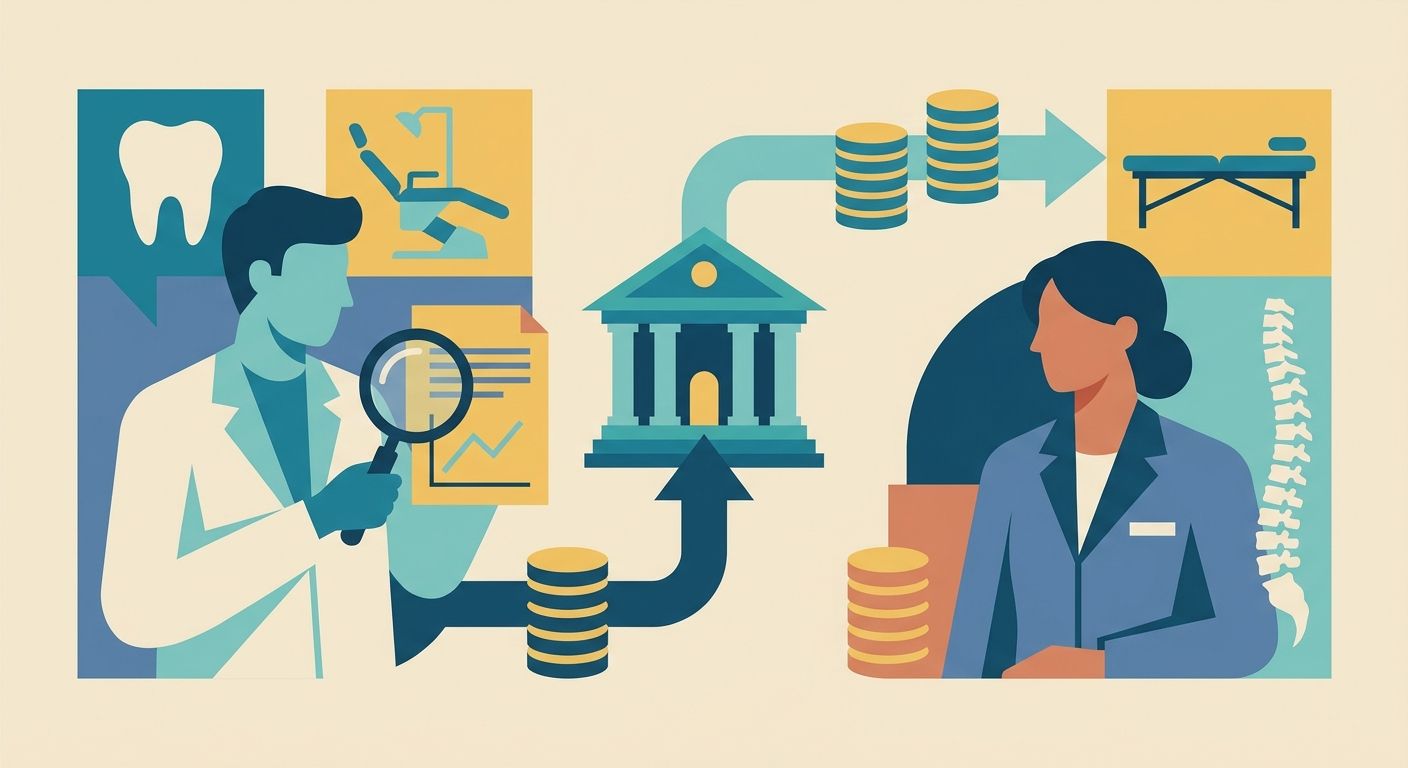
Dentists and chiropractors run practices that generate strong income but look messy on paper — S-corp distributions, equipment depreciation, and write-offs that shrink taxable income even when cash flow is healthy. Bank statement loans for dentists and chiropractors solve that mismatch by qualifying you off deposits, not tax returns.
TL;DR
- Bank statement loans for dentists qualify off 12-24 months of deposits, not tax returns — Buy if write-offs shrink your reported income.
- A 24-month statement window smooths seasonal dips better than 12 months for practices under three years old.
- Buying your practice building needs a commercial loan, not a residential bank statement loan.
- Skip any lender that won't explain how it calculates your qualifying income before you apply.
Why this matters
A dentist netting $280,000 on a tax return after depreciation and Section 179 deductions on new equipment can look like a $95,000 earner to a conventional underwriter. Traditional banks pull the tax return, apply their formula, and hand back a denial or a loan amount too small to buy the home or investment property you actually want. In 2026, non-QM lending exists specifically to close that gap — and dentists, chiropractors, and other self-employed medical professionals are the textbook use case.
The math is straightforward once you see it. A bank statement loan program averages your actual deposits over 12 or 24 months, applies an expense factor, and lends against that number instead of your adjusted gross income. No tax return line items. No explaining away depreciation to an underwriter who has never run a practice.
Who this is for
This guide is for practice-owning dentists, orthodontists, and chiropractors who file as self-employed or through an S-corp, show strong gross deposits but reduced net income after deductions, and need financing for a primary residence, an investment property, or the practice building itself. It also fits newer practice owners — under three years in — where tax returns do not yet reflect the current revenue trend. If you are a W-2 associate with a straightforward paystub, a bank statement loan is unnecessary: a conventional loan is usually cheaper and faster.
What to look for in a bank statement loan for dentists
Statement window flexibility
Lenders offer 12-month or 24-month statement programs, and the difference matters more than it sounds. A 24-month average smooths out a slow quarter or a year you invested heavily in operatory equipment. A 12-month program reacts faster to a strong recent year but punishes any recent dip. Ask upfront which window the lender defaults to and whether you can choose.
How the expense factor is calculated
Every bank statement program applies an expense ratio to gross deposits before calculating qualifying income — the lender counts only part of what lands in the account. A dental practice with high supply and staff costs should push for a documented, practice-specific expense ratio backed by a CPA letter rather than a generic flat default that undercounts real net income. This single input moves your approved loan amount more than the rate does.
Personal versus business bank statements
Some programs accept personal account deposits only. Others blend personal and business accounts, or require 100% business statements with a P&L. If practice revenue routes through a business account before you draw a salary, confirm the lender can use business statements — otherwise your qualifying income understates what the practice actually generates.
DTI thresholds for high-earning self-employed borrowers
Non-QM debt-to-income limits run higher than conventional loans, which matters if you carry practice debt, equipment financing, or a chiropractic table lease alongside a mortgage. Confirm the lender's DTI ceiling before you fall in love with a property. A number that works on paper at 43% may still clear at a non-QM lender's higher threshold.
Down payment and reserve requirements
Bank statement loans typically ask for a larger down payment than a conventional W-2 loan plus several months of reserves in the bank after closing. For a practice owner who just financed new chairs or bought out a partner, the reserve requirement — not the rate — is the actual bottleneck. Plan the cash position before you shop.
Whether the lender understands practices specifically
A lender who has underwritten a hundred dentist files knows a slow August or a CE-conference month is not a red flag. A generalist underwriter flags every dip and asks for a letter of explanation on patterns that are completely normal for a practice. Ask how many self-employed healthcare borrowers the lender closes per year.
Loan program picks for dentists and chiropractors
The standard pick: 12-month bank statement program. Best for practice owners with a consistent trailing year and no major revenue disruption. Fewer statements to gather means a shorter document chase. Verdict: Buy if last year's deposits reflect your current run rate — this is the fastest path, and you can get approved for a bank statement loan as a business owner without a single tax return in the file.
The safe pick for newer practices: 24-month bank statement program. Best if you opened in 2023 or 2024 and your first year carried startup costs, slow patient acquisition, or a partial year of billing. Averaging 24 months absorbs the ramp-up instead of letting one thin quarter tank your qualifying number. Verdict: Buy for practices under three years old with a bumpy early revenue curve. Consider it optional if your last 12 months alone already look strong.
The specialist option: healthcare-focused programs. Some lenders build guidelines around bank statement loans for physicians and healthcare workers, and the same expense-ratio logic extends to dental and chiropractic practices with similar deposit patterns. Verdict: Buy when the lender has documented experience with practice-based deposits — it cuts repeat documentation requests sharply.
The wildcard: a commercial loan for the practice building. If you are buying the office space your practice operates from rather than a residence or rental, a bank statement loan is the wrong tool. You need a commercial real estate loan for veterinary and medical practices, which underwrites the property and the business together. Verdict: Consider this route for owner-occupied practice real estate. Skip any attempt to force a residential product onto a commercial purchase.
Compare bank statement loan options
Talk through your deposit history and see what you qualify for in 2026.
What to avoid
- A lender that quotes a rate before reviewing statements. Bank statement pricing depends on your expense ratio, DTI, and reserves. A quote given blind is a placeholder, not a real number.
- Flat expense-ratio defaults with no CPA letter option. If your actual overhead runs lower than the lender's generic assumption, you are leaving qualifying income on the table by not documenting it.
- Confusing practice financing with personal financing. A practice acquisition loan and a bank statement loan for your own home are different products with different qualification paths. Do not let a lender pitch one when you need the other.
How the picks compare
12-month bank statement
- Best for: Strong recent trailing year
- Statement window: 12 months
- Verdict: Buy
24-month bank statement
- Best for: Newer or ramping practices
- Statement window: 24 months
- Verdict: Buy for young practices
Healthcare-specialist program
- Best for: Consistent deposit patterns
- Statement window: 12-24 months
- Verdict: Buy
Commercial practice-building loan
- Best for: Buying your own office space
- Statement window: Business plus property review
- Verdict: Consider
FAQ
What is the best bank statement loan for dentists in 2026?
The best fit depends on how long you have owned the practice. A 12-month program suits a strong recent year, while a 24-month program smooths out startup costs for practices under three years old. Both qualify off deposits instead of tax returns.
Is a bank statement loan better than a conventional loan for a dentist?
If your tax returns understate real income because of depreciation and write-offs, a bank statement loan usually supports a larger loan amount. If your returns already show strong net income, a conventional loan is typically cheaper.
How many months of bank statements do lenders require?
Most programs ask for 12 or 24 consecutive months of statements from the same account. Some lenders accept business statements, personal statements, or a blend of both.
Can chiropractors use a bank statement loan to buy a home?
Yes. Self-employed chiropractors qualify the same way dentists do, using average monthly deposits instead of tax return income. The underwriting approach is identical across self-employed medical and dental professionals.
Do bank statement loans require a higher down payment?
Bank statement programs generally require a larger down payment than conventional W-2 loans, plus several months of post-closing reserves. The exact amount varies by lender, DTI, and expense ratio.
Can I use a bank statement loan to buy my practice building?
No. A residential bank statement loan is built for personal or investment residences, not owner-occupied commercial real estate. Buying the office your practice operates from requires a commercial real estate loan.
Does a CPA letter change my qualifying income?
Yes. A CPA letter documenting your practice's actual overhead percentage can replace a lender's generic expense assumption and raise your qualifying income. Request it before you apply rather than after an offer comes back low.
Do I need tax returns at all for a bank statement loan?
No tax returns are required for the income calculation itself. Lenders still verify identity, assets, credit, and the source of your deposits.
One last thing
The single biggest lever most dentists and chiropractors never pull is the CPA letter. A one-page statement from your accountant confirming actual overhead can push qualifying income well above what a lender's generic expense default produces. Ask for it before you apply in 2026, not after a number comes back too low to buy the house you wanted.


