


Bank Statement Loans for Pet Groomers: 2026 Guide
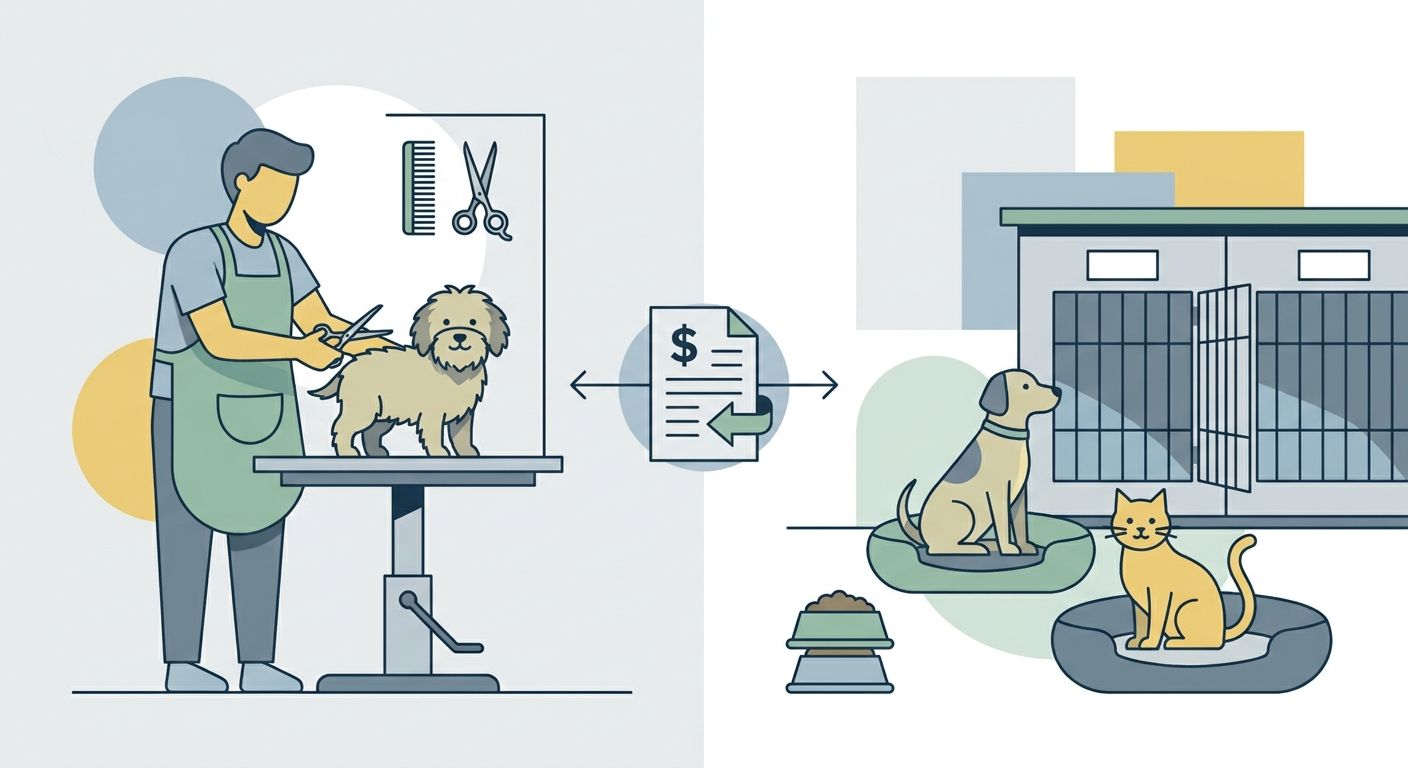
Pet groomers and boarding facility owners qualify for bank statement loans by using 12 to 24 months of business or personal deposits to prove income, instead of the tax returns that shrink after write-offs for vans, grooming tables, kennels, and supplies. Boarding operators with seasonal swings and groomers who run mostly on card and cash tips need an income calculation that reflects real cash flow, not net profit after depreciation.
TL;DR
- Bank statement loans for pet groomers use 12-24 months of deposits instead of tax returns to qualify for a mortgage.
- LoanGuys reviews both personal and business bank statement programs for groomers and boarding facility owners in 2026.
- Most bank statement lenders apply a fixed expense ratio to gross deposits unless a CPA letter documents lower overhead.
- Boarding facilities buying the real estate itself may qualify faster through a DSCR loan tied to rental income instead.
Why bank statement loans matter for pet groomers and boarding owners
Grooming and boarding businesses run on a mix of card swipes, cash tips, and recurring boarding invoices that rarely land the same every month. Tax returns for these businesses are packed with legitimate deductions: mobile grooming van depreciation, kennel equipment, cleaning supplies, insurance, and payroll for part-time bathers. Those write-offs are good for your tax bill and bad for a conventional mortgage application, because underwriters look at net income after deductions, not gross revenue.
A bank statement loan program built for small business owners skips that problem by counting deposits instead of adjusted gross income. If your grooming business deposits $18,000 a month and your kennel side brings in another $6,000 in boarding fees, that's the number a bank statement lender starts from, before any expense ratio is applied. This matters most for groomers who've been self-employed under two years and for boarding operators whose income spikes around holidays and summer travel season.
Update your bookkeeping before you apply
Lenders read your bank statements, not your Instagram reviews. Clean deposit history is the single biggest factor in how fast a bank statement loan closes.
- Separate a business checking account from personal spending if you haven't already
- Route all card processor deposits (Square, Clover, boarding software payouts) into one account
- Stop depositing large cash tips without a matching invoice or receipt
- Reconcile any NSF fees or overdrafts for the past 12 months before submitting statements
- Keep at least two full years of business bank statements on file, even if the lender only asks for 12 months
Document your seasonal cash flow pattern
Boarding facilities often see a 30-40% jump in deposits around major holidays and summer, then a quiet stretch in late winter. Groomers with mobile vans see similar dips when snow or heat keeps clients home.
- Pull a 24-month statement history if your business is less than three years old, since it smooths out seasonal swings
- Flag any one-time deposits (equipment sale, insurance payout) so the underwriter doesn't count them as recurring income
- Note any months with an owner capital contribution and be ready to explain it in writing
- Keep a simple spreadsheet mapping deposits to service type (grooming, boarding, retail) if your business mixes revenue streams
Calculate your effective income using an expense ratio
Most bank statement programs don't count 100% of your deposits as income. Lenders apply a standard expense ratio, commonly 50%, meaning half your gross deposits are treated as business overhead unless you supply documentation that says otherwise.
- Ask your loan officer whether the program allows a CPA-prepared profit and loss letter to lower the default expense ratio
- Total your actual gross deposits over the statement period, excluding transfers between your own accounts
- Divide by the number of months to get your average monthly deposit figure
- Apply the expense ratio the lender quotes to land on qualifying income before debt-to-income is calculated
- Compare that number against your target purchase price before you start touring properties
Choose between a personal and a business bank statement program
Groomers who run a sole proprietorship or single-member LLC often qualify off personal bank statements. Boarding facility owners with a separate business entity and payroll usually fit better into a business statement program.
- Personal statement programs typically require 100% of deposits reviewed, with the expense ratio applied at the end
- Business statement programs may allow a lower expense ratio if you can prove lower overhead with financials
- LLC and S-corp owners should ask which program treats owner draws as income versus a red flag
- If you operate under two entities (grooming plus retail sales), be ready to submit statements for both
This is the point where working with a broker who reads bank statement files daily saves weeks. LoanGuys reviews deposit history for self-employed borrowers across service businesses and matches the file to a program before you go under contract.
Compare reserve and down payment requirements across lenders
Bank statement loans carry higher reserve requirements than a standard conventional mortgage, and that gap widens for seasonal businesses like boarding kennels.
- Ask each lender how many months of reserves they require (commonly 6-12 months of the new payment)
- Confirm whether reserves can come from business accounts or must sit in personal savings
- Check if a larger down payment buys a lower rate or reduced reserve requirement
- Get the debt-to-income cap in writing before you submit an offer on a property
Get pre-qualified before you shop for property
A pre-qualification letter based on bank statement income carries more weight with sellers once they know it isn't a standard W-2 file.
- Submit statements early so any expense ratio disputes get resolved before you're under a contract deadline
- Ask for a written pre-qualification that states the qualifying income figure, not just a rate quote
- Confirm the lender's timeline for full underwriting once you go under contract, since bank statement files can take longer to clear
Talk to LoanGuys about your file
Get your bank statement income reviewed before you make an offer.
Loan options for groomers and boarding facility owners
Personal bank statement loan
- Best for: Sole proprietor groomers with clean personal deposit history
- Key limitation: Full deposit history reviewed, including non-business transactions
Business bank statement loan
- Best for: LLC or S-corp boarding facilities with separate business accounts
- Key limitation: Requires clean separation between business and personal spending
DSCR loan
- Best for: Boarding facility owners buying the real estate as a rental or investment
- Key limitation: Qualifies on property rental income, not business cash flow, so it won't work for an owner-occupied purchase
SBA loan
- Best for: Owners buying real estate and financing business expansion together
- Key limitation: Full documentation and longer underwriting timeline than bank statement programs
Conventional mortgage
- Best for: Groomers with strong W-2 income from a side job plus the grooming business
- Key limitation: Net income after write-offs usually disqualifies full-time self-employed applicants
Verdict: a bank statement loan is the faster path for a self-employed groomer or boarding owner whose tax returns understate real cash flow, but a DSCR loan makes more sense if the purchase is a rental property tied to the boarding business rather than the operator's home.
Common mistakes pet groomers and boarding owners make
- Mixing tip cash with business deposits without records. Undocumented cash deposits get flagged or excluded entirely, which lowers your qualifying income.
- Applying with only 12 months of statements from a business that just had a slow winter. A 24-month history smooths out the seasonal dip that scares an underwriter.
- Not asking about the expense ratio before shopping for a house. Skipping this step means your pre-qualification number can shrink by half once the lender applies the default ratio.
- Running boarding revenue and retail product sales through the same untracked account. Underwriters need to see which deposits are recurring service income versus one-time product sales.
- Waiting until under contract to gather two years of clean statements. Bank statement files take longer to underwrite than a standard W-2 loan, and last-minute documentation gaps cause closing delays.
FAQ
What's the best bank statement loan for pet groomers in 2026?
A personal or business bank statement loan works best for pet groomers, depending on whether you run a sole proprietorship or a separate LLC. LoanGuys matches groomers to the program based on how deposits are documented across 12 to 24 months of statements.
Is a bank statement loan better than a conventional mortgage for boarding facility owners?
Yes, for most self-employed boarding operators, because conventional mortgages qualify off net income after tax write-offs, which is usually lower than actual cash flow. A bank statement loan counts gross deposits, adjusted by an expense ratio, instead.
How many months of bank statements do groomers need for this loan type?
Most programs require 12 or 24 months of statements, and 24 months is safer for seasonal businesses because it smooths out slow winter months. Lenders average the deposits over the full period to calculate qualifying income.
Can a mobile pet grooming business qualify for a bank statement loan?
Yes, mobile groomers qualify the same way as brick-and-mortar salons, using deposit history from card processors and cash logs. The business needs to show consistent deposits over the statement period reviewed.
Does a boarding facility need a business entity to get a bank statement loan?
No, a sole proprietor can qualify using personal bank statements, but a separate LLC with its own business account often qualifies for a lower expense ratio. The entity structure changes which program fits, not whether you qualify at all.
What expense ratio do bank statement lenders use for pet care businesses?
Many programs default to a 50% expense ratio, meaning half of gross deposits count as business overhead. A CPA-prepared profit and loss statement can sometimes lower that ratio if actual expenses run lower.
Is a DSCR loan an option for a boarding kennel purchase?
Yes, if the boarding facility itself is being purchased as an investment property, a DSCR loan qualifies off the property's rental or service income rather than the owner's personal cash flow. It's a different program from a bank statement loan used for an owner-occupied purchase.
How long does a bank statement loan take to close for a self-employed groomer?
Bank statement loans typically take longer to underwrite than a standard W-2 mortgage because deposit history requires manual review. Getting a clean, separated 24-month statement history ready before you apply speeds up the process significantly.
One last thing
Boarding facility owners often overlook that the real estate itself may qualify for a DSCR loan even when the operator's personal tax returns wouldn't clear a conventional mortgage. If the property generates its own income stream through boarding contracts, a lender can underwrite the deal off that cash flow instead of the owner's bank statements, which opens a second path when the business side of the file looks thin.


