


Bank Statement Loans for Photographers 2026: Buy or Skip
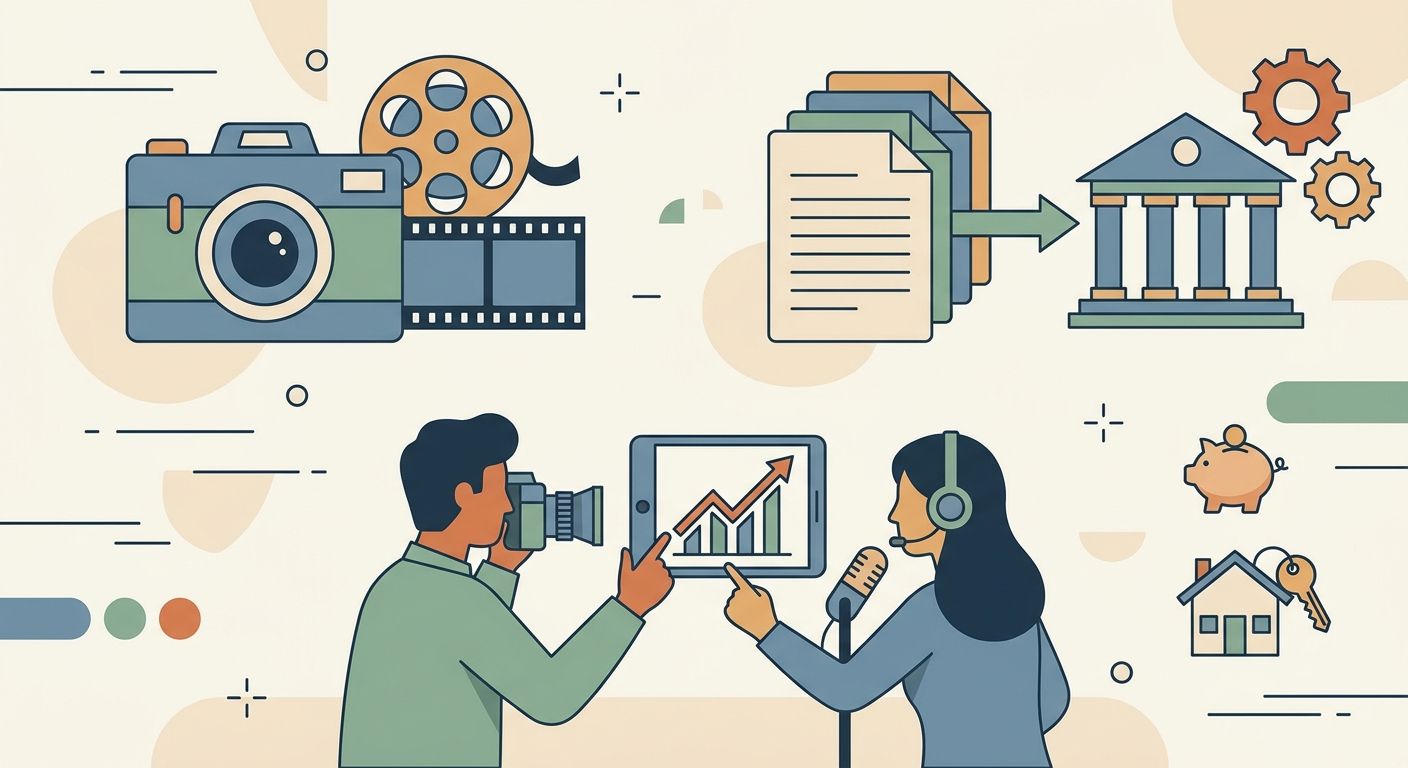
Wedding season pays the bills, but a lender staring at your Schedule C sees write-offs, not income — and that's exactly the gap bank statement loans for photographers and videographers close.
TL;DR
- Bank statement loans for photographers use deposits, not tax returns, so equipment write-offs stop killing your approval odds.
- 12-month personal statement programs are the fastest qualifier for solo shooters in 2026 - Buy if your last year was strong.
- 24-month business statement programs suit studio owners with 1099 crew and multiple client contracts - Consider.
- P&L-only programs cut paperwork for high earners with clean books but Skip if your bookkeeping is inconsistent.
- Seasonal income averaging matters more for wedding and event shooters than for full-time videographers on retainer.
Who this is for
This guide is for self-employed photographers, videographers, and small production studio owners whose tax returns understate what they actually bring in. If you write off cameras, lenses, editing software, studio rent, and travel every year, a conventional mortgage lender using your adjusted gross income will likely qualify you for less than you can genuinely afford. Bank statement loans solve that by looking at what hits your account, not what your accountant deducted.
Why this matters
Most photographers and videographers file as sole proprietors or single-member LLCs. Every deduction that lowers your tax bill also lowers the taxable income a conventional underwriter can count — a $120,000 gross year can show up as $45,000 net after equipment depreciation, software subscriptions, and travel. A bank statement loan works around that by using 12 to 24 months of deposits instead of tax returns, which is why it's become the go-to path for creative-industry freelancers buying a home or an investment property in 2026.
What to look for in bank statement loans for photographers
Personal vs. business account eligibility
Some programs only accept personal bank statements; others allow business account deposits or a blend of both. If your studio runs client payments through a business checking account, confirm the lender will use those statements before you apply — this determines whether your LLC's income even counts.
The expense factor calculation
Lenders apply an expense factor (a percentage assumed to cover business costs) against your gross deposits to arrive at qualifying income. A fixed factor near 50% is standard across most non-QM bank statement programs, but some allow a CPA-prepared profit and loss statement to justify a lower factor if your actual overhead is thinner than average.
Seasonal income averaging
Wedding and event photographers often see 60% of annual revenue land between May and October. A lender that averages deposits over a full 12 or 24 months smooths that out; one that only looks at trailing three months can misread a slow winter as declining income.
1099 crew and subcontractor documentation
Videographers running multi-person shoots often pay second shooters, editors, and drone operators as 1099 subcontractors. Lenders need to see those outflows aren't confused with personal expenses, and some programs specifically underwrite this pattern well because it's common among freelancers and consultants.
Down payment and reserve requirements
Self-employed borrowers using bank statement programs typically put down more than a W-2 buyer would and need cash reserves left over after closing. Ask upfront how many months of reserves the specific program requires — it varies more than the rate does.
Credit profile fit
Bank statement programs are built for income documentation gaps, not credit repair. A thin file or recent late payments will hurt your options here just as much as with a conventional loan, so know your credit score before you shop programs.
Top picks for photographers and videographers in 2026
The 12-Month Personal Bank Statement Program — the fast qualifier Uses 12 months of personal account deposits and a standard expense factor, making it the quickest path to a pre-approval letter. It rewards a strong recent year and doesn't punish you for a slower year two cycles back. Best for solo wedding and portrait photographers who can show consistent monthly deposits without wide seasonal swings. Buy if your last 12 months show steady, verifiable income.
The 24-Month Business Bank Statement Program — the higher approval ceiling Pulls deposits from a business checking account over two years, which tends to produce a larger qualifying income figure for studio owners running video production companies with multiple contracts and 1099 subcontractors on payroll. It takes more documentation to assemble than the 12-month version but can unlock a bigger loan amount. It fits the same profile lenders see with 1099 contractors more broadly, and photography studios with payroll fall into that same underwriting bucket. Consider if you run a multi-person production business with two-plus years of business banking history.
The P&L-Only Program — the minimal-paperwork route Some non-QM lenders will qualify you off a CPA-prepared profit and loss statement instead of raw bank statements, which is faster if your books are clean and your accountant is responsive. It suits high earners whose actual overhead runs well below the standard 50% expense factor. Consider if your bookkeeping is tight and your CPA can turn documents around quickly; Skip it if your books are inconsistent, since a sloppy P&L invites more underwriter scrutiny, not less.
Each of these paths runs through the same category most freelancers and consultants use to buy a home or investment property without full tax-return documentation — freelancers and consultants face nearly identical income-verification hurdles as photographers and videographers.
Get pre-qualified for a bank statement loan
Talk through 12-month vs. 24-month programs for your income pattern.
What to avoid
- Full-doc conventional loans if your write-offs are heavy. A mortgage underwriter using your Schedule C net income after depreciation and equipment deductions will almost always qualify you for less than a bank statement program will.
- Stated-income products with no deposit verification at all. If a lender won't ask for any bank statements or a CPA letter, that's not a documentation shortcut — it's a red flag on the loan structure itself.
- Ignoring the expense factor before you apply. A program that applies a high fixed expense factor to your gross deposits can shrink your qualifying income more than you expect, even with strong monthly revenue.
Verdict comparison
12-Month Personal Statement
- Documentation: Personal bank statements
- Statement Window: 12 months
- Best For: Solo photographers, steady recent income
- Verdict: Buy
24-Month Business Statement
- Documentation: Business bank statements
- Statement Window: 24 months
- Best For: Studio owners with 1099 crew
- Verdict: Consider
P&L-Only (CPA Letter)
- Documentation: CPA-prepared P&L
- Statement Window: N/A
- Best For: High earners with clean books
- Verdict: Consider
Full-Doc Conventional
- Documentation: Tax returns
- Statement Window: 2 years
- Best For: W-2 buyers, not heavy write-offs
- Verdict: Skip for most self-employed creatives
FAQ
What is a bank statement loan for photographers?
A bank statement loan for photographers uses 12 to 24 months of personal or business bank deposits to verify income instead of tax returns. It's built for self-employed creatives whose write-offs reduce their taxable income on paper.
How many months of bank statements do lenders require?
Most programs require either 12 or 24 months of statements. The 12-month option qualifies faster but the 24-month version can support a higher loan amount for established businesses.
Can videographers with 1099 income qualify for a bank statement loan?
Yes, videographers paying 1099 subcontractors like second shooters or editors can still qualify, since lenders separate business outflows from personal income during underwriting. Documentation of those subcontractor payments should be organized before you apply.
Do bank statement loans work for buying an investment property?
Yes, photographers and videographers use bank statement programs to buy primary residences, second homes, and investment properties in 2026. For pure rental property purchases, a DSCR loan based on the property's rental income is often a faster alternative since it skips personal income documentation entirely.
What credit score do you need for a bank statement loan?
Bank statement programs are built to solve income documentation, not credit issues, so lenders still expect a solid credit profile. Check your specific score against a lender's minimum before assuming you qualify.
Is a bank statement loan more expensive than a conventional loan?
Bank statement loans generally carry higher rates and larger down payment requirements than full-doc conventional loans because they carry more underwriting flexibility. The tradeoff is qualifying for a loan amount that actually reflects your real income.
Can seasonal wedding photographers qualify with uneven income?
Yes, a 12 or 24-month statement window averages deposits across the full year, which smooths out a heavy wedding season against a slower winter. This works better for seasonal shooters than a program that only reviews the trailing three months.
Do I need a business bank account to qualify?
Not always, but running client payments through a dedicated business account makes it easier to prove consistent deposits and can qualify you for programs that use business rather than personal statements.
One last thing
The detail most photographers miss: the expense factor a lender applies matters more than the interest rate quoted on the intro call. A program that assumes 50% overhead on your gross deposits can shrink your qualifying income by tens of thousands of dollars compared to one that lets your CPA document actual costs closer to 20-30% — ask about the factor before you compare rates.


