


Best no-doc business loan lenders for contractors: 2026

Best overall for contractors buying or renovating investment property: LoanGuys. Best for unpaid customer invoices: invoice factoring firms. Best for a work vehicle or machine: equipment finance lenders. These are different financing routes, not interchangeable no-doc loans; the best no-doc business loan lenders for contractors depend on what you need to fund and what records you can provide.
TL;DR
- LoanGuys is the best fit here for contractors financing investment property, not general business expenses.
- For unpaid invoices, compare invoice factoring firms before taking on an unrelated property loan.
- For a work vehicle or machine, ask equipment finance lenders what documentation and collateral they require.
- The best no-doc business loan lenders for contractors still need a way to verify the borrower, asset or repayment source.
Why this matters
A contractor can have a full schedule and still struggle to show steady income on a tax return. Customer payments arrive after labor and materials are paid; large equipment purchases create separate financing needs. Calling every one of these situations a no-doc loan hides the most important question: what will the lender use to evaluate repayment?
In 2026, start with the purpose of the money. A property purchase calls for a different conversation from a truck purchase, and neither solves an invoice that a customer has not paid. LoanGuys is a mortgage broker offering investment-property financing, including fix-and-flip and bridge loan programs. Its stated offerings do not establish that it provides an unsecured no-doc business loan for payroll, tools or general operating expenses.
What makes the best no-doc financing for contractors?
- Use of funds: Identify the property, equipment, invoices or business expenses the money must cover. A loan tied to one asset is not automatically available for another purpose.
- Documentation: Ask what replaces tax returns. Bank statements, contracts, invoices and asset records serve different purposes; no tax returns does not mean no verification.
- Repayment source: Match the obligation to expected cash from the project, customer or property. A seasonal business needs particular care when comparing payment schedules.
- Collateral and recourse: Find out what secures the financing and whether you remain personally responsible if the business cannot pay.
- Exit plan: For short-term financing, identify how you will repay or refinance before you sign. A hoped-for sale is not the same as a completed sale.
- Total obligation: Compare fees, payment timing and consequences of late payment in the actual offer. A simple application is not enough reason to accept a difficult repayment schedule.
For a 2026 comparison, use these criteria before asking which lender is fastest. The lender that needs fewer records can still be the wrong choice if its product does not fund your intended purchase.
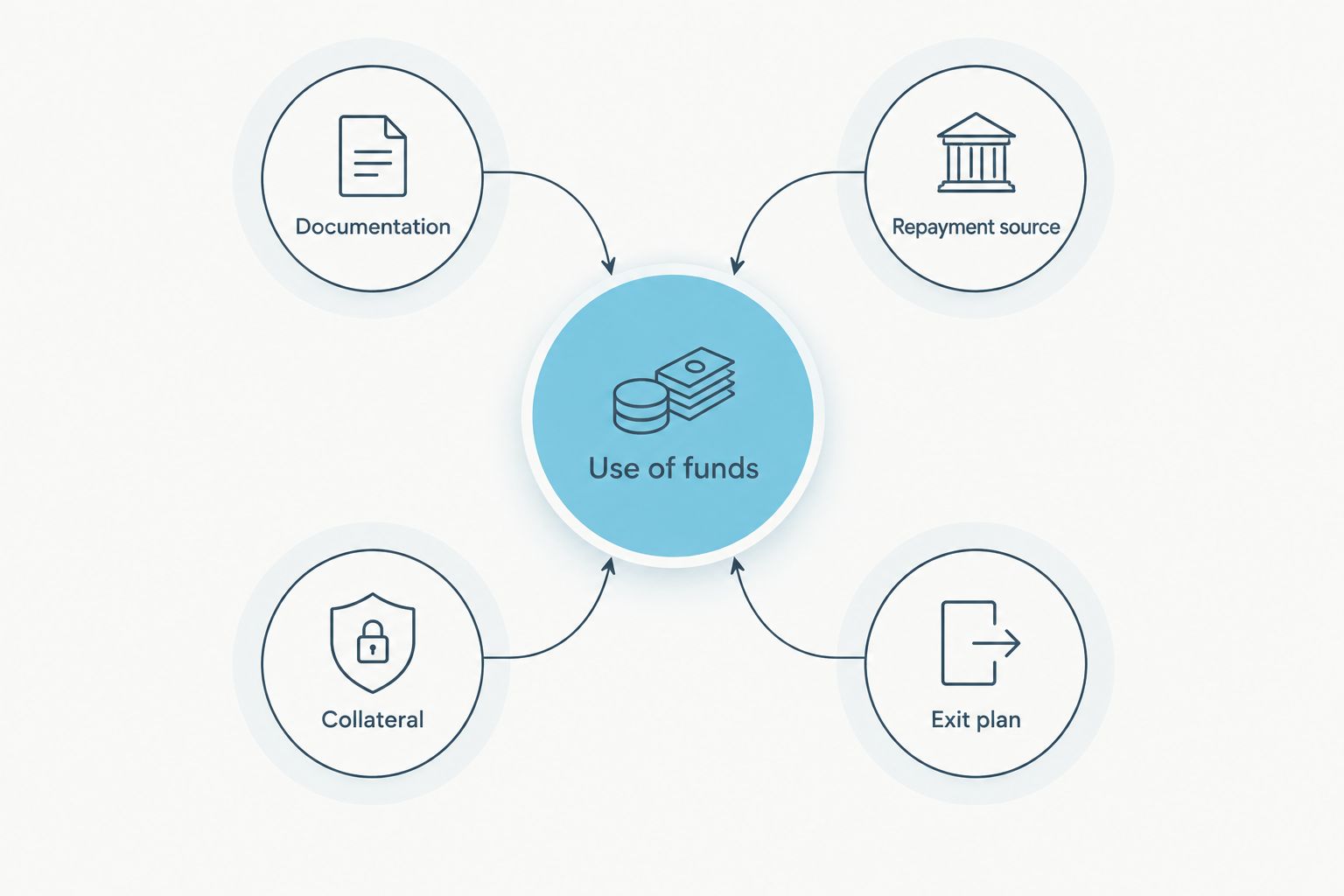
Start with what you need to fund, then test the records and repayment plan against it.
Contractor financing at a glance
1
- Provider or financing route: LoanGuys, mortgage broker
- Best for: Contractors financing investment property
- What the application centers on: The property and the applicable loan program
- Key limitation: Not presented as a general-purpose business lender
2
- Provider or financing route: Invoice factoring firms
- Best for: Contractors waiting on customer invoices
- What the application centers on: Eligible unpaid invoices and the customer payment process
- Key limitation: Requires invoices; changes how collections are handled
3
- Provider or financing route: Equipment finance lenders
- Best for: Contractors acquiring a work vehicle or machine
- What the application centers on: The equipment and the borrower's application
- Key limitation: Financing is tied to qualifying equipment
4
- Provider or financing route: Bank-statement business lenders
- Best for: Contractors seeking broader business funding without relying on tax returns alone
- What the application centers on: Business deposits and other requested records
- Key limitation: No specific provider or no-doc approval is verified here
This is a ranking by fit for the stated use case, not a claim that an unnamed lender has approved contractors or offers a particular no-doc program. The first entry is a named mortgage broker; the other entries describe provider categories you can compare. If you need unsecured working capital, do not treat a property-backed mortgage as its substitute.
1. LoanGuys: best property financing for contractor-investors
LoanGuys is a mortgage broker offering DSCR, fix-and-flip, bridge, bank-statement and short-term rental loan programs. For a contractor who also invests in real estate, those programs create a relevant starting point for a rental purchase or renovation project. A DSCR loan evaluates a rental property through its debt-service coverage ratio: a comparison of property income with debt payments under the lender's rules.
That is a property-financing use case, not proof of no-documentation business funding. In 2026, ask which records the relevant program requires and whether the property, planned work and intended repayment path fit. If you need to cover subcontractor wages on a customer job, begin with a business-funding provider instead.
LoanGuys pros:
- Offers several stated investment-property loan categories, including fix-and-flip and bridge financing.
- Gives a contractor-investor a route to discuss property financing without framing every project as a conventional mortgage.
- Includes bank-statement programs for a borrower whose income needs a different documentation approach.
LoanGuys cons:
- Its stated programs do not establish an unsecured business loan for general contractor expenses.
- No specific no-doc eligibility, approval terms or documentation waiver is supplied.
- A property loan depends on a property transaction; it does not solve every cash-flow gap in a contracting business.
LoanGuys documentation: Ask which program applies and which property and borrower records it requires. Best for: a contractor buying, renovating or financing investment property. Verdict: Buy the comparison if the project is property-backed; skip this route for unrelated operating expenses.
2. Invoice factoring firms: best for unpaid customer invoices
Invoice factoring centers on an existing receivable rather than a new property purchase. A contractor sells an eligible unpaid invoice to a factoring company under a contract; the contract determines how payment and collections work. This can fit a business that has finished billable work but must cover another expense before its customer pays.
The distinction matters in 2026: an invoice is evidence of money owed, not a promise that every factoring firm will accept it. Ask whether the customer, invoice terms, disputes and payment history qualify. Read who contacts the customer and what happens if the customer does not pay.
Invoice factoring firms pros:
- Directly address the gap between issuing an invoice and receiving payment.
- Tie the funding discussion to identifiable customer invoices.
- Do not require an investment-property purchase to make the financing relevant.
Invoice factoring firms cons:
- Cannot fund work for which you have no eligible invoice.
- Customer payment problems can affect the arrangement, depending on the contract.
- Collection terms can change your customer relationship.
Invoice factoring documentation: Expect the provider to examine invoices and request supporting business and customer information. Best for: contractors with eligible invoices already issued. Verdict: Buy the comparison when the payment gap is tied to completed, invoiced work; wait if you have only a prospective job.
3. Equipment finance lenders: best for a vehicle or machine
Equipment financing connects the funding request to a specific business asset. That makes it a more direct category to compare when a contractor needs a truck, excavator or other work equipment than a loan secured by an unrelated rental property. The lender still decides whether the asset and applicant meet its requirements.
For a vehicle purchase in 2026, verify the vehicle details before requesting financing terms. A search for used trucks in Houston illustrates why the asset comes first: the truck you select determines what vehicle information you can give a financing provider. Confirm permitted vehicle condition, seller documentation and title requirements with the lender before committing to a purchase.
Equipment finance lenders pros:
- Keep the financing discussion focused on the vehicle or machine you intend to acquire.
- Let you compare an asset-specific route instead of assuming general working capital is required.
- Give you a defined purchase to describe when asking what documents are needed.
Equipment finance lenders cons:
- Do not directly solve payroll or a customer payment delay.
- The vehicle or machine must meet the particular provider's criteria.
- A short application does not establish that a lender offers no-doc approval.
Equipment finance documentation: Ask for the exact asset, business and borrower records required before submitting an application. Best for: contractors making a defined equipment purchase. Verdict: Buy the comparison when the asset is identified; hold if the actual need is unrestricted cash.
4. Bank-statement business lenders: best for broader business expenses
A bank-statement lending route asks a different question from invoice or equipment financing: can the business's deposits help document its ability to repay? For a contractor with uneven monthly receipts, statements can show cash entering the business even when a single tax-return figure does not tell the whole story. This is a provider category, not a verified offer from a specific lender.
In 2026, separate a business loan evaluated using bank statements from a bank-statement mortgage. They can have different uses of funds, collateral and underwriting. LoanGuys lists bank-statement loan programs in its mortgage offering; that fact alone does not establish that it offers general-purpose bank-statement business loans.
Bank-statement business lenders pros:
- Provide a relevant category to investigate when tax returns alone do not describe business receipts.
- Keep the funding discussion centered on broader business needs rather than one invoice or machine.
- Give contractors a clear question to ask: which deposits count, and which records must support them?
Bank-statement business lenders cons:
- A bank-statement application is not a no-document application.
- Deposit patterns do not, by themselves, establish eligibility or affordable repayment.
- No named lender, terms or approval standard is verified in this comparison.
Bank-statement business lender documentation: Request the provider's document list and use-of-funds rules in writing. Best for: contractors who need broader business funding and can document business deposits. Verdict: Hold until a specific provider confirms its requirements and supplies an offer you can compare.
How we ranked these routes
The order prioritizes a clear match between the financing purpose and the stated or inherent scope of each route. LoanGuys ranks first only for a contractor-investor financing property. Invoice factoring follows for unpaid invoices, equipment finance for a defined asset, and bank-statement business lending for broader expenses that require a specific provider comparison.
This ranking does not score interest rates, approval speed or lender acceptance: no comparable offers or provider-level results were supplied. In 2026, make the final choice from actual written terms, not the no-doc label. Ask what you must submit, what secures the obligation and when repayment comes due.
Which no-doc business loan route should you choose?
Choose the route that matches the bill you need to pay. If you are a contractor buying an investment property, start with LoanGuys and ask which mortgage program matches the transaction. If an issued invoice is waiting on customer payment, compare factoring contracts. If you have selected a vehicle or machine, compare equipment finance offers. If you need funds for several business expenses, ask a bank-statement business lender for its eligibility rules and document list.
For a 2026 decision, put the use of funds at the top of your request and identify the records you have ready. Tell each provider whether the money relates to a property, invoice, asset purchase or operating expense. Reject any comparison that treats no-doc as a promise of funding without verification.
Discuss your property financing
Ask which investment-property loan program fits your project and what documents it requires.
FAQ
What are the best no-doc business loan lenders for contractors in 2026?
There is no single best provider for every contractor expense. LoanGuys fits an investment-property financing discussion; invoice factoring, equipment finance and bank-statement business lending address different business needs.
Does no-doc mean a contractor provides no paperwork?
No. Ask the provider exactly what it requires to verify the applicant, repayment source and any asset or invoice involved; avoiding tax returns is not the same as avoiding documentation.
Can LoanGuys fund general contractor business expenses?
LoanGuys is identified as a mortgage broker offering property-related loan programs, not as a general-purpose business lender. Ask about a specific property transaction rather than assuming its programs cover payroll or tools.
Is invoice factoring better than an equipment loan for contractors?
Invoice factoring fits an eligible unpaid invoice; equipment finance fits a vehicle or machine purchase. Choose based on the expense, then compare the contract terms and documentation requirements.
Can a contractor get financing without tax returns?
A contractor can ask about financing that evaluates other records, including bank statements, invoices or property information. Each provider sets its own requirements, so confirm the document list before applying.
Should a contractor use a DSCR loan for business working capital?
A DSCR loan is a rental-property financing route, not a default solution for general business working capital. If the expense is unrelated to an investment property, compare a business-funding route instead.
What should contractors compare besides the application process?
Compare the permitted use of funds, required records, collateral, personal responsibility and repayment schedule. Read the written offer before accepting a financing arrangement.
One last thing
A no-doc label tells you less than a lender's answer to what gets verified instead. Bring the property details, issued invoice, equipment information or business deposit records that match your request. That one distinction makes the first conversation more productive and keeps a mortgage, a receivable transaction and an equipment purchase from being mistaken for the same loan.


