


Bridge loans for medical practice buyouts: complete 2026 guide

Medical practice buyout bridge financing is temporary funding that connects an acquisition closing to a defined repayment event, with the aim of completing the purchase without exhausting operating cash. Bridge loans for medical practice buyouts require a clear distinction between buying the business and buying its building; medical billing, ownership rules, and patient continuity create additional financing risks.
TL;DR
- Bridge loans for medical practice buyouts need an identifiable repayment source, not just an expected refinancing approval.
- Loanguys offers real-estate bridge loans; medical practice acquisition financing is a separate eligibility question.
- Separate goodwill, equipment, receivables, and medical office property before requesting financing.
- Compare acquisition financing, seller financing, and property-backed borrowing before accepting a short maturity.
Why bridge financing matters for medical practice buyers
A medical practice acquisition combines assets that lenders evaluate differently. Goodwill reflects the business's intangible value, equipment has its own resale value, and an office building is real estate. A loan secured by the building does not automatically finance the other assets.
For your 2026 acquisition, start by identifying exactly what changes hands. If the transaction includes property, the guide to loans for medical office building investors addresses that separate financing question.
Timing matters beyond the purchase agreement. Payer enrollment, lease consent, records arrangements, and clinician retention belong in the closing plan because financing approval alone does not establish operational readiness. Have healthcare counsel identify the requirements for your transaction and state.
Use a bridge loan to solve a documented timing gap, not an unresolved acquisition problem. If the permanent lender has not assessed the proposed ownership structure or repayment capacity, refinancing remains an assumption.
How to structure bridge financing for a medical practice buyout
1. Separate the practice purchase from the property purchase
Start with a spreadsheet that assigns every acquisition use to an asset or obligation. Work from the purchase agreement and supporting schedules rather than treating the seller's total request as a single financing need.
Distinguish an asset purchase from an ownership-interest purchase with your attorney and accountant. The structure affects what transfers, which obligations remain, and what a lender can take as collateral. Do not assume that acquiring the practice also transfers its lease, payer contracts, or licenses.
If a separate entity owns the office, identify that entity and its proposed borrower. Match each funding source to its permitted use before negotiating loan terms.
- List goodwill and other intangible assets separately.
- Identify owned equipment and leased equipment.
- State whether receivables transfer to the buyer.
- Separate real estate from practice assets.
- Identify working capital needed after closing.
2. Build a collections-based repayment forecast
Create the first forecast manually using accounting records, bank deposits, and receivables reports. Billed charges are not the same as collected cash; your payment plan needs the money expected to reach the operating account.
For a 2026 closing, build a 13-week cash forecast as a planning exercise, not a lender requirement. Include payroll, occupancy, supplies, insurance, existing obligations, and proposed debt payments. Assign responsibility for confirming how claims submitted before and after closing will be collected.
Debt-service coverage ratio, or DSCR, compares the cash flow defined by the lender with required debt payments. At 1.0x coverage, the defined cash flow equals those payments, leaving no coverage cushion within that calculation. Ask which adjustments and obligations the lender includes; practice-business analysis and rental-property underwriting are not interchangeable.
- Reconcile reported collections with bank deposits.
- Review receivables by age and payer.
- Remove seller-specific income that will not transfer.
- Include replacement compensation for departing clinicians.
- Test delayed collections and reduced appointment volume.
- Keep operating reserves separate from acquisition funds.
3. Match the lender to the collateral
Prepare a short financing summary yourself before approaching lenders. State the transaction structure, proposed borrower, assets offered as security, use of proceeds, and repayment source. This makes unsuitable proposals easier to reject.
Loanguys is best suited to real-estate bridge-loan inquiries, not assumed medical practice acquisition financing. Loanguys is a mortgage broker offering bridge and other property-loan programs; its stated offering does not establish financing for goodwill, receivables, or a partner buyout.
Use the service overview to frame a property-financing inquiry and confirm whether the proposed collateral, occupancy, and use of proceeds fit. A broker can help with program matching, but that does not replace healthcare transaction advice or establish eligibility for this acquisition.
- Identify whether the lender finances businesses or property.
- Confirm that the proposed use of proceeds is permitted.
- Disclose owner occupancy and any related-party lease.
- Request the collateral and guarantee requirements in writing.
- Ask whether other acquisition debt creates a conflict.
4. Establish the exit before accepting the bridge
Contact the intended permanent lender directly and request its acquisition and refinance criteria. A future refinance is an exit strategy only when you understand what must happen before that lender can approve and fund it.
For your 2026 transaction, record the bridge maturity, application milestones, documentation dependencies, and responsible parties on one calendar. Work backward from maturity rather than assuming the closing date leaves enough time.
A bridge secured by property creates property risk even when the proceeds support a business objective. Loan-to-value, or LTV, measures the loan against the lender's accepted property value. An acceptable LTV does not prove that the practice can support payments or that the permanent lender will refinance the debt.
- Identify the primary repayment event.
- Obtain the permanent lender's written criteria.
- Check whether the proposed debt qualifies for refinancing.
- Identify required operating history and financial reporting.
- Review extension conditions and lender discretion.
- Document a backup exit that does not require uncommitted funding.
The decision sequence should remain simple: identify the assets, verify collections, confirm collateral eligibility, and establish repayment. A failure at any stage is a reason to restructure before signing.
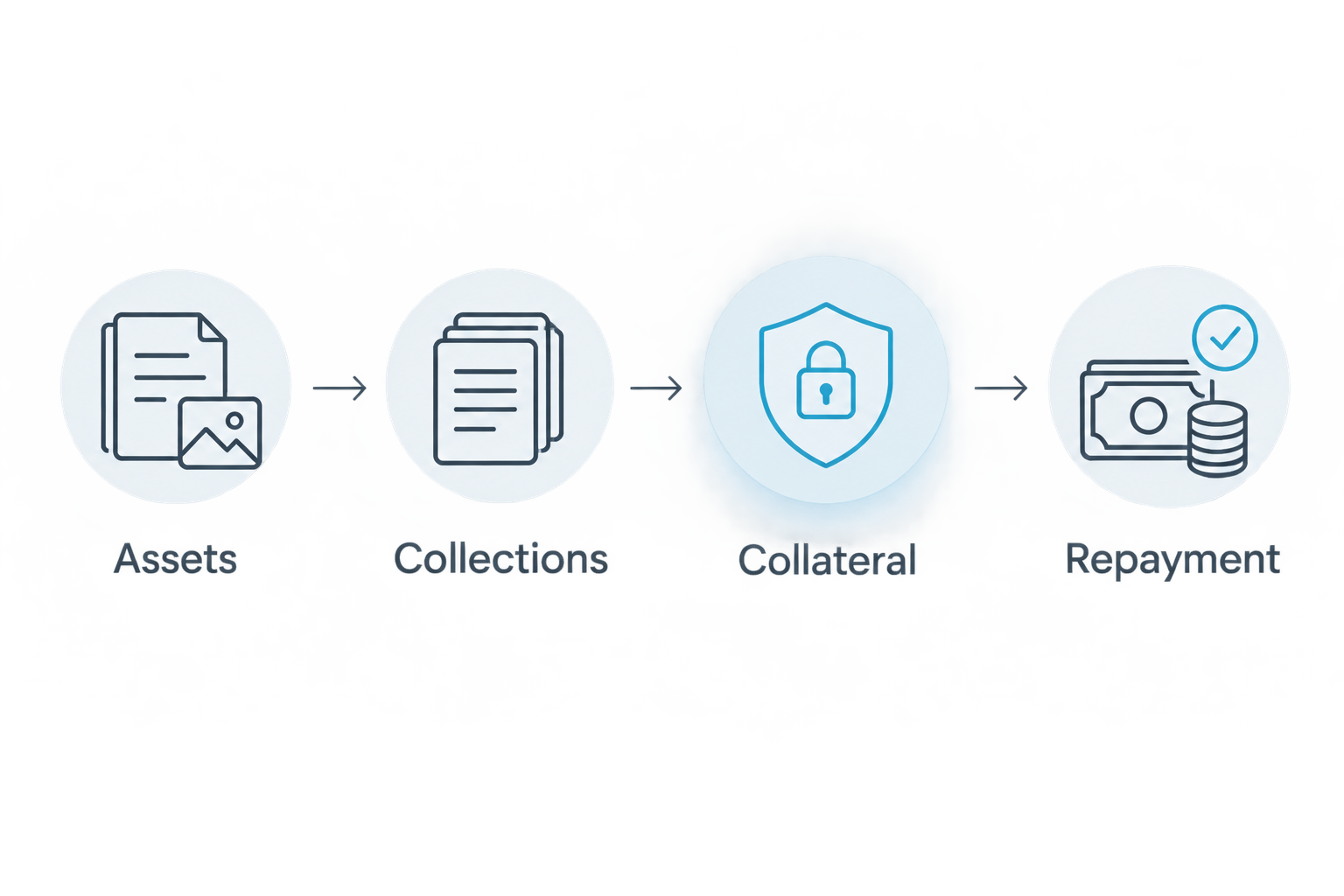
Confirm the acquisition structure and repayment path before accepting short-term debt.
5. Coordinate healthcare and financing diligence
Build a shared closing checklist with your attorney, accountant, seller, and lenders. Keep confidential patient information out of general financing folders and have counsel establish an appropriate information-sharing process.
The purchase agreement, loan documents, lease, and operating arrangements must describe a compatible transaction. For example, a lender's security interest requires review alongside existing equipment financing and the permanent lender's collateral requirements.
In 2026, do not treat a seller's existing payer relationships as proof that the buyer can bill without interruption. Have the relevant parties confirm enrollment, notification, assignment, and effective-date requirements for the actual transaction.
- Have healthcare counsel review ownership and fee-splitting restrictions.
- Confirm payer enrollment and contract-transfer requirements.
- Resolve landlord consent and lease assignment.
- Review liens, payoff letters, and equipment leases.
- Document records custody and authorized access.
- Coordinate clinician transition and employment arrangements.
6. Compare written terms and closing conditions
Use a side-by-side worksheet to compare proposals yourself. Separate an initial indication from a conditional approval and a final commitment; ask each lender what remains outstanding before funding.
Choose executable terms over an attractive headline. Review the maturity, payment structure, collateral, guarantees, extension provisions, default provisions, and early-repayment restrictions. Ask counsel to explain any cross-default or cross-collateralization language: one obligation can affect another when the documents connect them.
Before signing, require a complete schedule of financing charges and third-party expenses. Evaluate the full obligation against your forecast without assuming that an extension or refinance will be approved.
- Record every condition still required for funding.
- Confirm which assets secure each obligation.
- Identify personal guarantees and release conditions.
- Compare payment schedules and maturity obligations.
- Review early-repayment and extension provisions.
- Reconcile lender instructions with the closing statement.
Compare financing options for a medical practice buyout
The right option depends on what you are buying and how repayment works. Business acquisition financing and real-estate bridge financing solve different problems, even when both appear in the same transaction.
Healthcare practice acquisition loan
- Best for: Buyers financing the operating practice
- Main advantage: Evaluates the business acquisition rather than only the premises
- Key limitation: Requires business underwriting and transaction eligibility
SBA 7(a) acquisition financing
- Best for: Eligible buyers pursuing a qualifying business acquisition
- Main advantage: Can support eligible ownership changes and business uses
- Key limitation: Requires SBA and lender eligibility review; approval is not automatic
Business acquisition bridge loan
- Best for: Buyers with a documented temporary gap and repayment event
- Main advantage: Connects closing to a later funding event
- Key limitation: Short maturity creates repayment risk if the exit fails
Real-estate bridge loan
- Best for: Buyers with eligible property collateral and an approved property-related structure
- Main advantage: Addresses a property financing timing gap
- Key limitation: Does not automatically cover goodwill or practice ownership interests
Seller financing
- Best for: Buyers and sellers willing to negotiate deferred payment
- Main advantage: Allows part of the obligation to remain with the seller
- Key limitation: Requires agreement on security, payment terms, and other lenders' rights
Buyer equity or partner capital
- Best for: Buyers prioritizing reduced acquisition debt
- Main advantage: Avoids adding scheduled loan payments for that contribution
- Key limitation: Commits capital and can change ownership or control
Ask an SBA lender to evaluate the proposed acquisition under the rules applicable at application. Do not assume that bridge debt arranged first will qualify for a later SBA refinance.
If the building is leased rather than purchased, remove property-acquisition financing from the comparison unless a lender has confirmed another eligible structure. Available collateral and permitted proceeds must both fit.
Common mistakes medical practice buyers make
Treating a mortgage broker as a practice-acquisition lender
Loanguys offers real-estate financing programs. That is not confirmation of a loan for patient goodwill, ownership interests, or operating-company debt. Confirm the transaction fit before submitting a full application.
Financing the closing but not the transition
A fully funded purchase can still leave the buyer short of operating cash. Budget separately for payroll, supplies, insurance, and collection delays; do not count the same funds as both the closing contribution and the post-closing reserve.
Assuming clinical production equals repayment capacity
Appointments and billed charges do not establish collected cash. Reconcile collections, contractual adjustments, staffing expenses, and the buyer's compensation before deciding what payment the practice can support.
Using “refinance later” as the entire exit plan
A bridge maturity is a contractual obligation, while an unapproved refinance is not committed funding. Obtain the intended lender's requirements and test whether the acquisition structure can satisfy them before taking the bridge.
FAQ
Can I use a bridge loan to buy a medical practice?
A bridge loan can support a medical practice acquisition only when the lender permits the transaction, collateral, and use of proceeds. A real-estate bridge loan is not automatically eligible to finance goodwill, equipment, or ownership interests.
Does Loanguys offer bridge loans for medical practice buyouts?
Loanguys offers real-estate bridge loans, but its stated programs do not confirm medical practice buyout financing. Ask whether the property collateral and proposed use of proceeds qualify before relying on financing for an acquisition.
Is a bridge loan better than an SBA loan for a practice acquisition?
A bridge loan addresses a temporary funding gap, while an SBA acquisition loan addresses an eligible business acquisition under SBA and lender requirements. Compare the repayment structure and eligibility rather than treating either option as universally better.
Can I finance the medical office and the practice together?
Financing both requires lender approval of the assets, borrowers, collateral, and use of proceeds. Ask whether one facility can cover the transaction or whether coordinated business and property loans are required.
What documents should I prepare for a medical practice buyout loan?
Prepare the purchase agreement, financial statements, tax returns, collections reports, receivables aging, debt schedules, and buyer financial information. Confirm the lender's exact requirements and provide property records if real estate is involved.
Can a rental-property DSCR loan finance practice goodwill?
Do not assume a rental-property DSCR loan permits financing practice goodwill. Rental-property underwriting evaluates an eligible property and its income; a practice buyout requires separate approval of business assets and permitted proceeds.
What happens if I cannot refinance the bridge loan?
The bridge debt remains payable under its loan documents even if refinancing fails. Extensions require the contractual conditions and any necessary lender approval; discuss default consequences and backup repayment with counsel before signing.
One last thing
The seller's closing date and the practice's operational handover date are separate milestones. For a 2026 buyout, place funding, ownership transfer, payer readiness, lease possession, and records arrangements on the same closing checklist. A funded loan does not fix a mismatch between those dates.


