


Cap Rate Calculator
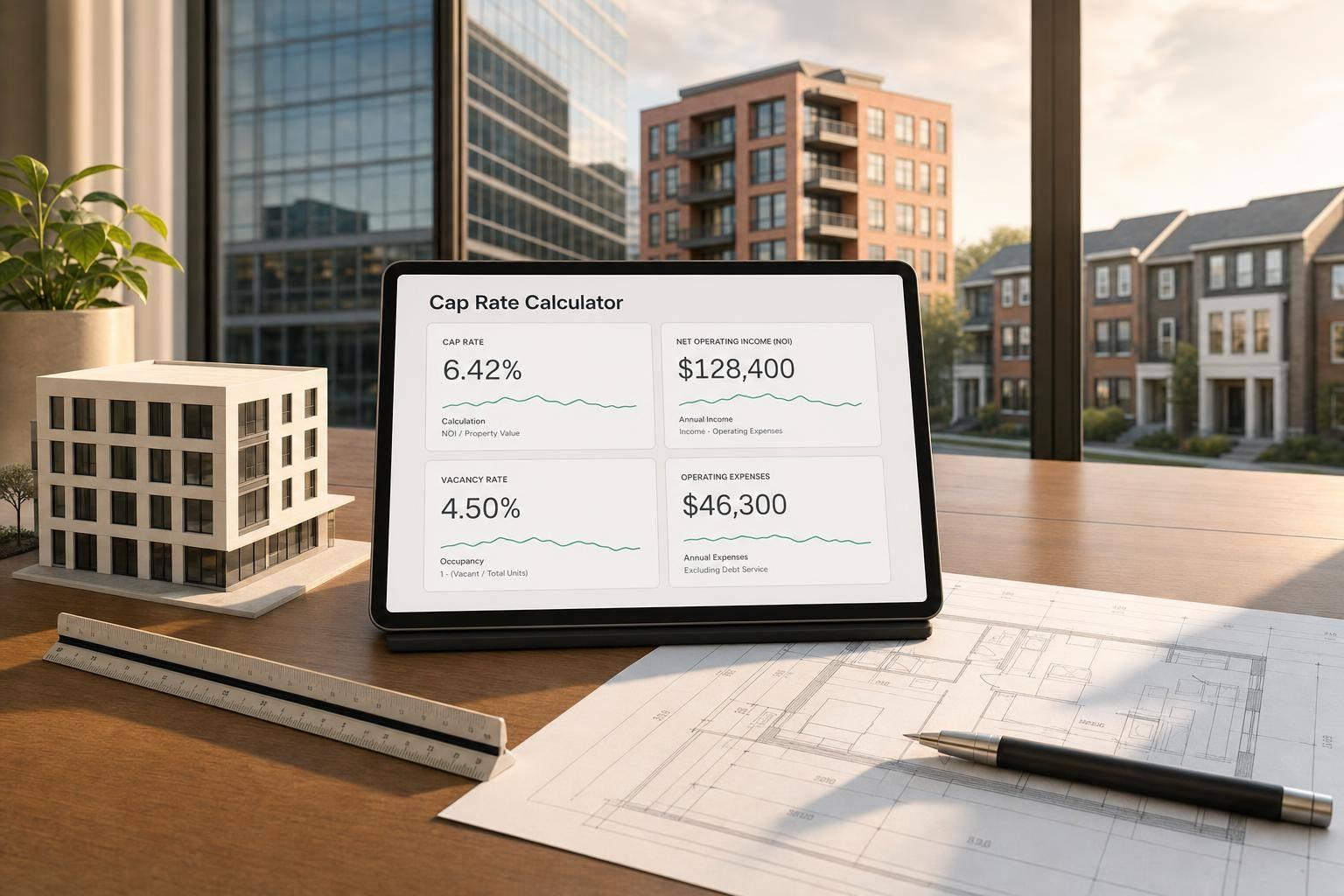
Understand Property Income Faster
A Cap Rate Calculator gives you a quick way to measure how efficiently a property produces income relative to its value. For both residential rentals and commercial real estate, that number can help you compare opportunities without getting lost in a full underwriting model.
What the Calculator Uses
This tool starts with the basics: property value, rental income, other income, vacancy, and annual operating expenses. From there, it estimates vacancy loss, calculates effective gross income, and determines net operating income. If you already know NOI, you can enter it directly and skip the intermediate steps.
Why It Helps
A reliable cap rate calculator saves time when you're reviewing listings, checking broker assumptions, or analyzing a deal from your own numbers. It also keeps the math consistent, which matters when you're comparing several properties side by side. Clear outputs like NOI, expense totals, and cap rate percentage make it easier to spot how changes in rent, vacancy, or expenses affect overall performance.
Better Real Estate Analysis, Less Friction
Whether you're evaluating a duplex, apartment building, retail space, or office asset, this real estate return tool gives you an immediate snapshot of property income performance. It's simple enough for quick checks and detailed enough for practical day-to-day analysis.
FAQs
What is cap rate, and why does it matter?
Cap rate, short for capitalization rate, measures a property's net operating income as a percentage of its value or purchase price. It's a quick way to compare income-producing properties on a similar basis. A higher percentage can indicate stronger income relative to price, while a lower percentage can reflect lower income relative to value, but context always matters, including location, property condition, tenant quality, and market risk.
Does cap rate include mortgage payments or financing?
No. Cap rate is based on net operating income before debt service, which means mortgage payments, loan interest, and financing terms are not part of the calculation. That's intentional, because cap rate is meant to evaluate the property itself rather than the specific way a buyer chooses to finance it. If you want to analyze cash flow after financing, you'd use additional metrics beyond cap rate.
Should I enter NOI directly or let the calculator compute it?
Either approach works. If you already have a reliable NOI figure from a rent roll, broker package, or underwriting model, entering it directly is the fastest option. If not, building NOI from rental income, other income, vacancy, and operating expenses gives you a more transparent view of how the number is formed, which can be especially helpful when reviewing assumptions or comparing multiple properties.


