


DSCR Cash-Out Refinance 2026: Fund Your Next Rental
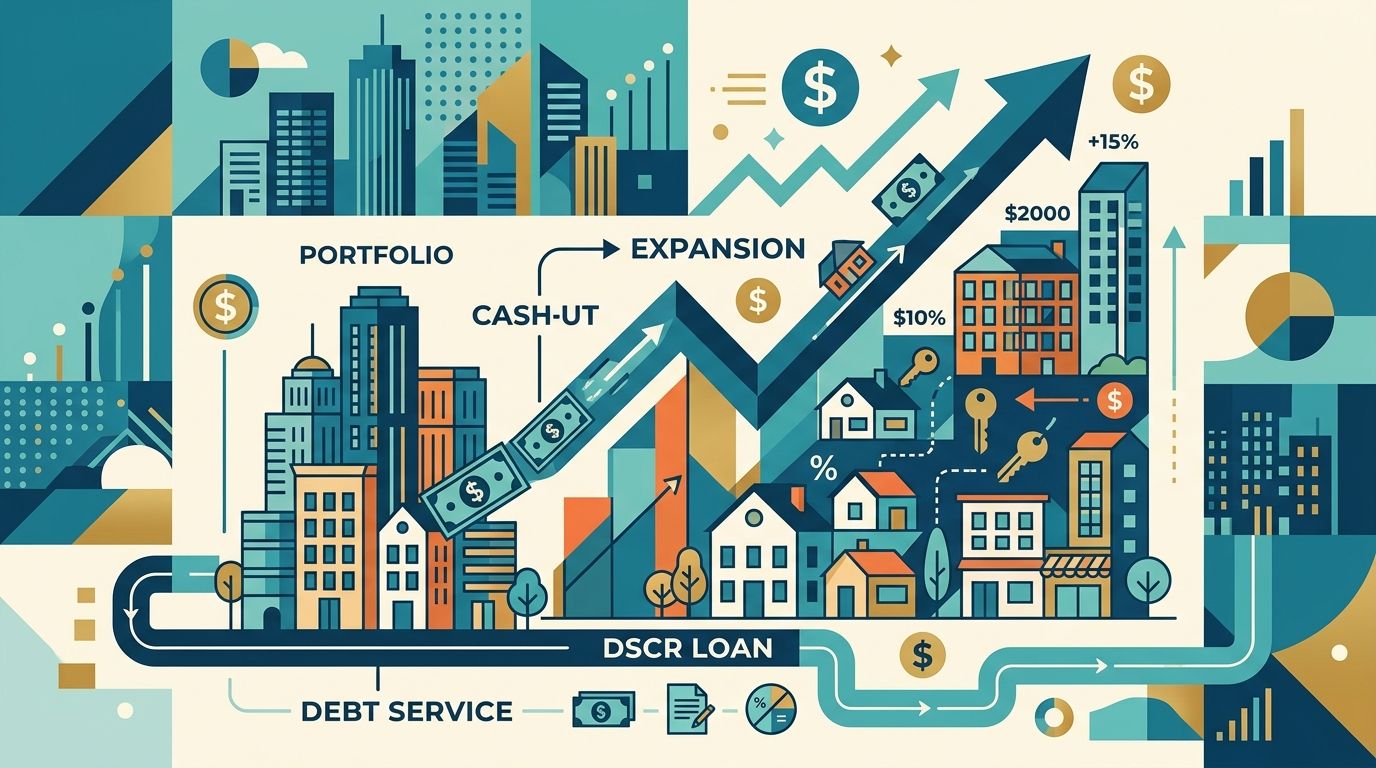
Portfolio expansion investors use a DSCR cash-out refinance to convert equity sitting in a performing rental property into cash for the next down payment, and the underwrite runs on rent, not personal income. In 2026, that distinction matters more than ever: a W-2 or tax-return-based lender stalls a file for weeks while an investor with three properties under contract needs capital to move now.
What separates this segment from a homeowner doing a cash-out refi on a primary residence is scale and repetition. A portfolio investor isn't refinancing once every seven years — they're often refinancing two or three properties a year to keep buying, which means the DSCR math, the seasoning clock, and the reserve requirement all have to work across a portfolio, not a single house.
TL;DR
- DSCR cash out refinance pulls equity from a rental property based on rent, not personal income tax returns.
- LoanGuys structures DSCR cash-out refinances up to a typical 70-75% LTV for investors scaling rental portfolios in 2026.
- Blanket refinance consolidates several rentals into one DSCR loan; per-property cash-out keeps more flexibility to sell one asset later.
- Minimum DSCR of 1.00x to 1.25x is standard across most 2026 non-QM programs; fall below that and pricing worsens fast.
Why DSCR cash-out refinance matters for portfolio expansion investors
Most active investors hold properties inside an LLC or a handful of LLCs, which knocks them out of conventional cash-out refinance programs entirely — those loans are built for individuals on title, not entities. A DSCR loan for LLC-owned rental properties closes on rent and title as-is, which is exactly the structure a portfolio investor needs when the next acquisition is under contract in 30 days.
Speed is the other half of the argument. A portfolio investor refinancing to fund a down payment is racing a closing date on a separate deal, not shopping leisurely for a lower rate. A DSCR cash-out refinance that skips income verification typically closes faster than a bank statement or full-doc loan, because there's no payroll department to call and no two years of returns to reconcile.
How to run a DSCR cash-out refinance for portfolio growth
Calculate the equity you can actually pull
Start with the appraised value, not the price you paid three years ago — rents and values have both moved since then. Most lenders won't let you touch 100% of the difference between value and loan balance.
- Current appraised or estimated market value
- Existing loan payoff balance
- Loan-to-value cap, typically 70-75% for a DSCR cash-out program
- Reserve requirement the lender holds back after closing
- Seasoning period since the last purchase or refinance
Confirm the rental income clears the new DSCR test
The DSCR ratio is gross rental income divided by the new loan's total housing payment (principal, interest, taxes, insurance, association dues). A ratio of 1.00x means rent exactly covers the payment; most 2026 programs want 1.00x to 1.25x before pricing gets favorable.
- Signed lease or market rent schedule from an appraiser
- Total PITIA on the proposed new loan amount
- Target DSCR ratio for the specific program (1.00x-1.25x is standard)
- Vacancy factor if the unit sits between tenants
- How short-term rental income gets averaged or discounted
Decide between a per-property refinance and a blanket structure
If you're pulling equity from four or five doors at once, refinancing each one separately means four or five sets of closing costs and four separate appraisals. A blanket mortgage lender working with growing rental portfolios rolls multiple properties under one note instead.
- Number of properties involved in the refinance
- Cross-collateralization risk if one property underperforms
- Whether you need a release clause to sell one asset later
- Total closing cost across one loan versus several
- Appetite for keeping properties independently financeable
Line up documentation before requesting a term sheet
A DSCR cash-out refinance skips personal income docs, but the file still needs paperwork on the asset and the entity.
- Current leases or a rent-ready market rent letter
- LLC operating agreement and EIN documents if entity-owned
- Appraisal order and access coordination with tenants
- Current insurance binder naming the new lender
- Title report confirming vesting matches the borrowing entity
Model the new payment against portfolio cash flow
Don't just check whether one property clears DSCR — check whether the new payment still leaves the portfolio's net cash flow where you want it. An interest-only DSCR loan built for cash flow investors lowers the monthly payment and can push a marginal DSCR ratio into approvable territory.
- Interest-only payment option versus fully amortizing
- Prepayment penalty structure and its length
- Stress test the payment at a higher rate scenario
- Reserve balance remaining after closing costs and cash-out
- Impact on portfolio-wide DSCR if you refinance again in 2026
Time the closing around the next acquisition
Capital sitting in an account earning nothing defeats the purpose. Coordinate the refinance closing so the cash lands before the earnest money deadline on the next contract, not after.
- Earnest money and inspection contingency deadlines on the next deal
- Appraisal turnaround time on the refinance file
- Rate lock window and whether it needs an extension
- Confirmation the seasoning requirement is actually met
- Contract contingencies tied to financing on the new purchase
Redeploy the capital and repeat the cycle
Once funds hit the account, the discipline that got you here matters more than the payout itself.
- Direct the cash-out proceeds toward the next down payment
- Keep a reserve buffer instead of deploying every dollar
- Track DSCR ratio across the whole portfolio, not just the refinanced asset
- Avoid stripping so much equity that one property carries negative leverage
- Set a rough timeline for when the next refinance becomes viable
Talk through your portfolio numbers
Get LTV and DSCR estimates before you order an appraisal.
Comparing your cash-out options for portfolio growth
DSCR cash-out refinance
- Best for: Investors who want speed and no personal income docs
- Key limitation: Requires DSCR of roughly 1.00x-1.25x depending on the program
Blanket cash-out refinance
- Best for: Investors pulling equity from 3+ properties at once
- Key limitation: Cross-collateralizes properties; selling one gets more complex
HELOC on a rental property
- Best for: Investors who want a revolving line instead of a lump sum
- Key limitation: Variable rate and stricter LTV limits on non-owner-occupied units
Home equity loan
- Best for: Investors who want a fixed second lien without refinancing the first
- Key limitation: Adds a second payment stacked on top of the existing mortgage
Rate-and-term refinance
- Best for: Investors who only want a lower rate, not cash out
- Key limitation: Doesn't put capital in your hand for the next purchase
Verdict: a DSCR cash-out refinance is the right call for a portfolio investor who has a rental clearing 1.00x DSCR or better and a next deal lined up — it's the wrong call for someone chasing a lower rate with no acquisition plan.
Common mistakes portfolio expansion investors make
- Refinancing properties one at a time out of habit, stacking closing costs instead of exploring a blanket structure once the portfolio hits three or more doors.
- Ignoring vacancy or rent-ready status on a short-term rental and getting surprised when the appraiser uses a discounted market rent instead of last year's Airbnb revenue.
- Pulling the maximum LTV every time, leaving no reserve and pushing the next property's DSCR ratio below the 1.00x line.
- Letting entity vesting drift from title — the LLC on the deed doesn't match the LLC on the loan application, which stalls closing during document review.
- Refinancing before the seasoning period ends, then getting quoted a worse rate or LTV cap than expected.
A DSCR cash-out refinance only works if the new rent still clears the new payment by a comfortable margin.
FAQ
What is a DSCR cash-out refinance?
A DSCR cash-out refinance replaces an existing loan on a rental property with a new, larger loan based on the property's rental income rather than the owner's personal income, and pays the difference out in cash. Qualification runs on the debt service coverage ratio instead of tax returns or pay stubs.
How much equity can I pull with a DSCR cash-out refinance in 2026?
Most 2026 DSCR cash-out programs cap the new loan at 70-75% of the appraised value. The exact number depends on the DSCR ratio the rent supports and the specific lender's guidelines.
Is a DSCR cash-out refinance better than a HELOC for portfolio expansion?
A DSCR cash-out refinance delivers a lump sum at a fixed rate on a new first-lien loan, while a HELOC adds a revolving second lien at a variable rate. Investors funding a specific down payment usually prefer the lump sum; investors who want flexible, repeated draws lean toward a HELOC.
Can I do a DSCR cash-out refinance on a property owned by an LLC?
Yes, DSCR programs are built to close with an LLC or other entity on title, unlike most conventional cash-out refinances. Documentation on the entity, not the owner's income, drives the underwrite.
What DSCR ratio do I need to qualify for a cash-out refinance?
Most 2026 non-QM DSCR cash-out programs want a ratio of 1.00x to 1.25x, meaning rent covers 100% to 125% of the new payment. Ratios below 1.00x are sometimes still approvable through no-ratio programs, but pricing runs higher.
Should I refinance each rental property separately or use a blanket loan?
Refinance separately if you might sell individual properties soon or want each asset independently financeable. Use a blanket structure once you're refinancing three or more properties at the same time and want one closing instead of several.
How fast does a DSCR cash-out refinance close?
A DSCR cash-out refinance generally closes faster than a full-doc or bank statement loan because there's no personal income verification step. The appraisal and title work, not payroll or tax return review, become the main timeline drivers.
Can I use DSCR cash-out proceeds as a down payment on another property?
Yes, that's the standard use case for portfolio expansion investors. Coordinate the refinance closing date against the earnest money deadline on the next contract so the cash lands in time.
One last thing
Each DSCR cash-out refinance recalculates independently on that single property's rent and value, so a portfolio investor who clears 1.15x today doesn't have to wait for the whole portfolio to season before pulling equity from the next asset in 2026. That's the real advantage over a blanket agency refinance: rising rents on one door can fund the down payment on the next one without touching the rest of the portfolio.


