


Commercial Real Estate Loans for Cannabis Dispensaries 2026
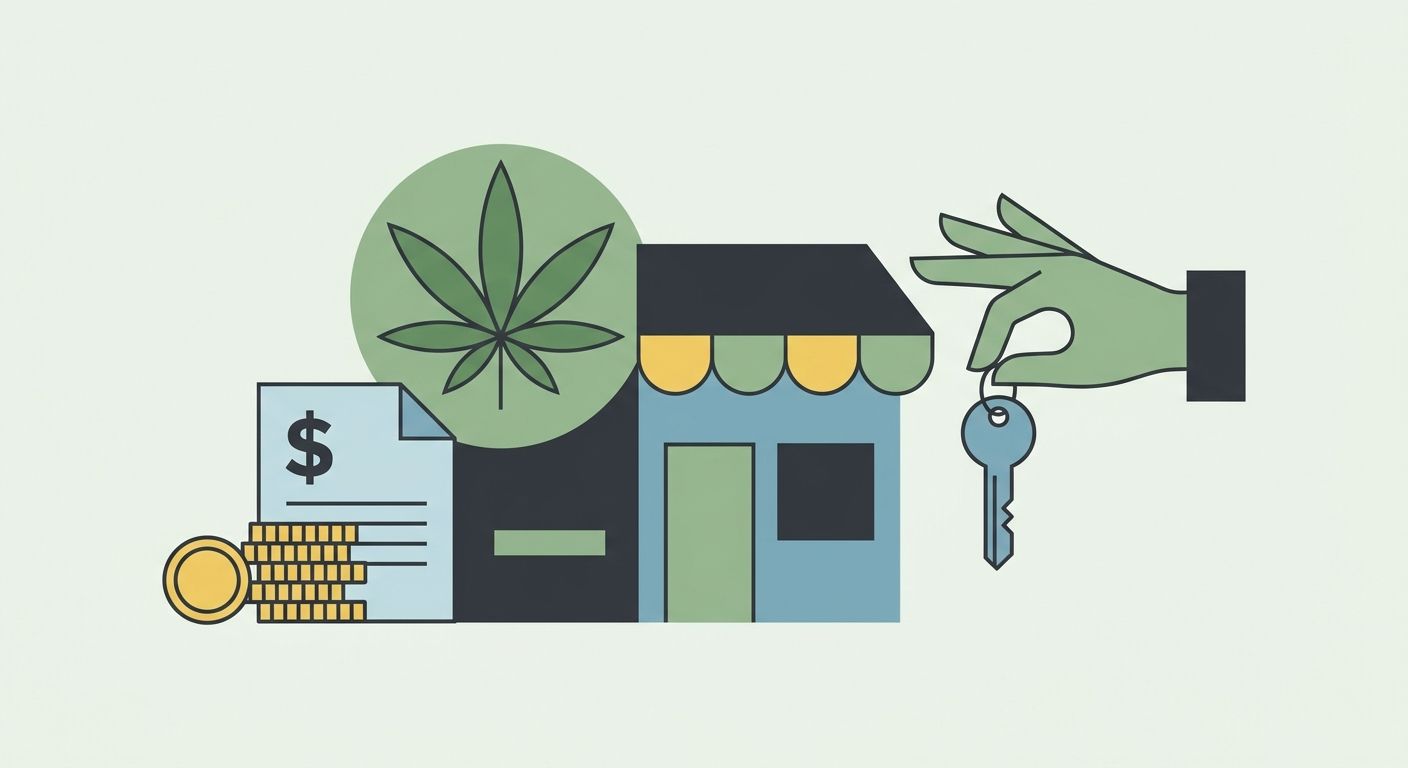
Cannabis dispensary owners buying or refinancing retail real estate face a financing market that looks nothing like standard commercial real estate lending, because federal law still classifies cannabis as a Schedule I substance and most banks and SBA programs won't touch the collateral or the tenant. Commercial real estate loans for cannabis dispensaries in 2026 come almost entirely from private lenders, bridge lenders, and DSCR-style programs that underwrite the property and lease income rather than the plant-touching business itself.
TL;DR
- Commercial real estate loans for cannabis dispensaries in 2026 mostly come from private and bridge lenders, not banks or SBA.
- SBA loan programs exclude marijuana-related businesses outright due to federal Schedule I status.
- DSCR-style financing works only when the loan is structured around lease income to the landlord, not the dispensary's plant-touching revenue.
- IRC Section 280E strips normal business deductions from dispensaries, which distorts cash flow numbers lenders rely on.
- Bridge loans close faster than conventional financing and fit acquisition timelines dispensary landlords can't stretch out.
Why commercial real estate loans matter for cannabis dispensary property
A dispensary lease is not a normal retail lease in a lender's eyes. Underwriters have to evaluate zoning compliance, local licensing caps, tenant turnover risk if a license gets revoked, and the fact that federally chartered banks can face regulatory exposure just for holding the deposit relationship, let alone the mortgage.
That pushes dispensary property owners toward the same corner of the lending market as other cash-intensive, federally restricted, or hard-to-document businesses: private capital, commercial real estate loans for gas stations and convenience stores style lenders, and bridge financing built around real estate fundamentals instead of a business's tax returns. Investors who wait until they're under contract to start these conversations lose deals to buyers who lined up financing first.
Confirm zoning and licensing status before you shop lenders
Most commercial lenders will kill a deal the moment a title search or zoning letter flags an unresolved cannabis use question. Handle this before you approach anyone.
- Pull the local zoning overlay and confirm the parcel is inside an approved cannabis retail district
- Verify the dispensary's state license is active and tied to the exact address on the deed
- Check for a local cap on dispensary licenses per zip code or per population threshold
- Confirm buffer-distance rules from schools, parks, and churches are met at current property lines
- Get written confirmation from the municipality that no moratorium or pending ordinance affects the parcel
Separate real estate income from plant-touching revenue
Lenders that will finance dispensary real estate almost always want the loan structured around the lease, not the retailer's sales.
- Draft or review the lease to show a fixed rent figure independent of dispensary sales volume
- Avoid percentage-rent clauses tied to cannabis revenue if you want conventional-style underwriting
- Keep the landlord entity legally and financially separate from the dispensary operator
- Document the tenant's time in business and license renewal history, not just its sales figures
- Have a backup-tenant plan ready in case the current operator loses its license
Build in the 280E tax reality when you model cash flow
Section 280E of the federal tax code disallows standard business deductions for companies trafficking a Schedule I substance, which inflates a dispensary operator's taxable income and shrinks the coverage ratio a lender calculates from tax returns.
- Ask the tenant for internal P&L statements, not just filed tax returns, when assessing rent-paying capacity
- Stress-test the debt service coverage ratio assuming 280E-adjusted net income, not gross sales
- Factor a cash reserve requirement into the loan structure rather than relying on thin post-tax margins
- Have the borrower show 6-12 months of bank statements to confirm real cash flow behind the lease payment
- Get a third-party appraisal that prices the real estate on comparable retail use, not the cannabis business value
Line up private or bridge financing before you're under contract
Because banks and SBA lenders sit out this segment almost entirely, speed and lender relationships matter more than rate shopping once you find a property.
- Get pre-qualified with a private or bridge lender before making an offer, not after
- Ask upfront whether the lender excludes properties with any cannabis tenant, plant-touching or not
- Compare loan-to-value expectations across lenders since cannabis retail often carries lower LTV ceilings than standard retail
- Confirm whether the lender requires the landlord entity to disclose the tenant's business type on the application
- Review loan options without tax returns if the property income documentation is thin or the ownership structure is complicated
Get an appraisal built on real cannabis retail comparables
An appraiser who pulls generic retail comps will misprice a dispensary building, because the pool of comparable sales is smaller and often reflects premium pricing for licensed-use zoning.
- Request an appraiser with documented experience valuing cannabis-zoned or cannabis-leased retail
- Ask for comps within the same municipality or licensing jurisdiction whenever possible
- Flag any income approach that assumes standard retail rent growth rather than dispensary-market rent growth
- Cross-check the appraisal against recent local dispensary lease renewals, not just sale prices
Negotiate loan terms around your exit before you sign
Dispensary real estate deals change fast if a state changes licensing rules or a tenant's license lapses. Build flexibility into the loan from day one.
- Ask about prepayment penalties if you plan to refinance into longer-term paper once the tenant is stabilized
- Confirm whether the loan is assumable if you sell to another cannabis-friendly landlord
- Negotiate a renewal or extension option on bridge financing in case licensing delays push your timeline
- Get clarity on what happens to the loan if the current tenant's license is revoked mid-term
Financing options compared for dispensary real estate
Private/hard money loan
- Best For: Fast acquisition of a dispensary-leased property
- Key Limitation: Shorter terms, requires a clear exit or refinance plan
Seller financing
- Best For: Buyers where the seller is motivated and cannabis-friendly
- Key Limitation: Depends entirely on seller willingness, not always available
Sale-leaseback
- Best For: Existing dispensary owners needing capital from owned real estate
- Key Limitation: Owner gives up direct control of the property
Bridge loan (real estate-based underwriting)
- Best For: Investors buying property with a stable dispensary lease already in place
- Key Limitation: Many bridge lenders still exclude plant-touching tenants outright
SBA 7(a) / 504
- Best For: Not applicable to dispensary real estate
- Key Limitation: SBA policy excludes marijuana-related businesses due to federal Schedule I status
Talk through your dispensary property deal
Get a read on bridge and DSCR-style options before you make an offer.
Common mistakes dispensary property buyers make
- Assuming a DSCR loan will price like any other retail property without accounting for cannabis-specific LTV restrictions most lenders apply
- Ignoring 280E when running the numbers, then getting surprised when the coverage ratio a lender calculates looks worse than the tenant's actual cash position
- Waiting until under contract to start lender conversations, which burns the due diligence window and often kills financing timelines entirely
- Skipping zoning verification before ordering an appraisal, paying for a report the deal can't use once a zoning conflict surfaces
- Treating the cannabis business value and the real estate value as one number, which confuses both the appraisal and the loan structure
Financing options change fast as state cannabis programs mature and lenders adjust their appetite; a lender that excluded dispensary tenants in 2024 may underwrite them differently in 2026 as the market matures.
FAQ
Can you get a bank loan for cannabis dispensary real estate in 2026?
Traditional banks rarely finance cannabis dispensary property in 2026 because federally chartered institutions face regulatory exposure tied to cannabis's Schedule I status. Most dispensary property buyers use private lenders, bridge loans, or seller financing instead.
Do SBA loans work for cannabis dispensary properties?
No. SBA policy excludes marijuana-related businesses from its loan programs due to federal law, regardless of state legalization. This applies to both the dispensary operator and, in most cases, the landlord entity leasing to one.
What is the best commercial real estate loan for cannabis dispensaries?
A bridge loan or DSCR-style loan structured around the property's lease income, rather than the dispensary's sales, is generally the fastest path to closing in 2026. The tradeoff is a lower loan-to-value ceiling than standard retail financing.
How does 280E affect dispensary property financing?
Section 280E disallows standard business deductions for cannabis operators, which inflates taxable income on filed returns and can distort the debt service coverage ratio a lender calculates. Lenders that understand cannabis retail typically ask for internal financials, not just tax returns.
Is seller financing common for dispensary property purchases?
It happens more often than in mainstream retail because sellers who already understand the cannabis market are more willing to carry paper. It depends entirely on the individual seller's motivation and risk tolerance.
What loan-to-value should I expect for a dispensary-leased property?
Cannabis retail generally carries a lower LTV ceiling than standard commercial retail because fewer lenders compete for the risk. Exact terms vary by lender and by whether the tenant's license and lease terms are stable.
Can I refinance a dispensary property once the tenant is stabilized?
Yes, and many investors use a bridge loan specifically to buy time until the tenant has a longer license and lease history, then refinance into longer-term financing. Confirm prepayment terms on the bridge loan before closing so refinancing doesn't trigger a penalty.
Does the type of cannabis license affect financing options?
Yes. Retail dispensary licenses, cultivation licenses, and manufacturing licenses carry different risk profiles for lenders, and retail dispensary real estate is generally the easiest of the three to finance because the use is most comparable to standard retail.
One last thing
The single biggest underwriting variable in dispensary real estate isn't the lease rate or the zoning letter, it's whether the loan is structured around the property's income or the operator's sales. Get that distinction wrong with a lender and the deal dies in underwriting no matter how strong the location is.


