


Commercial Real Estate Loans for Cold Storage 2026
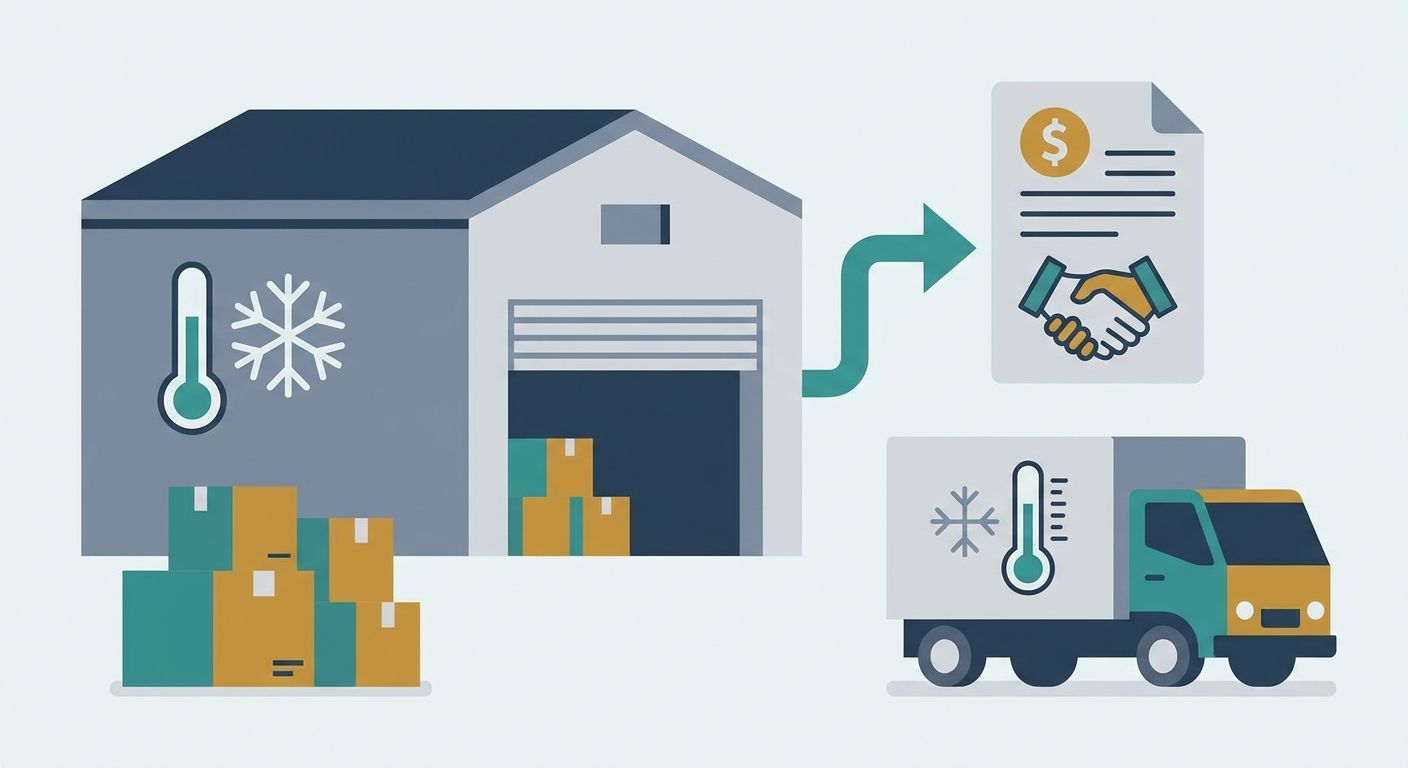
Cold storage warehouses are the fastest-growing asset class in industrial real estate, and traditional bank underwriting still treats them like generic warehouse space — which is exactly why financing gets denied. This guide breaks down which commercial real estate loans actually work for refrigerated and frozen storage facilities in 2026.
TL;DR
- DSCR loans work best for stabilized cold storage with signed tenant leases — Buy for cash-flowing facilities.
- Bridge loans cover value-add conversions and refrigeration upgrades in 2026 — Consider if you need 12-36 month flexibility.
- SBA 504 loans fit owner-occupied cold storage operators up to 90% financing — Consider for owner-users only.
- Asset-based lending skips tax return underwriting for portfolio investors with multiple facilities — Buy for scaling operators.
- Skip conventional bank term loans for specialized refrigeration equipment — most banks won't finance the compressors and racking separately.
Why this matters
Cold storage isn't a shed with a thermostat. Lenders classify it as specialized-use industrial, which means appraisals cost more, insurance runs higher, and standard warehouse comps don't apply.
A bank that happily finances a dry-goods warehouse at 75% LTV will often cap a cold storage deal at 65% because the refrigeration systems, insulated panels, and dock equipment depreciate faster and cost more to replace. Get financing structured for the asset type from the start and you avoid a mid-underwriting rate re-quote.
Who this is for
This guide is built for real estate investors and operators acquiring, refinancing, or building out cold storage and refrigerated warehouse facilities — whether you're buying a 20,000-square-foot food distribution facility, converting dry warehouse space into freezer capacity, or refinancing a stabilized facility leased to a single food-service tenant. If you're comparing loan programs against a loans for warehouse and industrial property investors framework, cold storage sits at the specialized end of that spectrum and needs its own underwriting approach.
What to look for in commercial real estate loans for cold storage warehouses
Lender experience with specialized industrial
Most regional banks have never underwritten a cold storage deal and will price it like generic flex space, which usually means a lower LTV offer than the property deserves. A lender who's closed refrigerated facility loans before knows how to value racking systems and compressor capacity as part of the collateral, not as depreciating equipment to discount away.
DSCR flexibility for equipment-heavy properties
Cold storage facilities carry higher operating expenses than dry warehouses — electricity for refrigeration alone can run 3-5x a standard warehouse's utility cost. A DSCR loan program that calculates debt service coverage using actual net operating income, rather than a generic industrial expense ratio, gives you a more accurate qualifying number.
Loan-to-value ceiling on specialized use
Expect LTV caps of 65-70% on cold storage in 2026, lower than the 75-80% you'd see on a standard warehouse. Confirm this number before you get attached to a purchase price, because a 10-point LTV gap changes your down payment by hundreds of thousands of dollars on a mid-size facility.
Prepayment and rate lock terms
Cold storage deals often take longer to close than typical commercial purchases because refrigeration equipment inspections add weeks to due diligence. A rate lock that expires in 30 days is a problem if your equipment inspection alone takes three weeks.
Refinance path for conversions
If you're converting dry warehouse space into cold storage, your acquisition loan is usually a bridge loan, and you need a clear exit into permanent DSCR or conventional financing once the facility stabilizes. Ask upfront how the lender treats the transition, not after you've already drawn the construction budget.
Tenant and lease structure fit
Cold storage facilities leased to a single food distributor or third-party logistics tenant on a triple net lease look different to underwriters than multi-tenant flex space. Loan programs built around triple net lease commercial property investors often price more favorably when your cold storage tenant carries a long-term NNN lease.
Get matched with a cold storage lender
Talk through DSCR, bridge, and SBA options for your facility.
Top picks for cold storage financing
The safe pick: DSCR loans for stabilized facilities
DSCR loans qualify you on the property's net operating income instead of your personal tax returns, which matters when a cold storage facility's income comes from a single anchor tenant lease. Minimum DSCR requirements typically sit at 1.20x in 2026, and LTV caps run 65-70% on specialized industrial collateral. If your facility already has a signed lease and stabilized cash flow, this is the program most lenders offer for warehouse and industrial property investors with cold storage assets. Buy for any leased, income-producing facility.
The wildcard: bridge loans for conversions and upgrades
Bridge loans fund the gap between buying a raw or underperforming facility and having it stabilized enough for permanent financing. Terms run 12 to 36 months, and they're built for the exact scenario of converting dry warehouse space into refrigerated capacity or upgrading an aging cold storage building's compressors and insulation. Read the bridge loan process for commercial property purchases before you assume this is a last-resort option — it's often the fastest close for a competitive cold storage deal. Consider if you have a clear stabilization plan and exit within three years.
The owner-user pick: SBA 504 loans
If you operate a food distribution or processing business and plan to occupy the cold storage facility yourself, SBA 504 loans finance up to 90% of the purchase price with long-term, below-market fixed rates. This program is built for owner-occupants, not passive investors — you need to occupy at least 51% of the space. Compare structures against SBA lenders for real estate investment properties to see how the owner-occupied requirement changes your underwriting path. Consider for owner-operators only; Skip if you're buying purely as a landlord.
The scale pick: asset-based lending for portfolio operators
If you already own two or more cold storage or industrial facilities and want to keep expanding without producing three years of tax returns per deal, asset-based lending qualifies you on the collateral and portfolio performance instead. This is the program that lets high-volume operators close their fourth or fifth facility on the same timeline as their first. Details on structuring this against a broader portfolio live at asset-based lenders for real estate investors. Buy if you're scaling a multi-facility portfolio.
The one to skip: conventional bank term loans
Standard bank term loans, the kind sized for a generic office building or retail strip, routinely undervalue refrigeration equipment as depreciating personal property rather than real estate collateral. That mismatch drags your appraised value down and your required down payment up. Skip unless your bank has a documented track record closing cold storage deals specifically.
What to avoid
- Lenders quoting warehouse rates without a cold storage adjustment. If the quote doesn't mention refrigeration equipment or utility load, it's priced for the wrong asset.
- Short rate locks on complex deals. A 30-day lock rarely survives the extended due diligence a refrigerated facility requires.
- Ignoring the exit on a bridge loan. A conversion project without a confirmed refinance path into DSCR or SBA financing leaves you exposed when the bridge term ends.
Verdict comparison
DSCR Loan
- Best For: Stabilized, leased facilities
- Typical LTV: 65-70%
- Verdict: Buy
Bridge Loan
- Best For: Conversions, upgrades
- Typical LTV: Up to 70% (as-is)
- Verdict: Consider
SBA 504
- Best For: Owner-occupied operators
- Typical LTV: Up to 90%
- Verdict: Consider
Asset-Based Lending
- Best For: Multi-facility portfolios
- Typical LTV: 65-70%
- Verdict: Buy
Conventional Bank Term Loan
- Best For: Generic warehouse only
- Typical LTV: Varies, often overcautious on cold storage
- Verdict: Skip
FAQ
What's the best loan for buying a cold storage warehouse in 2026?
A DSCR loan is the best fit for a stabilized, leased cold storage facility in 2026, since it qualifies you on the property's income rather than personal tax returns. Bridge loans work better for facilities that need conversion or upgrades before they stabilize.
Is a bridge loan better than a DSCR loan for cold storage conversions?
Yes, for conversions specifically — bridge loans fund the 12 to 36 month window needed to install refrigeration and stabilize occupancy, then you refinance into a DSCR loan. A DSCR loan alone can't fund a property with no operating income yet.
How much does it cost to finance a cold storage warehouse?
Expect a loan-to-value ceiling of 65-70% on most cold storage deals in 2026, meaning you'll need 30-35% down versus the 20-25% typical on standard warehouse financing. Owner-occupants using SBA 504 can finance up to 90%.
Can I get an SBA loan for a cold storage facility?
Yes, if you occupy at least 51% of the space as your own business's operations. SBA 504 loans are not available to passive investors leasing the entire facility to a third party.
What DSCR do I need to qualify for a cold storage loan?
Most lenders set a minimum DSCR of 1.20x for specialized industrial and cold storage properties in 2026. Facilities with long-term NNN leases to established food distributors often qualify more easily at this threshold.
Do cold storage warehouses need a specialized appraisal?
Yes. Refrigeration equipment, insulated panel construction, and compressor capacity require an appraiser with cold storage experience, and generic warehouse comps will undervalue the property.
Can I finance a dry warehouse-to-cold storage conversion?
Bridge loans are the standard tool for this in 2026, covering the purchase and renovation budget with a 12 to 36 month term, then refinanced into permanent DSCR or SBA financing once the facility is operational.
Are cold storage warehouses a good investment in 2026?
Demand for refrigerated and frozen storage continues to outpace supply in most metro markets in 2026, driven by grocery delivery and food distribution growth, which keeps well-located cold storage facilities leasing quickly.
One last thing
The detail most investors miss: cold storage insurance premiums run significantly higher than standard industrial coverage, and lenders factor that expense into your DSCR calculation whether you've budgeted for it or not. Get an insurance quote before you lock a rate, not after — a premium surprise can push your coverage ratio below the 1.20x line and stall your closing.


