


Commercial Property Lending Guide for Small Businesses 2026
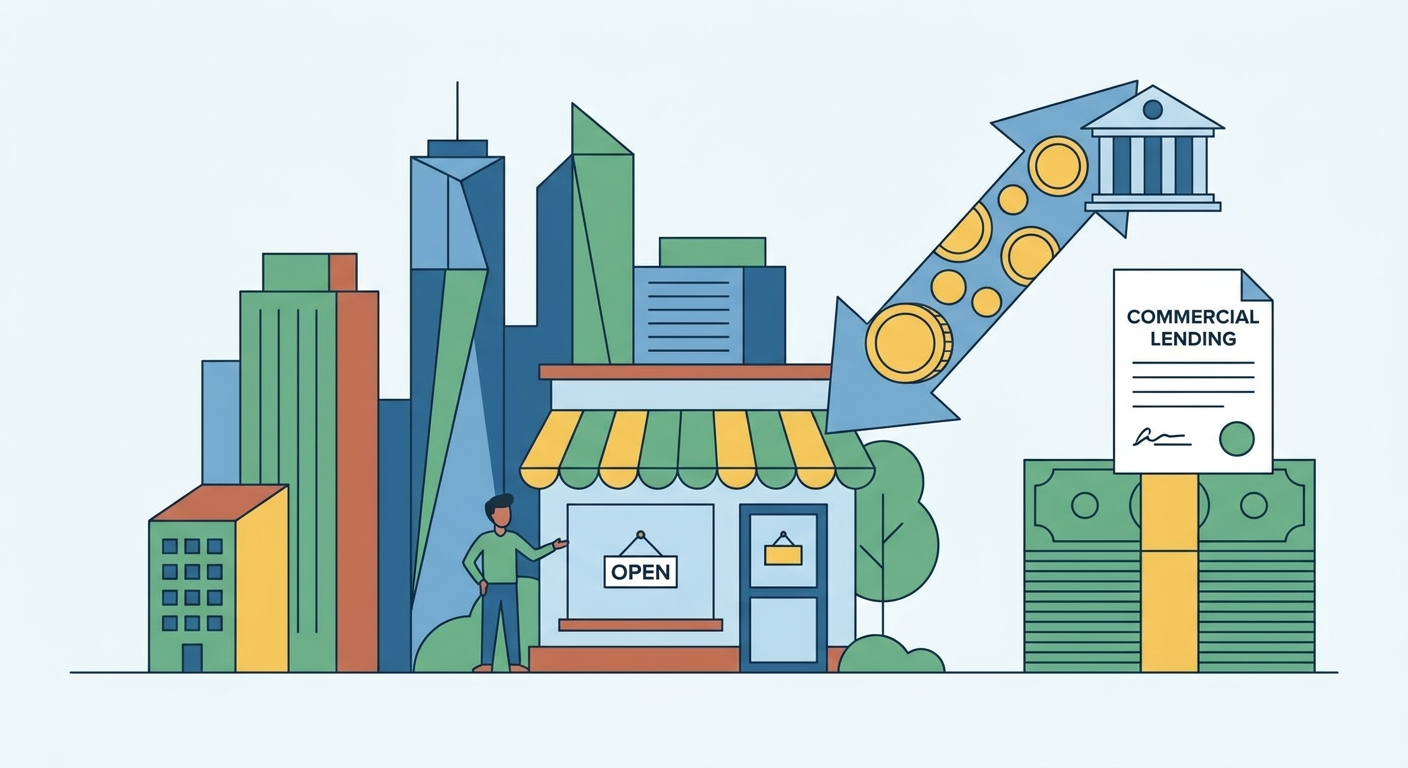
Buying the building your business runs out of beats renting it, but commercial property lending for owner-occupied small businesses works differently than a landlord's investment loan. Here's how the programs stack up in 2026 and which one fits your deal.
TL;DR
- SBA 504 loans require as little as 10% down for owner-occupied purchases in 2026 -- the default pick for most small business buyers.
- SBA 7(a) loans cover real estate plus working capital in one loan -- Consider it if you need cash beyond the building.
- Bank statement loans work when tax returns understate real income -- Buy for self-employed owners who write off heavily.
- Bridge loans close in as little as 2-3 weeks for time-sensitive deals -- Consider only when a conventional timeline kills the purchase.
- DSCR loans are built for rental income, not owner-occupied space -- Skip them for this purpose entirely.
Why this matters
A lender underwriting an owner-occupied commercial building looks at your business cash flow, not a tenant's rent roll. That single distinction changes which loan program fits, how much you put down, and how fast the deal closes.
Most small business owners default to whatever their operating bank offers and never compare structures. Loanguys.com works with programs built specifically for owner-occupiers who don't fit a conventional bank box -- self-employed borrowers, businesses with seasonal cash flow, and buyers who need speed over the lowest rate.
Who this is for
This guide is for a small business owner buying the building where the business physically operates -- a medical practice buying its office, a restaurant buying its space, a contractor buying a warehouse and yard. It's not for investors buying property to lease out to someone else's tenants; that's a different underwriting conversation entirely, built around DSCR and rent coverage instead of business income.
What to look for in commercial property lending for owner-occupied buyers
Down payment requirement
Owner-occupied CRE loans typically ask for less down than investment-property loans because the lender is underwriting an operating business, not a speculative rental. SBA 504 loans go as low as 10% down in 2026 for a standard project; conventional bank CRE loans often want 20-25%. If a program quotes you 30%+ down for an owner-occupied purchase, something about your file is triggering extra risk pricing.
Owner-occupancy percentage requirement
SBA-backed programs require the business to occupy at least 51% of the building's square footage at closing, with a plan to occupy more over time for new construction. If you're buying a building to occupy 40% and lease the rest, you've moved into a different loan category and the SBA math no longer applies.
Income documentation type
Self-employed owners who run heavy write-offs on tax returns often show less taxable income than they actually generate, which tanks a conventional debt-to-income calculation. A bank statement loans for small business owners program qualifies you off deposits instead of net income on a 1040, which is the difference between approval and denial for a lot of profitable but tax-optimized businesses.
Rate structure and reset risk
SBA 504 debentures fix the long-term portion of the rate; the bank's first-lien piece can be fixed or variable depending on the lender. Conventional bank CRE loans frequently carry a 5-year or 7-year fixed rate that resets to market at maturity -- know your reset date before you sign, not when the notice arrives.
Closing timeline
SBA 504 and 7(a) loans typically take 45-75 days to close given the extra underwriting layers. If a seller deadline, lease expiration, or competing offer won't wait that long, a bridge loan built for owner-occupied purchases can close faster and get refinanced into permanent financing afterward.
Prepayment penalty and lockout
SBA 504 loans carry a declining prepayment penalty for roughly the first half of the loan term. If you expect to sell or refinance the building within 5 years, that penalty schedule matters more than the headline rate.
Top picks for owner-occupied commercial property lending
SBA 504 loan -- the low-down-payment pick
Structured as two loans stacked together: a bank first mortgage around 50% loan-to-value and a Certified Development Company second mortgage backed by the SBA. Down payment runs as low as 10% in 2026 for an established business buying an existing building, rising to 15-20% for special-use properties or startups. Best for owners with strong business financials who want to minimize cash out of pocket on a straightforward purchase. Verdict: Buy for most owner-occupied purchases where the down payment matters more than closing speed.
SBA 7(a) loan -- the flexible pick
A single loan that can fund the real estate purchase, renovations, equipment, and working capital together, up to $5 million in 2026. It carries a higher rate than 504 financing but skips the two-loan structure and gives you flexibility to fund more than just the building. Review the best SBA lenders for real estate investment properties options if your purchase needs cash beyond the four walls. Verdict: Consider when you need combined real estate and business capital in one closing.
Bank statement loan -- the self-employed pick
Qualifies you using 12-24 months of business or personal bank deposits instead of tax-return net income, which fits owners whose write-offs make their real income look thin on paper. Rates run higher than SBA programs but approval hinges on cash actually moving through your accounts, not what your accountant reported. Verdict: Buy for self-employed owners who'd otherwise get declined on documented income alone.
Bridge loan -- the fast-close pick
Short-term financing, typically 6-24 months, designed to close in weeks instead of months when a deal has a hard deadline -- an auction property, a landlord ending your lease, or a competing buyer. Read how to get a bridge loan for a commercial property purchase before assuming it's your only option; it's built to be refinanced into permanent SBA or conventional financing once the building is stabilized, not held long-term. Verdict: Consider only when timeline risk outweighs the higher rate.
Conventional bank CRE loan -- the traditional pick
Standard portfolio lending from a local or regional bank, usually requiring 20-25% down, full tax-return documentation, and a shorter fixed-rate period before a reset. Works well for owners with clean, strong financials and an existing banking relationship. Verdict: Consider if your income documents cleanly and you can absorb a larger down payment; Skip if your tax returns understate real cash flow.
Compare owner-occupied CRE loan options
Get matched to the right commercial property lending program for your business.
What to avoid
- DSCR loans marketed for "commercial property" -- these are underwritten on rental income coverage, not your business cash flow, and most DSCR programs won't touch a purchase where the borrower's own business occupies the space.
- Mixed-use financing sold as a simple owner-occupied loan -- if part of the building is retail you occupy and part is residential or leased commercial space, you need a program built for that split. The best commercial loan options for mixed-use properties breakdown covers what changes when occupancy isn't 100% your business.
- Adjustable-rate teaser loans with no rate cap disclosure -- a low year-one rate on a variable CRE loan can jump hard at the first reset; know the cap and the index before you compare it against a fixed SBA rate.
Verdict comparison
SBA 504
- Typical down payment: 10-20%
- Documentation style: Full tax returns
- Closing speed (2026): 45-75 days
- Verdict: Buy
SBA 7(a)
- Typical down payment: 10-15%
- Documentation style: Full tax returns
- Closing speed (2026): 45-75 days
- Verdict: Consider
Bank statement loan
- Typical down payment: 15-25%
- Documentation style: Bank deposits
- Closing speed (2026): 30-45 days
- Verdict: Buy for self-employed
Bridge loan
- Typical down payment: 20-30%
- Documentation style: Light documentation
- Closing speed (2026): 2-3 weeks
- Verdict: Consider for tight deadlines
Conventional bank CRE
- Typical down payment: 20-25%
- Documentation style: Full tax returns
- Closing speed (2026): 45-60 days
- Verdict: Consider / Skip by income type
FAQ
What is the minimum down payment for an owner-occupied commercial property loan?
SBA 504 loans go as low as 10% down in 2026 for an established business buying an existing building. Conventional bank commercial loans usually require 20-25% down, and special-use properties can push the SBA number to 15-20% as well.
Is an SBA 504 or SBA 7(a) loan better for buying my business's building?
SBA 504 usually wins on down payment and rate for a straightforward real estate purchase, while SBA 7(a) makes more sense if you need working capital or equipment money bundled into the same loan. Both cap out around $5 million for 504 project size and $5 million total for 7(a) in 2026.
Can a self-employed business owner get a commercial property loan without full tax returns?
Yes, bank statement loans qualify borrowers using 12-24 months of deposits instead of net income on a 1040. This fits business owners whose write-offs make their taxable income look lower than their actual cash flow.
How much square footage does my business need to occupy for an SBA loan?
SBA-backed owner-occupied loans require the business to occupy at least 51% of the building at closing. Below that threshold, the deal shifts into investment or mixed-use financing categories instead.
How fast can a commercial property loan close in 2026?
SBA 504 and 7(a) loans typically take 45-75 days to close given the extra underwriting steps. Bridge loans built for owner-occupied purchases can close in as little as 2-3 weeks when a deadline won't wait.
What credit score do I need for commercial property lending?
Most SBA and conventional bank programs look for a personal credit score in the high 600s or above, though bank statement and bridge programs can work with lower scores in exchange for a higher rate or larger down payment. Exact requirements vary by lender and loan size.
Does an SBA loan have a prepayment penalty?
SBA 504 loans carry a declining prepayment penalty for roughly the first half of the loan term, so selling or refinancing early costs money. SBA 7(a) loans also carry a prepayment penalty in the first three years if the loan term exceeds 15 years.
Can I use a DSCR loan to buy a building for my own business?
No, DSCR loans are underwritten against rental income from tenants, not your own business's cash flow, and most DSCR lenders exclude owner-occupied purchases entirely. Use an SBA, bank statement, or conventional commercial loan instead for owner-occupied space.
One last thing
The number that trips up the most owner-occupied buyers isn't the rate -- it's the 51% occupancy rule. Businesses that plan to grow into a building over a few years still need a documented occupancy plan at closing, or the SBA program falls off the table entirely and they're stuck with conventional terms and a bigger down payment.


