


Commercial Real Estate Loans for Pharmacies (2026 Guide)
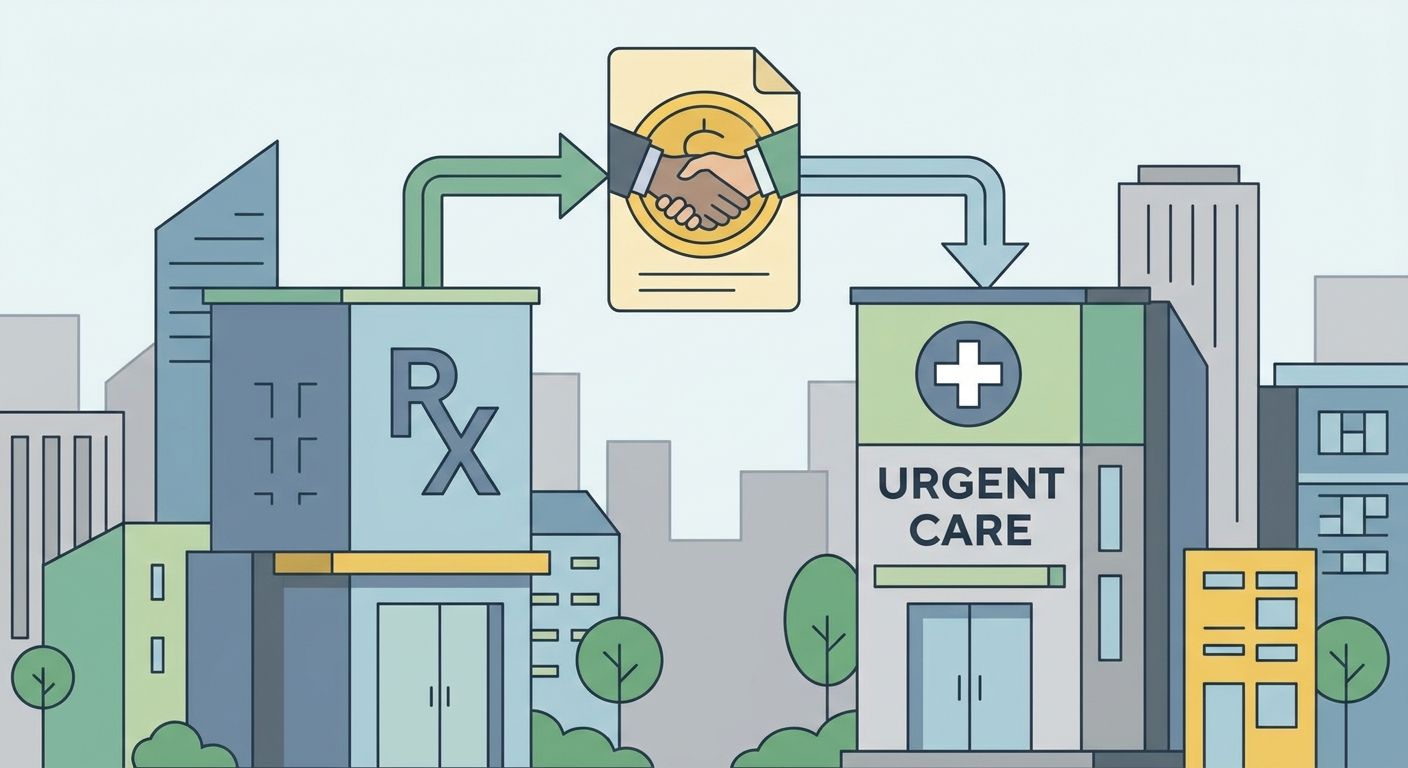
Commercial real estate loans for pharmacies and urgent care clinics finance the purchase, refinance, or buildout of retail medical space, with the goal of locking a fixed-cost occupancy rate instead of renting from a landlord who can raise rent every lease renewal. This segment carries different underwriting than a standard retail strip center because pharmacies and urgent care operators often lease to a single-tenant NNN structure, carry pharmacy inventory and DEA-licensed storage requirements, and depend on foot traffic patterns tied to insurance networks rather than general retail demand.
TL;DR
- Commercial real estate loans for pharmacies typically run 65-75% LTV with DSCR requirements near 1.20x or higher.
- SBA 504 loans work well for owner-occupied pharmacies needing as little as 10% down in 2026.
- DSCR and bank-statement loans skip tax returns entirely, which matters for pharmacy owners with heavy equipment depreciation.
- LoanGuys underwrites urgent care and retail pharmacy purchases using rent rolls, lease terms, and cash flow instead of personal income alone.
Why commercial real estate loans matter for retail pharmacies and urgent care
A pharmacy or urgent care lease renewal can swing operating costs by tens of thousands of dollars a year, and a landlord who declines to renew forces a relocation that disrupts patient records, signage recognition, and insurance panel continuity. Owning the building removes that risk entirely.
Lenders also treat this segment differently than generic retail. A single-tenant pharmacy building leased on a 15-20 year NNN structure to a national chain reads as a lower-risk asset than an independent urgent care clinic with a 5-year lease and no corporate guarantee. That distinction drives pricing, loan-to-value limits, and how much weight underwriters put on the operator's personal financials versus the real estate itself.
At LoanGuys.com, files in this category get underwritten around the property's income and lease structure first, tax returns second — which matters when a pharmacy owner's Schedule C shows heavy depreciation on refrigeration units, compounding equipment, or point-of-sale systems that make net income look thinner than actual cash flow.
Update your entity structure before you apply
Most lenders in this space want the real estate held separately from the operating business, even when the same person runs both.
- Form a single-purpose LLC to hold title to the pharmacy or clinic building
- Keep the operating pharmacy or urgent care entity as the tenant paying rent to the LLC
- Draft a market-rate lease between the two entities before closing — lenders use this lease to calculate DSCR
- Confirm the LLC's operating agreement doesn't restrict mortgage encumbrance
- Pull a current entity good-standing certificate from the state, since stale filings stall closings
Document your lease and tenant credit
Whether you're the tenant-owner or buying a building leased to a third-party pharmacy chain, the lease is the collateral story.
- Gather the full lease agreement, not just the summary abstract
- Confirm remaining lease term — most lenders want at least 5-7 years remaining on a single-tenant deal
- Check for a corporate guarantee behind the tenant, since a franchisee-only guarantee lowers the property's risk profile
- Pull the tenant's public financials if it's a national chain, or two years of P&L if it's an independent operator
- Document any rent escalation clauses, since flat rent for 10+ years can actually hurt DSCR calculations over time
Calculate your debt service coverage ratio manually first
Before talking to any lender, run the math yourself so you know what you're walking into.
- Take annual net operating income from the lease (rent minus property taxes, insurance, and any landlord-paid expenses)
- Divide by the annual debt payment on the loan amount you're requesting
- A result at or above 1.20x clears most DSCR-based commercial programs in 2026
- A result below 1.0 means the property doesn't cash flow at that loan amount — you'll need a larger down payment or a smaller ask
- Re-run the number at a 1-2 point higher interest rate to stress-test against rate movement before closing
Compare SBA financing against conventional and DSCR options
SBA 504 loans exist specifically for owner-occupied commercial real estate, and a pharmacy or urgent care clinic that occupies its own building qualifies as an eligible use.
- SBA 504 loans typically require 10% down for a standard owner-occupied purchase, sometimes 15% for a special-purpose property
- Conventional commercial mortgages usually cap at 65-75% LTV, meaning 25-35% down
- DSCR-based lending works when the tenant is a third party and the property's lease income, not the borrower's personal income, drives approval
- SBA loans require full tax return documentation and a longer approval runway; DSCR and bank-statement programs skip that entirely and close faster
- If the pharmacy owner recently opened the business or shows declining Schedule C income, asset-based lending for medical and dental practice owners is worth comparing against SBA before committing to a 90-day underwriting timeline
Get the property appraised as special-purpose, not general retail
A pharmacy buildout with a pharmacy vault, refrigeration systems, and DEA-compliant storage doesn't appraise the same as an empty retail box.
- Order an appraisal from a firm with medical or pharmacy retail experience specifically
- Flag any built-in equipment (pharmacy counters, refrigeration, drive-through pharmacy windows) as part of the real property, not personal property
- Request a reuse/alternative-use section in the appraisal — lenders want to know what happens if the pharmacy tenant leaves
- Compare the appraised value against recent single-tenant pharmacy sales in the same metro, since general retail comps understate value
Line up your down payment and reserve documentation
- Bank statements covering 2-3 months for conventional and SBA programs
- Proof of seasoned funds — most lenders want down payment money sitting in the account 60-90 days
- 6 months of PITI in reserves for larger urgent care acquisitions, since clinic buildouts run higher in cost than a standard retail unit
- A clean explanation letter for any large deposits outside normal payroll or business revenue patterns
Talk to a lender who underwrites this property type regularly
A generalist commercial lender treats a pharmacy building like any other retail box and misses the lease-structure nuances that actually drive the loan terms. LoanGuys.com works commercial real estate files for medical and retail-medical property types daily, and knows which programs move fast on a single-tenant pharmacy deal versus a multi-suite urgent care buildout with several tenants.
Get pharmacy or clinic financing reviewed
Talk through DSCR, SBA, or bank-statement options for your property.
Loan options compared for pharmacy and urgent care buyers
SBA 504
- Best for: Owner-occupied pharmacies and clinics
- Down payment (typical): Around 10%
- Key limitation: Full tax returns and 60-90 day underwriting
Conventional commercial mortgage
- Best for: Strong-credit buyers with 2+ years tax returns
- Down payment (typical): 25-35%
- Key limitation: Personal income and credit weigh heavily
DSCR commercial loan
- Best for: Single-tenant leased pharmacy buildings
- Down payment (typical): 25-30%
- Key limitation: Requires a solid lease with remaining term
Bank-statement loan
- Best for: Self-employed clinic operators with thin tax-return income
- Down payment (typical): 20-25%
- Key limitation: Rate premium over full-doc programs
Bridge loan
- Best for: Buyers closing fast on a vacant retail-to-medical conversion
- Down payment (typical): 15-25%
- Key limitation: Short term, requires a refinance exit plan
Verdict: an owner-occupied pharmacy with clean tax returns should run the SBA 504 numbers first; a single-tenant leased building with a strong corporate guarantee is a stronger fit for a DSCR commercial loan that skips personal income underwriting altogether.
Common mistakes pharmacy and urgent care buyers make
- Treating the lease as an afterthought. Buyers negotiate purchase price hard and then hand over a thin, unreviewed lease that tanks the DSCR calculation at underwriting.
- Assuming general retail appraisal comps apply. A pharmacy vault and drive-through window add cost basis that a generic retail appraiser won't credit properly.
- Underestimating buildout timelines for urgent care conversions. Clinics converting existing retail space into exam rooms often blow past their bridge loan term before the refinance is ready — check best commercial bridge loan lenders for retail redevelopment before locking a short bridge term.
- Mixing operating business debt with real estate debt. Lenders want to see the property loan sit against a clean single-purpose LLC, not tangled with pharmacy inventory financing or equipment leases.
- Waiting on SBA approval without a backup plan. SBA timelines run 60-90 days; a deal with a tight closing date needs a DSCR or bank-statement fallback lined up in parallel, not after the SBA file stalls.
FAQ
What's the best loan for buying a pharmacy building in 2026?
An SBA 504 loan is the best fit for an owner-occupied pharmacy with two years of clean tax returns, since it requires as little as 10% down in 2026. A DSCR commercial loan works better when the building is leased to a pharmacy tenant and the borrower's personal income doesn't drive the approval.
Is a DSCR loan better than SBA for urgent care real estate?
A DSCR loan is better when the urgent care operator has thin or declining tax-return income but a strong lease. SBA financing wins on down payment size for owner-occupied clinics with solid full-documentation financials.
How much does a commercial real estate loan for a pharmacy cost?
Pricing depends on loan type, LTV, and the lease structure behind the property, and it moves with market rates throughout 2026. Check current terms directly with a lender underwriting this property type rather than relying on a published rate table.
Can I get a commercial real estate loan without tax returns for a clinic purchase?
Yes, bank-statement and DSCR programs qualify borrowers using bank deposits or lease income instead of tax returns. This helps clinic owners whose Schedule C shows heavy equipment depreciation that understates real cash flow.
What LTV should I expect on a pharmacy building loan?
Most conventional and DSCR commercial programs cap between 65% and 75% LTV for pharmacy and urgent care properties in 2026. SBA 504 loans allow higher leverage, sometimes down to 10% down for qualifying owner-occupied purchases.
Does an urgent care clinic count as a special-purpose property?
Yes, once a clinic includes exam rooms, medical waste handling, or specialized plumbing, appraisers typically classify it as special-purpose rather than general retail. That classification changes which appraisal firm and reuse analysis a lender requires.
How long does closing take on a pharmacy commercial loan?
DSCR and bank-statement loans often close in 3-4 weeks once documentation is complete. SBA 504 loans typically take 60-90 days due to full underwriting and government processing.
One last thing
The single biggest variable in pharmacy and urgent care commercial lending isn't the borrower's credit score — it's the remaining lease term on the tenant. A building with a corporate-guaranteed pharmacy lease and 12 years remaining clears DSCR underwriting faster and at better leverage than a comparable building with a strong tenant but only 3 years left before renewal risk kicks in. Check the lease calendar before you check your credit report.


