


Construction Loan for Self Storage Development 2026
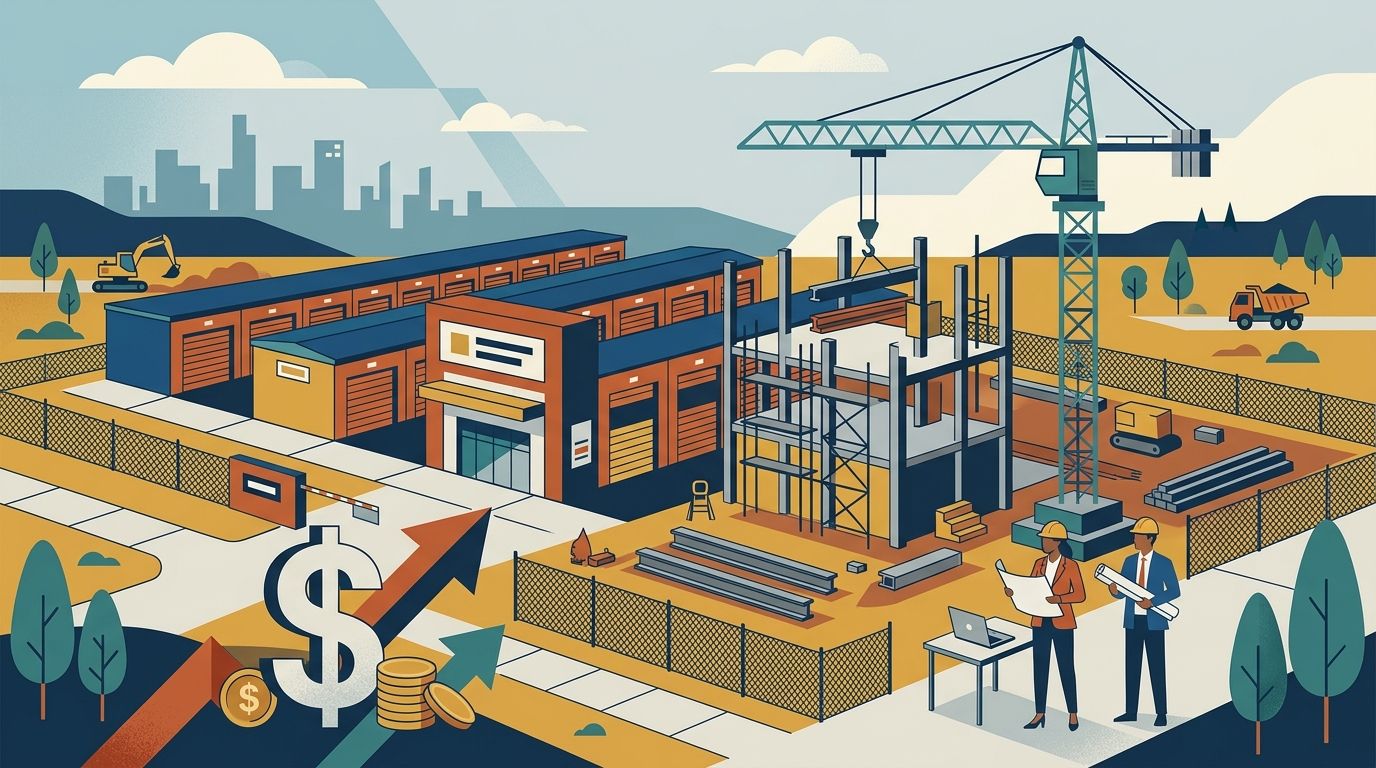
Ground-up self storage developers need a construction loan structured for a 9-to-18-month build cycle, an interest reserve during lease-up, and a clear exit into permanent debt — not a standard bank term loan retrofitted for construction. A construction loan for self storage development moves faster through a private or bridge lender than through a bank in 2026, but it costs more and carries a shorter runway, so the structure has to match the timeline you're actually building on.
TL;DR
- A construction loan for self storage development needs site control, permits, and a lender-ready pro forma before closing.
- LoanGuys arranges ground-up construction and bridge financing for self storage developers traditional banks turn away.
- Private construction loans close faster than bank construction loans but carry higher rates and shorter terms.
- Plan your exit — DSCR refinance or sale — before breaking ground, not after lease-up starts.
Why a construction loan for self storage development is different
Self storage is a niche property type, and most retail banks treat it as a specialty asset class even when the sponsor has a strong track record. A ground-up build has zero income at closing, so the lender is underwriting the sponsor, the land, the contractor, and the pro forma stabilized rent — not existing cash flow. Traditional banks that will finance a stabilized storage facility purchase often decline the same deal at the construction stage because there is no operating history to point to yet.
That gap is exactly where LoanGuys works with self storage developers: land is entitled, plans are drawn, and the sponsor needs a construction loan that a community bank's credit committee will not approve on a 2026 timeline. Private and bridge construction lenders underwrite the project and the sponsor's experience instead of three years of tax returns.
How to line up financing for a ground-up self storage project
1. Lock down zoning and site control before you shop lenders
No construction lender quotes a deal seriously until zoning, use permits, and site control are settled. Storage-specific zoning fights over traffic, noise, and aesthetics kill more deals in entitlement than in underwriting.
- Confirm the parcel is zoned for self storage or secure a conditional use permit before you go to market
- Pull a Phase I environmental report if the site has any prior industrial or fuel-station use
- Lock the purchase or option contract with a financing contingency long enough to close a construction loan
- Check flood zone and setback requirements against your planned building footprint
- Get a written zoning verification letter from the municipality, not a verbal confirmation
2. Build a lender-ready feasibility study and pro forma
Every construction lender wants a market study before they touch the budget. This is where a self storage-specific broker earns its fee, because generic commercial underwriters do not know the metrics that matter for the asset class.
- Pull square-foot-per-capita saturation data for a 3-, 5-, and 10-mile radius around the site
- Model lease-up absorption month by month, not as a single stabilization date
- Benchmark climate-controlled versus drive-up unit mix against competing facilities nearby
- Show a rent roll based on in-place rates at comparable properties, not asking rates
- Include a sensitivity table showing debt service coverage at 70%, 85%, and 100% occupancy
3. Size your construction budget and contingency correctly
Underpricing the build is the fastest way to run out of money mid-construction, and most lenders will not fund a cost overrun outside the original loan amount without a full re-underwrite.
- Get a hard bid from your general contractor, not a rough order-of-magnitude estimate
- Build in a contingency line for site work surprises: grading, utility tie-ins, retention ponds
- Separate hard costs (structure, paving, fencing, gate access) from soft costs (architecture, permits, impact fees)
- Confirm steel and concrete pricing is locked or escalation-adjusted in your 2026 contract
- Match your draw schedule to your contractor's actual payment milestones, not a generic percentage template
4. Choose a construction loan structure that fits a storage build
This is the step where the loan product decision actually gets made, and it is the first place LoanGuys enters the process — after the numbers are real, not before.
- A bank construction loan works if you have an existing relationship, strong liquidity, and can tolerate a long underwriting cycle
- A private or bridge construction loan closes faster and underwrites the deal and sponsor rather than years of tax filings
- Land acquisition and development financing covers the gap when the parcel is not fully entitled at the time you need to move
- An interest-reserve structure rolls carrying costs into the loan so you are not paying construction interest out of pocket during the build
- A draw-based facility tied to inspected completion percentages protects both you and the lender against contractor overbilling
5. Line up your general contractor and permitting timeline
Lenders check contractor qualifications as closely as they check the sponsor's balance sheet. A contractor with no self storage experience raises flags on cost accuracy and build timeline.
- Verify your GC has built at least one comparable storage facility, with references you can call
- Confirm bonding and insurance limits match your project size before signing the construction contract
- Map the permitting sequence — grading, foundation, building, fire marshal sign-off — against the lender's draw milestones
- Build a two-to-four week buffer into the schedule for inspection delays, which are common on gated storage builds
- Get the certificate of occupancy timeline in writing from the local building department
6. Plan your exit before you break ground
A construction loan is short-term money. Every self storage developer needs a takeout plan before the first draw, not after the last unit is leased.
- Model a DSCR-based refinance into permanent debt once the facility hits a stabilized occupancy threshold
- Confirm your construction loan term overlaps your projected lease-up period with margin, not exactly matching it
- Decide early whether the exit is a refinance-and-hold or a sale to an institutional storage buyer
- Check prepayment and extension terms in case lease-up runs longer than projected
Comparison: financing options for self storage developers
Bank construction loan
- Best for: Sponsors with an existing bank relationship and strong liquidity
- Speed to close: Slowest, extensive underwriting
- Key limitation: Full documentation and often personal guarantees required
Private/bridge construction loan
- Best for: Developers who need to move on entitled land quickly
- Speed to close: Fast, underwrites project and sponsor
- Key limitation: Higher rate and shorter term than bank debt
- Best for: Bridging acquisition-to-construction or construction-to-refinance gaps
- Speed to close: Fast
- Key limitation: Interest-only structure means the exit plan has to work
SBA 504/7(a)
- Best for: Owner-users occupying part of the facility themselves
- Speed to close: Slow, heavy documentation
- Key limitation: Not available for pure investment properties with no owner use
Verdict: a private construction loan is the fastest path from entitled land to a completed self storage facility in 2026, and a bank construction loan is the cheapest path if you can tolerate the timeline and documentation load.
Common mistakes self storage developers make
- Underestimating lease-up length. Storage facilities do not fill overnight — a pro forma assuming 12-month stabilization when the market study supports 24 months sinks the debt service coverage math.
- Skipping the saturation study. Self storage oversupply is hyper-local; a strong regional market can still have a saturated submarket within a few miles of your site.
- Underbudgeting site work. Grading, drainage, and utility tie-ins on raw land routinely run over initial estimates, and lenders will not fund the overrun without renegotiating the loan.
- Waiting until the building is topped out to shop refinance options. Lenders want the takeout plan at closing, not 60 days before the construction loan matures.
- Choosing a contractor without storage-specific experience. Gate access systems, unit mix ratios, and climate-control zoning are specialized enough that general commercial GCs often misprice them.
Talk to a self storage construction lender
Get financing options matched to your site, timeline, and exit plan.
FAQ
What is a construction loan for self storage development?
It is a short-term, interest-only loan that funds land improvement and building costs for a ground-up self storage facility. It converts to permanent debt or is paid off by a sale once the facility is built and leasing up.
How long does a self storage construction loan term usually run?
Most ground-up self storage construction loans run 9 to 18 months, matched to the build timeline plus an initial lease-up cushion built into the term.
Can I get a construction loan for self storage without an existing operating facility?
Yes. Private and bridge construction lenders underwrite the sponsor's experience, the market study, and the pro forma rather than requiring existing operating income from the site.
Is a bank or a private lender better for self storage construction financing?
A bank construction loan usually costs less if you qualify and can wait through full underwriting. A private or bridge lender closes faster and underwrites the deal instead of years of tax returns.
What happens to the construction loan once the facility is built?
Developers typically refinance into a DSCR or permanent commercial loan once occupancy stabilizes, or sell the facility and pay off the construction loan at closing.
How much of the construction cost will a lender finance?
Loan-to-cost ratios vary by lender, sponsor experience, and site risk. Get a written term sheet early rather than assuming a fixed percentage across all lenders.
Do I need a feasibility study before applying for a construction loan?
Most construction lenders require a market and feasibility study covering saturation, absorption, and comparable rents before issuing a term sheet on a self storage build.
What is the biggest risk in financing a self storage development in 2026?
Slower-than-projected lease-up is the main risk. It stretches the interest-only period and can force a costly extension or a rushed refinance before the property is stabilized.
One last thing
The developers who get burned on self storage construction loans almost never get burned on the build itself. They get burned in the gap between certificate of occupancy and stabilized lease-up, when the construction loan is maturing and the refinance is not ready. Start the takeout financing conversation with your lender before you break ground in 2026, not when the loan is 60 days from maturity.


