


Fix and Flip Loans for Basement Finishing (2026 Guide)
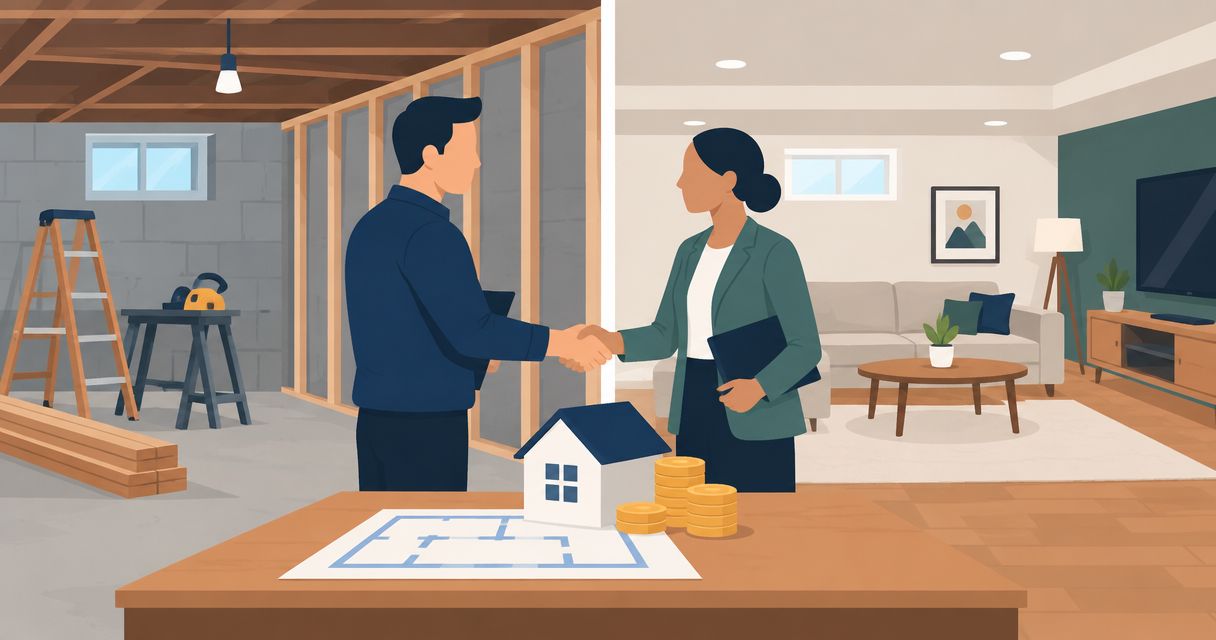
Fix and flip loans for basement finishing fund the part of a rehab budget that traditional lenders won't touch: egress windows, waterproofing, permit-driven scope, and the inspection sequence a basement conversion demands. Investors turning an unfinished basement into livable square footage or a legal rental unit need financing that matches that permit timeline, not a generic rehab draw schedule built for kitchens and baths.
TL;DR
- Fix and flip loans for basement finishing fund egress windows, waterproofing, and permit-driven scope that standard rehab budgets skip.
- Loanguys structures draws around inspection milestones, not calendar dates, for basement conversion projects in 2026.
- ARV comps need to include comparable finished basements, not just above-grade square footage.
- Hard money loans and fix-and-flip lines of credit both work, but repeat flippers lean on lines of credit to move faster in 2026.
Why this matters for basement finishing and conversion flips
A basement conversion isn't a cosmetic flip. Getting the space to count as legal living area usually means an ADU rental conversion-style scope: egress windows, ceiling height clearance, and a permit sign-off before the appraiser will credit the square footage at all.
The International Residential Code sets a minimum net clear opening of 5.7 square feet for an egress window and caps sill height at 44 inches — figures every basement conversion loan file needs to account for before draws start. Miss that and the loan closes on a scope that can't legally become a bedroom, which changes the exit math fast.
Generic rehab loans built for a 60-day cosmetic flip don't flex for a permit cycle that can run 30-90 days depending on the jurisdiction. Fix and flip loans for basement finishing need a draw schedule tied to inspection milestones, not a fixed calendar.
Confirm the basement meets baseline code before you underwrite the deal
Do this before the loan file goes anywhere near an underwriter:
- Verify local code requires at minimum 7 feet of ceiling height for habitable basement space
- Confirm an egress window well fits the foundation without hitting a property line setback
- Check the sump pump and foundation drainage system before assuming waterproofing is a paint-and-seal job
- Pull the permit application early — some jurisdictions require it before any demo starts
- Rule out a legal bedroom conversion if the municipality caps below-grade bedrooms outright
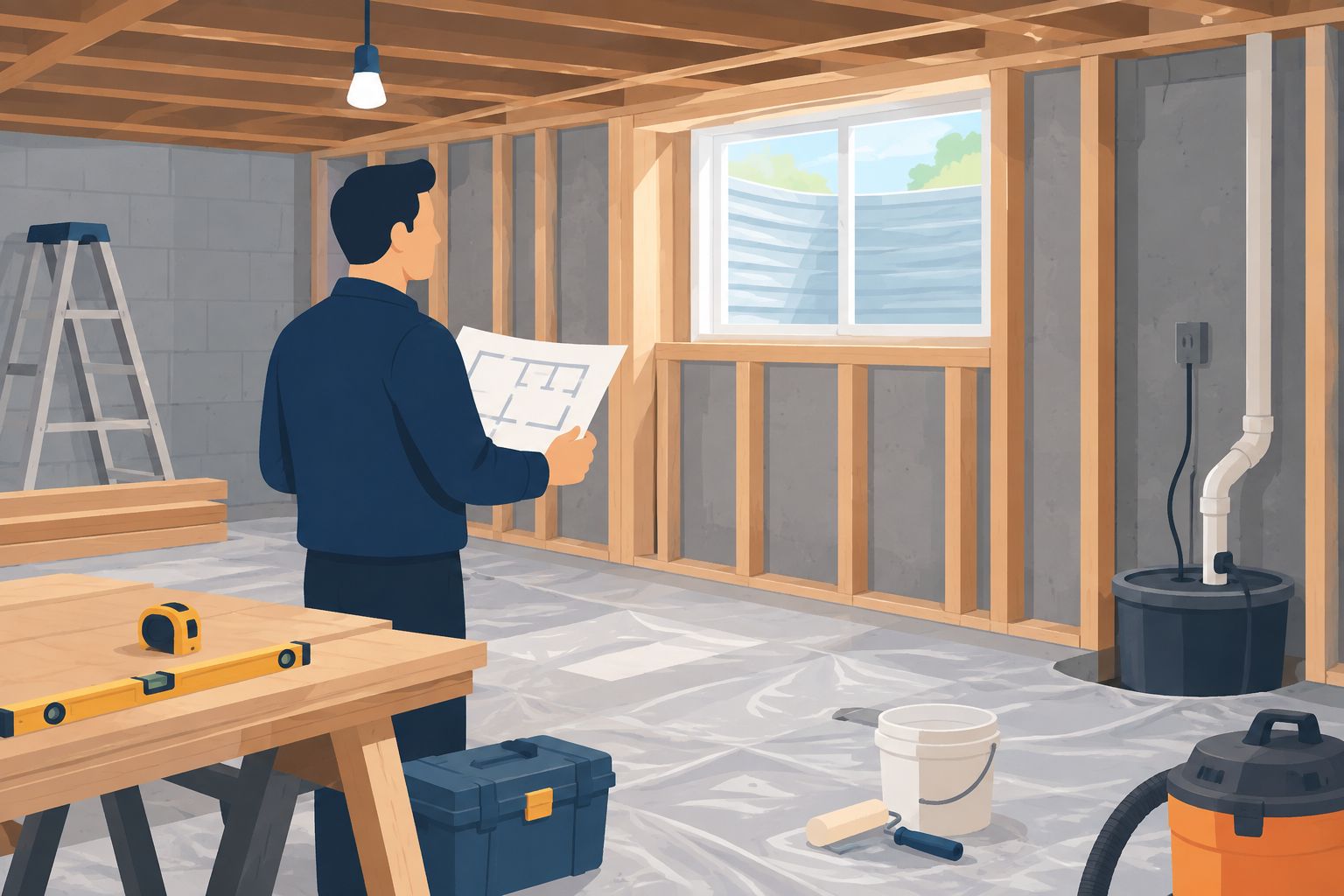
Egress and drainage work usually come before drywall, not after.
Pull ARV comps that include finished basements
An appraiser who only pulls above-grade comps will undervalue the conversion, and that gap shows up at refinance or resale.
- Ask for comps with a finished, legal basement in the same price tier
- Confirm the appraiser breaks out below-grade square footage separately from gross living area
- Widen the comp radius if the immediate block has mostly unfinished basements
- Flag any comp basement listed as a separate rental unit — those pull different numbers
Structure your draw schedule around permit and inspection milestones
A basement conversion has hard stops a lender has to respect:
- Rough-in inspection (framing, electrical, plumbing) before the first major draw
- Insulation and vapor barrier sign-off before drywall
- Final inspection and certificate of occupancy before the last draw releases
- A lender site visit scheduled around the inspector, not before it
- A contingency buffer for a failed inspection and re-inspection cycle
Budget for the waterproofing and mechanical work most estimates miss
The line items that blow a basement conversion budget rarely show up on a first-pass rehab estimate:
- Sump pump replacement or backup battery system
- Foundation crack injection and exterior grading fixes
- HVAC extension or a mini-split unit for the new square footage
- Electrical subpanel upgrade to cover new circuits
- Radon mitigation if the jurisdiction requires testing on finished basements
Line up your contractor and permit documentation before you submit the loan file
A loan file with a vague scope of work slows underwriting. Get this together first:
- A contractor with documented below-grade or basement conversion experience
- The permit application filed, not just planned
- A trade-by-trade scope of work with line-item costs
- Proof of contractor insurance and workers' comp coverage
Investors doing their first conversion should read how to qualify for a fix and flip loan with no experience before submitting a file — a clean permit package covers for a thin track record.
Compare hard money, bridge, and fix-and-flip lines of credit before you pick one
The right structure depends on how many basement or conversion projects you're running in 2026, not just the size of this one deal.
Hard money fix and flip loan
- Best For: A single basement conversion on one property
- Typical Draw Structure: Draws released after each inspected phase
- Key Limitation: Costs more than long-term financing, built for a short hold
Fix-and-flip line of credit
- Best For: Investors running multiple basement or conversion projects a year
- Typical Draw Structure: Revolving access across projects instead of a new file each time
- Key Limitation: Requires a completed-flip track record to qualify
Bridge loan
- Best For: Flippers who need to close on the acquisition before scoping the basement
- Typical Draw Structure: Funds acquisition upfront, rehab draws follow separately
- Key Limitation: Shorter runway if permitting drags past the loan term
Self-funded cash
- Best For: A small-scope basement refresh with minimal permit work
- Typical Draw Structure: No draw schedule at all, investor pays as work completes
- Key Limitation: Ties up capital that could fund the next deal
Verdict: for most flippers converting a basement into legal living or rental square footage, a fix and flip loan with phased draws tied to inspections beats a fixed-calendar bridge loan. Buy the phased structure; skip the bridge loan unless the acquisition timeline is the real bottleneck.
Get your basement conversion scoped and priced
Talk through draw structure and permit timing before you submit a file.
Plan your exit before the rehab starts
A basement conversion changes the exit math because it can support either a sale or a rental strategy.
- Pull both sale comps and rental comps before committing to a strategy
- Model holding costs against a realistic permit delay, not the best-case timeline
- Keep a contingency reserve sized for at least one failed inspection cycle
- Confirm the refinance path if the plan shifts from flip to hold — a DSCR loan is the common landing spot
Common mistakes flippers make on basement conversions
- Assuming finished basement square footage adds dollar-for-dollar ARV the way above-grade space does
- Framing and drywalling before the egress window is installed, forcing a costly rip-out
- Marketing the basement as a legal bedroom before confirming the municipality allows it under 2026 code
- Underestimating waterproofing as a line item instead of a percentage of the total rehab budget
- Requesting a full draw before the local inspector signs off, which stalls the lender's next release
FAQ
What are fix and flip loans for basement finishing?
They're short-term rehab loans structured to fund the permit-driven scope of a basement conversion — egress windows, waterproofing, mechanical upgrades — with draws tied to inspection milestones instead of a fixed calendar.
Can you get a fix and flip loan for a basement conversion before permits are pulled?
Most lenders want the permit application filed before funding releases for framing or mechanical work. Acquisition funds can close first; conversion-specific draws typically wait on the permit.
Does finishing a basement add full ARV value?
No. Appraisal guidelines generally exclude below-grade square footage from gross living area and value it separately from above-grade rooms, so a finished basement rarely adds dollar-for-dollar value.
What egress window size does a basement conversion need in 2026?
The International Residential Code requires a minimum net clear opening of 5.7 square feet and a maximum sill height of 44 inches, though local jurisdictions can add stricter requirements.
Is a fix-and-flip line of credit better than a single hard money loan for basement projects?
A line of credit works better for investors running several basement or conversion projects a year since it avoids a new loan file each time. A single hard money loan fits a one-off conversion.
How long does a basement finishing fix-and-flip loan take to close?
Timelines vary by lender and how complete the permit and contractor documentation is at submission — a clean file with permits already filed moves faster than one still awaiting approval.
Can a basement conversion turn into a legal rental unit?
Yes, if local code allows a separate legal unit and the conversion meets egress, ceiling height, and utility separation requirements. Confirm zoning before marketing it as a rental.
Do lenders require a separate appraisal line item for basement square footage?
Most appraisals break out below-grade finished space separately from above-grade gross living area, which is why comps need to include comparable finished basements.
One last thing
Appraisal guidelines from Fannie Mae exclude below-grade square footage from gross living area entirely, valuing a finished basement as a separate line item rather than folding it into the home's total livable space. That single rule is why so many flippers overestimate what a basement conversion adds to resale value in 2026 — budget the rehab for the functional upgrade, not for a dollar-for-dollar bump in the appraisal.


