


Consolidate Rental Loans Into a Blanket Mortgage (2026)
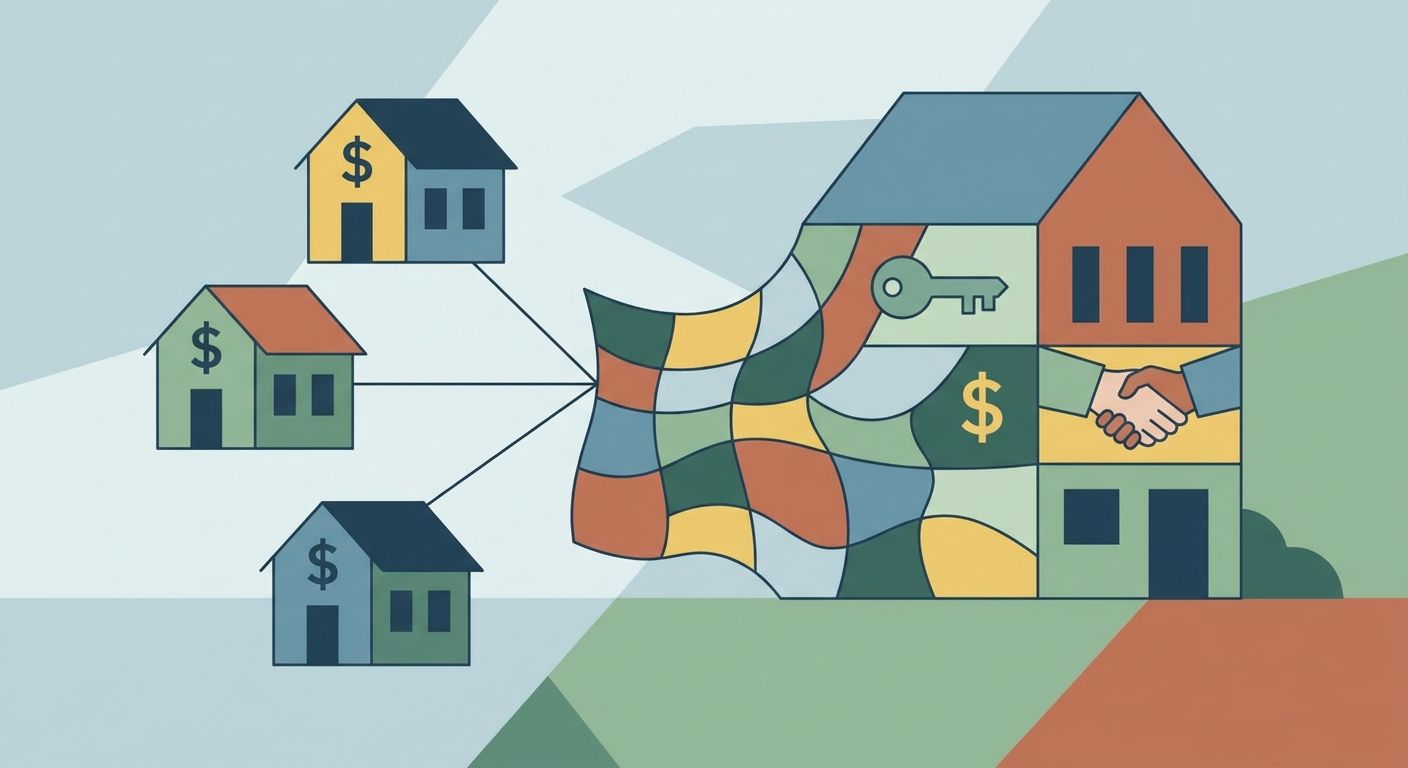
Five rental mortgages, five payments, five renewal dates, five headaches every time you refinance one property — that's the math blanket mortgage consolidation is built to fix in 2026.
TL;DR
- Blanket mortgages let you consolidate rental loans into one note secured by multiple properties instead of juggling 5+ separate mortgages.
- Most 2026 blanket programs cap loan-to-value at 70-75% and require a portfolio DSCR of 1.0 or higher.
- Release clauses matter more than rate — without one, selling a single property means refinancing the entire blanket loan.
- LLC-held portfolios consolidate faster because title and entity structure are already aligned across properties.
- Skip this move if you plan to sell 1-2 properties in the next 24 months; the exit penalties usually outweigh the rate savings.
Why this matters
Running five rental loans through five servicers means five renewal dates, five sets of paperwork, and five chances for a lender to call a loan due when you least expect it. A blanket mortgage rolls those notes into a single loan secured by the whole portfolio, which simplifies servicing and, in many cases, frees up cash for the next acquisition.
The tradeoff is real: you're pledging multiple assets against one obligation, and a default on the blanket note puts every property in it at risk, not just one. Investors holding properties inside LLC-held rental portfolios tend to move through this process faster because the entity structure is already set up to hold multiple titles under one legal umbrella — lenders like that clarity.
What you'll need
- Current mortgage statements for every property you want to consolidate (payoff amounts, rates, terms)
- 12 months of rent rolls or lease agreements per property
- Property insurance declarations pages for each address
- An entity structure — most blanket lenders in 2026 require the properties be held in an LLC or similar holding company
- Recent appraisals or a willingness to pay for new ones ($400-$600 per property is typical in 2026)
- A target DSCR calculation: combined annual rental income divided by combined annual debt service
- A payoff letter request ready to send to each existing lender
The steps
1. Inventory every existing loan and its payoff terms
Pull the payoff statement, not just the balance, for each mortgage you want to fold in. Payoff amounts include per-diem interest and sometimes prepayment penalties that don't show up on a regular statement.
This step accomplishes one thing: it tells you the real number you need the new blanket loan to cover. Skip it, and you'll underestimate the loan amount by thousands once penalties and per-diem interest are added at closing.
Common mistake: using the balance shown on last month's mortgage statement instead of requesting a formal payoff good through your expected closing date.
2. Calculate combined portfolio DSCR
Add up gross rental income across every property, then divide by the projected annual debt service on the new blanket loan (principal, interest, taxes, insurance). Most 2026 blanket programs want to see 1.0 to 1.25, meaning rental income covers the debt payment with some room to spare.
A property that's underwater on its own DSCR can sometimes still qualify inside a blanket structure because stronger-performing units offset it — this is one of the real advantages of consolidation over refinancing loans one at a time. DSCR loans for multi-unit properties use the same underwriting logic per building, so the math transfers directly.
Common mistake: using asking rents instead of actual signed lease amounts, which inflates the DSCR and creates a surprise at underwriting.
3. Confirm entity and title alignment
Every property going into the blanket loan needs to sit under the same ownership entity, or the lender needs a clear path to get there before closing. If three properties are in your personal name and two are in an LLC, expect a title transfer step before the blanket loan can close.
This matters because blanket lenders underwrite the entity, not just the individual assets. Mismatched titling is the single biggest cause of closing delays on consolidation deals in 2026.
Common mistake: assuming a quitclaim deed into an LLC is instant — most states require recording time of 2-4 weeks, and the lender won't close until it's confirmed.
4. Order appraisals and confirm loan-to-value
Blanket lenders typically cap loan-to-value at 70-75% of combined appraised portfolio value in 2026. Order appraisals on every property — expect $400-$600 each depending on market and property type — and total them to see where you land against your payoff amounts.
If your combined payoffs exceed 75% of appraised value, you won't get a clean consolidation and will need to bring cash to closing or drop a property from the pool.
Common mistake: relying on Zillow or county assessor values instead of a lender-ordered appraisal, which routinely comes in lower on investment property.
5. Negotiate the release clause before you sign
A release clause lets you sell or refinance one property out of the blanket loan without unwinding the entire note — usually by paying down a set percentage of the loan balance tied to that property's value. Without one, selling any single asset forces a full refinance of the entire portfolio.
This is the clause that separates a good blanket loan from a trap. Push for a per-property release price stated in dollars, not a vague percentage the lender can interpret later.
Common mistake: signing without a release clause because the rate quoted was 0.25% lower — that savings evaporates the first time you need to sell one house.
6. Line up the new loan against existing payoffs
Once terms are set, your lender orders payoff letters and coordinates simultaneous closing across every existing mortgage. This is where per-diem interest and any prepayment penalties from Step 1 get reconciled against the new blanket loan proceeds.
Investors coming out of hard money or bridge financing on any of these properties should confirm the payoff includes exit fees — the process mirrors what happens when you refinance a hard money loan into a DSCR loan, just across multiple properties at once instead of one.
Common mistake: scheduling the blanket closing before all payoff letters are confirmed good-through-date, which can blow up the closing if even one lender's number changes.
7. Set up single-payment servicing
After closing, confirm your new servicer, payment date, and escrow setup for taxes and insurance across the whole portfolio. One autopay, one due date, one statement — that's the entire point of the exercise.
Double-check that insurance on every property lists the new lender correctly; a lapsed or mis-titled policy on even one property in the blanket loan can trigger a default clause across the whole note.
Common mistake: letting old insurance policies auto-renew under the previous lienholder's name instead of updating them to reflect the new blanket lender.
Talk through your portfolio numbers
Get a read on DSCR, LTV, and release terms before you commit to one lender.
Troubleshooting
- Combined DSCR comes in under 1.0 — drop your weakest-performing property from the pool and refinance it separately, or raise rents on underperforming units before applying.
- Title isn't consolidated under one entity — transfer remaining properties into the LLC first; budget 2-4 weeks for recording before the blanket loan can close.
- Appraisals come in lower than expected — request a reconsideration of value with recent comps, or reduce the loan amount and bring the difference to closing.
- Lender won't offer a release clause — walk away and shop another lender; a blanket loan without a release clause locks up your exit strategy.
- One property has a prepayment penalty on its current loan — factor that penalty into your total payoff before comparing blanket loan quotes, not after.
- Insurance carriers won't add all properties under one policy — some carriers cap the number of addresses per policy; you may need two carriers even with one blanket loan.
Tools and resources
- A payoff statement request form from each current mortgage servicer
- A rent roll template covering trailing 12 months per property
- An appraisal management company that handles multi-property portfolio orders
- Entity documents (LLC operating agreement, EIN) if consolidating under a holding company
- Background reading on how rental property loans for LLCs and holding companies get structured, since entity setup is the first bottleneck most investors hit
What to do next
Once the blanket loan closes, revisit your portfolio's DSCR annually — rents change, insurance premiums change, and a portfolio that qualified at 1.05 in 2026 might sit at 1.15 a year later once rents catch up. If you're weighing a blanket mortgage against tapping equity property-by-property instead, compare the total cost against a straight HELOC for real estate investors before committing either way.
FAQ
What is a blanket mortgage for rental properties?
A blanket mortgage is a single loan secured by two or more properties instead of one mortgage per property. Investors use it in 2026 to consolidate multiple rental loans into one payment and one closing.
How many properties do I need to qualify for a blanket loan?
Most 2026 blanket loan programs require five or more properties, though some lenders will consolidate three if the combined DSCR and loan-to-value are strong. Fewer properties usually means a portfolio loan makes more sense than a true blanket structure.
What DSCR do I need to consolidate rental loans into a blanket mortgage?
Lenders typically want a combined portfolio DSCR of 1.0 to 1.25 in 2026, meaning rental income covers the total blanket loan payment with some cushion. A weaker property can be offset by stronger performers in the same pool.
Can I sell one property out of a blanket mortgage without refinancing everything?
Only if the loan includes a release clause specifying a set paydown amount per property. Without one, selling any single asset forces a full payoff and refinance of the entire blanket loan.
Do all my rental properties need to be in the same LLC to consolidate?
Most blanket lenders require consistent entity ownership across every property in the loan. If your properties are split across your personal name and an LLC, expect a title transfer step before closing.
Is a blanket mortgage cheaper than refinancing rental loans individually?
It depends on your existing rates and prepayment penalties, but the main savings in 2026 come from consolidated servicing costs and one closing instead of several. Run your combined payoff against a single blanket quote before assuming it's automatically cheaper.
What loan-to-value can I get on a blanket mortgage in 2026?
Most programs cap loan-to-value at 70-75% of combined appraised portfolio value. If your existing payoffs exceed that threshold, you'll need to bring cash to closing or remove a property from the pool.
Should I consolidate rental loans if I plan to sell a property soon?
No — without a strong release clause, consolidating right before a planned sale usually costs more than it saves. Hold off until your near-term sale plans clear or negotiate a release clause specifically built for that exit.
One last thing
The release clause, not the interest rate, is what most investors get wrong on their first blanket mortgage in 2026 — a quarter-point rate discount means nothing the day you need to sell one property and find out the whole note comes due.


