


Bridge Loan to Buy Before Selling: 2026 Step-by-Step Guide
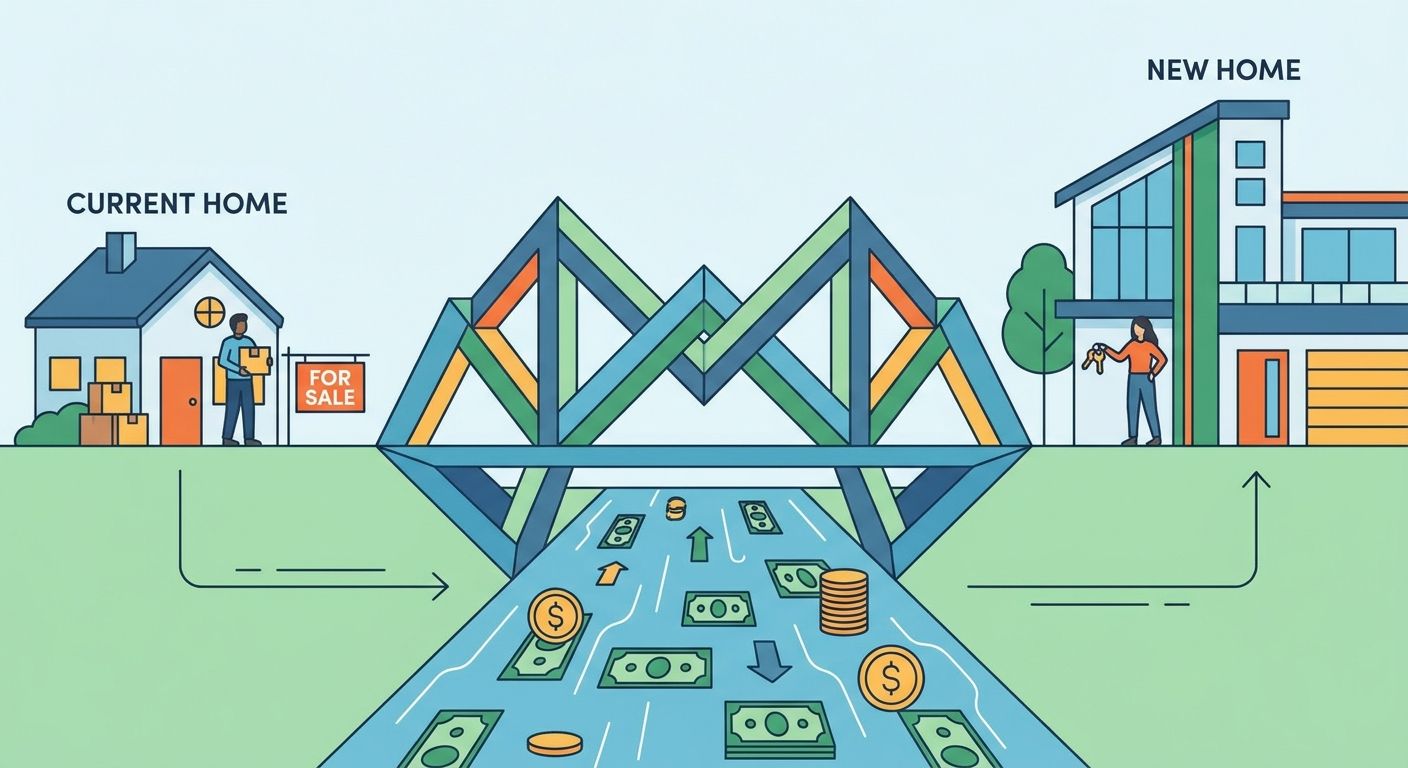
A bridge loan lets you close on a new home with equity from the one you haven't sold yet, so you skip the contingent-offer trap and move on your timeline instead of the buyer's.
TL;DR
- A bridge loan to buy before selling taps 65-75% combined loan-to-value across both properties to fund your down payment.
- Terms run 6 to 12 months in 2026, with most borrowers paying off the bridge loan within 90 days of closing on the new house.
- LoanGuys.com underwrites bridge loans on equity and exit strategy, not W2 income, so self-employed sellers qualify faster than with a bank.
- Skip a bridge loan if your current home has under 20% equity or you don't have a signed listing agreement — Wait.
Why this matters
Most sellers in 2026 still can't buy their next house until the current one closes, which means they lose bidding wars to buyers who aren't waiting on anything. A bridge loan removes the sale contingency from your offer entirely.
The mechanics are simple even when the paperwork looks intimidating. You borrow against the equity in your current home, use that cash for the down payment and closing costs on the new one, then pay the bridge off when the old house sells. LoanGuys.com structures these loans around your home's equity position and a documented exit strategy rather than a full income file, which is why investors and self-employed buyers gravitate toward this product over a conventional second mortgage.
What you'll need
- A signed listing agreement or active listing on your current home, dated within the last 30-60 days
- A recent valuation (appraisal or broker price opinion) showing at least 20-25% equity in the departing residence
- A purchase contract on the new property, or a clear target price range if you're still shopping
- Two months of bank statements to show reserves for both mortgage payments during the overlap period
- A payoff statement from your current mortgage servicer
- An exit strategy in writing: sale of the current home, refinance into a DSCR loan, or cash payoff
The steps
1. Verify your home equity position
Your bridge loan amount depends entirely on how much equity sits in the current property, so this step decides everything downstream. Lenders typically cap combined loan-to-value at 65-75% across both homes, meaning a $500,000 house with a $250,000 mortgage balance gives you real room to work with.
Get a broker price opinion before you apply — not a Zillow estimate. Common mistake: borrowers assume their home's market value equals what a lender will use, then get surprised when the appraisal comes in 8-10% lower and shrinks the available bridge amount.
2. Get pre-approved for the bridge loan
Pre-approval on a bridge loan takes days, not weeks, because underwriting focuses on equity and exit strategy rather than a full income and asset review. Expect to submit your listing agreement, current mortgage statement, and two months of bank statements.
Rates on bridge loans in 2026 typically run higher than a 30-year fixed — plan on a premium reflecting the short-term, asset-based nature of the loan. That premium buys you speed: closings in 7-14 days are standard versus 30-45 for a conventional purchase loan. Common mistake: shopping the bridge loan after you've already gone under contract on the new house, which leaves no time to fix a low appraisal or a documentation gap.
3. Set your bridge loan terms and exit strategy
Most bridge loans carry a 6 to 12 month term, and the lender wants to see exactly how you'll pay it off before approving anything. "Sale of the current home" is the cleanest exit; a refinance into a longer-term product is the backup plan you put in writing.
If your exit strategy is a refinance rather than a sale, look at how a HELOC can fund a rental property down payment as a comparison point — the underwriting logic is similar even though the product differs. Common mistake: picking a 6-month term when your local market's average days-on-market runs closer to 90; a short fuse forces a price cut you didn't need to take.
4. Use bridge funds for down payment and closing costs
Once approved, the bridge loan funds go toward the down payment and closing costs on the new purchase — not renovation, not moving expenses, unless your lender explicitly allows it. Keep the fund use documented since some lenders audit this at the six-month mark.
A typical structure: 20% down on a $450,000 purchase means $90,000 drawn from the bridge, leaving the rest for closing costs and reserves. Common mistake: draining every dollar of available equity into the down payment and leaving nothing for two months of overlapping mortgage payments.
5. Close on the new home
This is the step that makes a bridge loan worth the cost — you close without a home-sale contingency, which is what wins offers in a competitive 2026 market. Sellers routinely favor non-contingent offers even when they're not the highest bid.
Expect to carry two mortgage payments simultaneously starting here. Budget for it explicitly instead of assuming the sale will close before the first payment on the new house is due. Common mistake: underestimating carrying costs and running reserves down to zero before the old home closes.
6. List and sell the departing residence
With the pressure of a contingent sale removed, you can actually negotiate on the old house instead of accepting the first offer to hit a closing deadline. That said, the clock on your bridge loan term is still running.
Price the home to sell within your bridge term, not at the top of the range. Common mistake: overpricing because "there's no rush," then scrambling to cut the price when the bridge loan's maturity date gets close.
7. Pay off the bridge loan at settlement
Proceeds from the sale of your old home go directly to paying off the bridge loan balance plus any accrued interest, and whatever's left is yours. Most borrowers close this out well inside the 12-month term — often within 90 days.
Confirm the payoff amount in writing before your closing date; interest accrual on bridge loans compounds differently than a standard amortizing mortgage. Common mistake: assuming the payoff quote from month two still applies at month five.
Talk through your bridge loan numbers
Get equity and exit-strategy guidance before you list your home.
Troubleshooting
- Appraisal comes in low on the departing home. Combined LTV shrinks and so does your available bridge amount — get a second BPO before accepting the number, and be ready to bring more cash to the down payment.
- The old home doesn't sell within the loan term. Ask about a term extension before you're 30 days from maturity; most lenders will discuss it, few will surprise-default you.
- Buyer on your old home has a financing contingency that falls through. Keep the listing live and don't relax on price just because you thought you had a buyer — re-list immediately.
- Combined loan-to-value comes in too high to qualify. A partial paydown of the existing mortgage before applying can bring the ratio back under the 65-75% ceiling most lenders use.
- You don't want to carry two mortgage payments. Model the monthly reserve requirement before you apply — most bridge programs want two to three months of both payments in the bank.
- Exit strategy shifts from sale to refinance. If the departing home becomes a rental instead of a sale, a refinance into a DSCR loan for LLC-owned rental properties is a workable backup — confirm eligibility before you commit to that path.
Tools and resources
- Broker price opinion or full appraisal on the current home
- Two months of bank statements for reserve verification
- Signed listing agreement or active MLS listing
- Purchase contract or target price range for the new home
- If you're financing a purchase for buy-and-hold rather than a primary residence, review bridge loans for BRRRR strategy investors for the investment-property version of this same play
What to do next
If the new purchase is a commercial or mixed-use property rather than a primary residence, the underwriting and exit-strategy requirements shift — read how to get a bridge loan for a commercial property purchase before you apply.
FAQ
What is a bridge loan to buy before selling?
It's a short-term loan secured by equity in your current home that funds the down payment on a new purchase before the old home closes. Terms typically run 6 to 12 months and the loan is paid off from sale proceeds.
How much equity do I need for a bridge loan in 2026?
Most lenders want 20-25% equity in the departing home, since combined loan-to-value across both properties usually caps at 65-75%. Less equity means a smaller bridge amount or disqualification.
Is a bridge loan better than a HELOC for buying before selling?
A bridge loan is built specifically around a documented sale, while a HELOC is a revolving line that doesn't require you to sell anything. Bridge loans close faster when a listing is already in place; HELOCs work better if you're not selling at all.
How much does a bridge loan cost?
Bridge loans carry a rate premium over a standard 30-year mortgage because of the short term and asset-based underwriting. Origination fees and interest accrual vary by lender, so get a written quote before comparing options.
How fast can a bridge loan close?
Bridge loans typically close in 7-14 days once the listing, appraisal, and bank statements are submitted. That's roughly half the timeline of a conventional purchase loan.
What happens if my home doesn't sell before the bridge loan term ends?
Most lenders will discuss a term extension if you approach them before the maturity date, rather than defaulting you automatically. Re-pricing the listing early is the better fix.
Can self-employed buyers qualify for a bridge loan?
Yes — bridge loan underwriting focuses on home equity and exit strategy rather than a full income file, which makes it faster for self-employed and investor borrowers than a conventional second mortgage.
Do I need a signed contract on the new home to apply?
No, but you do need an active listing or signed listing agreement on the home you're selling. A target price range on the new purchase is usually enough to start pre-approval.
One last thing
The detail that trips up most first-time bridge borrowers isn't the interest rate — it's the reserve requirement. Lenders in 2026 routinely want two to three months of combined mortgage payments sitting in the bank before they'll fund the bridge, and that number surprises people who budgeted only for the down payment.


