


Investment Property Loans for Pro Athletes (2026 Guide)

Investment property loans for professional athletes with signing bonuses run on DSCR, bank statement, and asset-utilization programs instead of the two-year tax return a conventional bank wants. The fastest path to closing in 2026 skips personal income underwriting entirely and qualifies the property itself, or the bonus sitting in the bank, as the asset.
TL;DR
- DSCR loans qualify professional athletes off rental cash flow, not a two-year tax history, making a 2026 signing bonus usable as a down payment immediately.
- Asset-utilization loans convert a lump-sum bonus sitting in a brokerage or bank account into qualifying income, with no job history required.
- Bank statement loans fit athletes with 1099 endorsement income but need 12-24 months of deposits, not a single bonus payout.
- Buying in the current team's market before a trade is finalized is the most repeated mistake among first-time athlete investors.
Why investment property loans work differently for professional athletes
A rookie signing bonus can land as a single six- or seven-figure deposit, then get followed by a year with no comparable income at all if a contract option isn't picked up. Conventional mortgage underwriting wants two years of tax returns and a debt-to-income ratio built on steady paychecks — a career that runs in three- and four-year contract cycles doesn't produce that paper trail. LoanGuys and other non-QM brokers built DSCR, bank statement, and asset-utilization programs specifically for income that doesn't arrive on a biweekly schedule.
Athletes also carry a tax wrinkle most other high earners don't deal with: multi-state "jock tax" liability tied to where games are played, layered on top of the state where the signing bonus itself was paid. That reduces the cash actually available for a down payment well below the number reported in a press release, and it means the documentation a lender sees rarely matches the contract's headline figure.
None of that matters to a DSCR loan. The lender underwrites the rental property's ability to cover its own mortgage payment, not the borrower's next contract or next season. That single difference is why DSCR and asset-based programs show up in more athlete real estate closings in 2026 than any conventional product does.
How to buy rental property on a signing bonus, step by step
Separate signing bonus cash from tax reserves before you shop
Most of the trouble in athlete deals starts before a property is even picked, when bonus cash gets treated as fully spendable.
- Set aside an estimated percentage for federal and state tax before touching the balance for a down payment
- Open a dedicated account for the bonus, separate from agent-managed or team-issued accounts
- Confirm which state counts as primary residence for tax purposes, since it's often not the team's home state
- Keep the bonus deposit untouched for at least one full statement cycle before a lender pulls records
Build a paper trail the underwriter can actually use
DSCR and asset-based lenders don't need tax returns, but they still need to see where the money came from.
- A copy of the contract page showing the signing bonus line item
- The bonus payment schedule from the team or league
- Bank statements showing the deposit landing and sitting for at least one cycle
- A letter from the agent or business manager confirming the payment source, if funds moved through a third party
Pick the loan type that matches a lump-sum, no-two-year-return profile
This is the point where the manual paperwork approach gives way to a program built for exactly this income pattern.
- DSCR loan — qualifies off the property's rent-to-payment ratio, ignores personal income entirely
- Asset-utilization loan — converts brokerage or savings balances into a monthly qualifying figure, useful for a jumbo DSCR loan on a luxury rental purchase where the price point pushes past standard limits
- Bank statement loan — works if endorsement or appearance income shows up as regular 1099 deposits over 12-24 months
- Asset-based lending — pledges the portfolio itself rather than depleting it, an option worth reviewing through asset-utilization loans for high-net-worth borrowers before a full liquidation
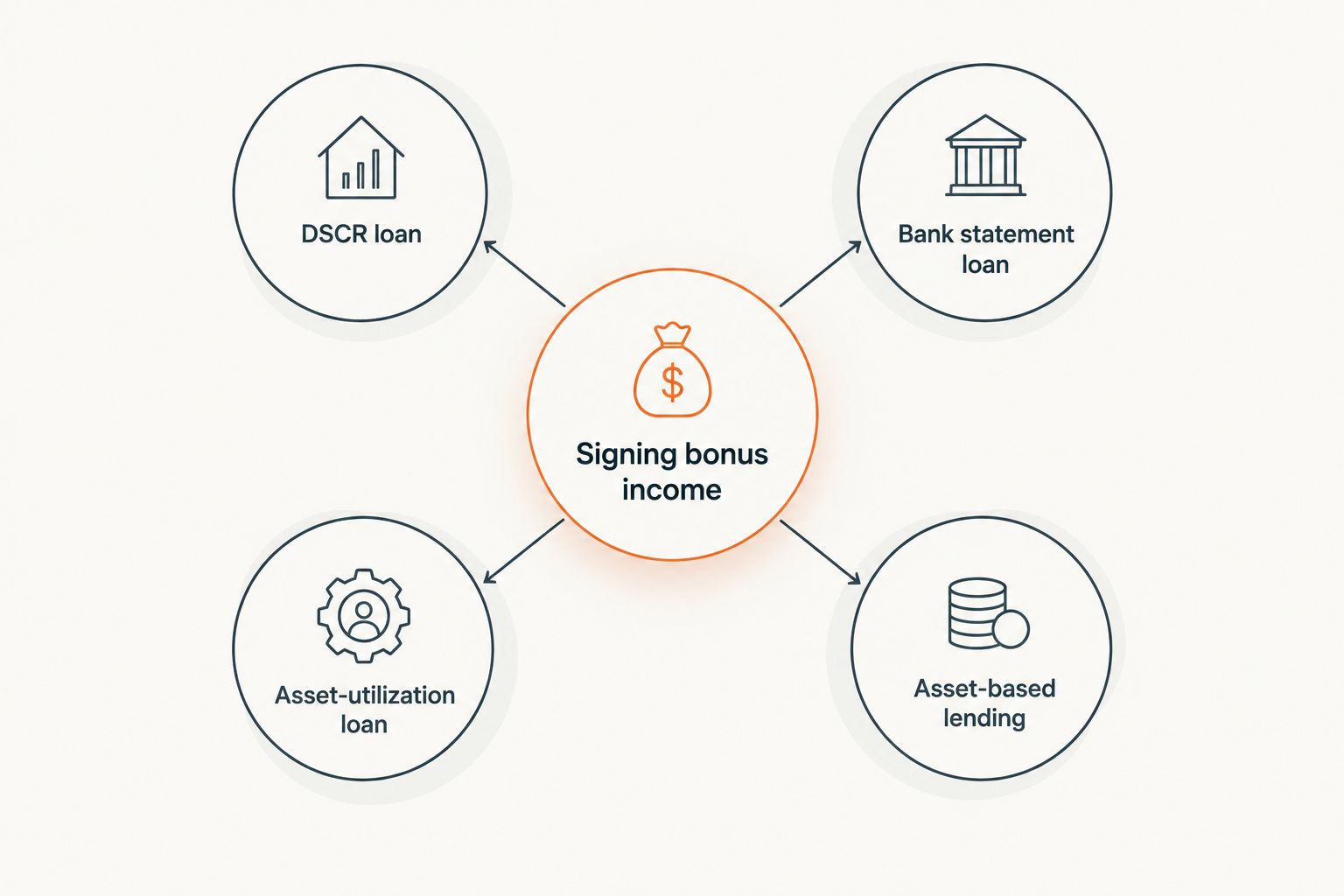
A signing bonus can qualify for any of four programs depending on how the money is held and documented.
Run the DSCR math before you commit to a property
A property that looks affordable on the listing page can still fail the ratio a lender needs.
- Pull a rent estimate for the property, not the neighborhood average
- Add up the full PITIA payment: principal, interest, taxes, insurance, association dues
- Divide monthly rent by PITIA — a property renting for $3,000 against a $2,400 payment lands at a 1.25 DSCR
- Most lenders want 1.0 to 1.25 minimum; anything below 1.0 needs a larger down payment to clear
Match the loan program to your career stage
- Rookie on a first contract — bonus is fresh, no rental history yet; DSCR with a larger reserve cushion covers the gap
- Veteran mid-career — established rental history and multiple properties open the door to blanket or portfolio financing
- Post-career transition — income shifts from contract-based to investment or business income, which shifts qualification toward asset-utilization or bank statement documentation
Talk through your signing bonus timeline
Get a program match before your next contract cycle changes your qualifying income.
Put the property in an LLC before you close
Most athletes buy through an entity for liability separation, and lenders that work with investors expect it.
- Form the LLC before the purchase contract is signed, not after
- Confirm the lender accepts title in an LLC for the specific loan program chosen
- Keep the LLC's operating agreement and EIN documentation ready for underwriting
- Use a personal guaranty only where the lender requires it — some DSCR programs don't
Build reserves for an off-season, trade, or injury scenario
A rental property doesn't stop needing a mortgage payment because a season ends or a trade happens.
- Confirm the lender's required reserve months — DSCR programs commonly ask for 6-12 months of PITIA in reserve
- Add a buffer beyond the minimum if the contract includes injury clauses or non-guaranteed years
- Keep reserves liquid and separate from the funds used for the down payment itself
Loan options ranked for athletes with signing bonus income
DSCR loan
- Best for: Rookies with no two-year rental or tax history
- Income doc used: Rental cash flow only
- Key limitation: Ratio below 1.0 needs a bigger down payment
- Verdict: Buy
Bank statement loan
- Best for: Athletes with steady 1099 endorsement deposits
- Income doc used: 12-24 months of bank statements
- Key limitation: Useless for a single lump-sum bonus
- Verdict: Hold
Asset-utilization loan
- Best for: Bonus sitting in savings or brokerage
- Income doc used: Account balance converted to income
- Key limitation: Requires seasoning the funds first
- Verdict: Buy
Asset-based lending
- Best for: Large portfolios the athlete wants to keep invested
- Income doc used: Pledged securities, not liquidated
- Key limitation: Market drops can trigger a call
- Verdict: Hold
Conventional mortgage
- Best for: Retired athletes with W-2 or established tax history
- Income doc used: Two years of tax returns
- Key limitation: Contract-cycle income rarely qualifies
- Verdict: Skip
Common mistakes professional athletes make with signing bonus real estate
- Buying in the current team's city before a trade is settled — a mid-season trade leaves the rental far from where the athlete actually lives
- Letting an agent's financial team pick the property without running DSCR math first — a property that looks like a good investment can still fail to cash flow
- Using the entire bonus as a down payment with no tax reserve set aside — a surprise multi-state tax bill can force a distressed sale within the first year
- Closing under a name or entity that doesn't match the bonus payment records — mismatched names between the contract, the deposit, and the loan application slow underwriting
- Skipping lease-up before the season starts — a vacant rental during a road-heavy schedule burns through reserves faster than expected
FAQ
What's the best loan for a professional athlete buying rental property with a signing bonus?
A DSCR loan is usually the best fit in 2026 because it qualifies off the rental property's cash flow instead of the athlete's tax return history. Athletes with a large lump sum still sitting in savings or a brokerage account can also use an asset-utilization loan.
Do I need two years of tax returns to qualify for a DSCR loan?
No. DSCR loans skip personal tax returns entirely and underwrite the property's rent against its own mortgage payment. That's the main reason they work for athletes with short or irregular income histories.
Can a rookie contract signing bonus count as income for a mortgage?
A signing bonus alone doesn't function as ongoing income for a conventional mortgage, since underwriters want repeatable earnings. Once the bonus is deposited and seasoned, it can qualify as an asset for an asset-utilization loan or as the down payment on a DSCR loan.
Is a bank statement loan better than a DSCR loan for athletes?
It depends on the income pattern. A bank statement loan works if endorsement or appearance income shows up as regular deposits over 12 to 24 months; a DSCR loan works better for a one-time bonus with no ongoing deposit history.
How does state jock tax affect the down payment on a rental property?
Multi-state jock tax reduces the actual cash available from a signing bonus below its face value, since tax is owed in every state where games are played plus the athlete's home state. Budgeting the down payment after estimated taxes, not before, avoids a shortfall at closing.
Can I buy investment property in an LLC on a signing bonus?
Yes, most DSCR and asset-based lenders allow title in an LLC and many investors prefer it for liability separation. The LLC needs to be formed before the purchase contract is signed so the lender can review its formation documents during underwriting.
What DSCR ratio do lenders want from professional athletes?
Most DSCR programs in 2026 want a ratio of 1.0 to 1.25, meaning the property's rent covers 100% to 125% of the full mortgage payment. A ratio below 1.0 usually requires a larger down payment to bring the numbers into range.
How much of a signing bonus should go toward a down payment?
There's no fixed percentage, but reserving the estimated tax liability first and keeping 6 to 12 months of mortgage payments in reserve after closing protects against an off-season or injury year. Whatever's left after taxes and reserves is what should go toward the down payment.
One last thing
Because a DSCR loan never looks at personal income, an athlete's qualifying position doesn't change if next season's income drops to zero — the loan performs as long as the property keeps renting. That's the opposite of how a conventional mortgage treats a non-guaranteed contract year, and it's the main reason DSCR financing has become the default entry point for athletes buying their first rental in 2026 rather than a fourth or fifth deal.


