


Loans for 5 to 8 Unit Apartment Buildings: 2026 Guide
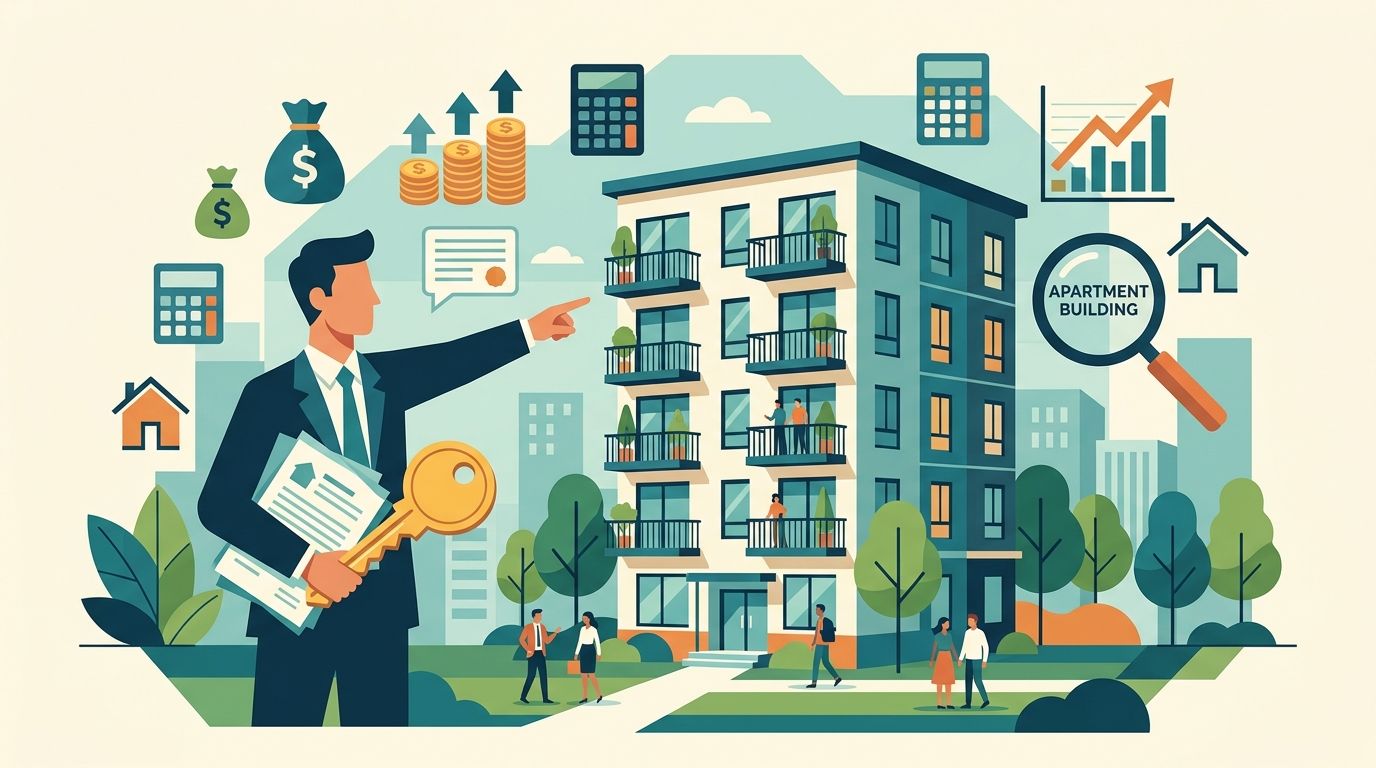
5 to 8 unit apartment building loans are commercial multifamily financing products, sized for buildings too large for a conventional residential mortgage and too small for institutional agency debt. Five units is the line where Fannie Mae and Freddie Mac conventional programs stop and commercial underwriting starts, which changes the down payment, the appraisal, and the paperwork an investor needs before closing in 2026. This segment gets treated inconsistently by lenders who either force it into a residential box it doesn't fit or push it toward institutional programs built for 50-unit buildings.
TL;DR
- Loans for 5 to 8 unit apartment buildings move from residential to commercial underwriting at unit five.
- DSCR loans from LoanGuys.com qualify these deals on rental income instead of personal tax returns.
- Commercial appraisals value the building on net operating income, not curb appeal or nearby house sales.
- Bridge loans fit 5-8 unit buildings with vacancy or repairs better than a stabilized DSCR program.
Why this matters for 5 to 8 unit apartment building investors
A fourplex buyer and a 6-unit buyer are shopping two different markets, even though both look like "small multifamily" on paper. The fourplex buyer can still use a conventional or DSCR loan built around residential guidelines. The 5-8 unit buyer is now in commercial territory: the appraisal method changes, the loan term usually runs shorter with a balloon instead of a flat 30-year amortization, and the lender wants a rent roll and a trailing 12-month operating statement instead of a pay stub.
Most generic "how to finance an apartment building" content lumps duplexes and 20-unit properties together. That's not useful for someone underwriting a 6-unit deal in 2026, where the down payment, reserve requirements, and appraisal method sit closer to a commercial loan than to a residential one. The building's unit count, not its size or price, decides which lending world you're in.
Confirm your building crosses the 5-unit commercial line
Before you get attached to a deal, verify the unit count is what the listing says it is. Discrepancies between the county assessor's record and the actual number of livable units kill more 5-8 unit deals than financing terms do.
- Check the county assessor's record against the actual number of separate units
- Confirm the certificate of occupancy lists 5 to 8 legal units, not fewer
- Rule out illegal in-law, basement, or garage conversions inflating the count
- Pull the current rent roll to see which units are leased, vacant, or month-to-month
- Flag mixed-use buildings (ground-floor retail plus apartments) since that changes underwriting again
Pull the numbers a commercial lender will ask for first
Commercial lenders don't underwrite off a pay stub. They underwrite off the property's own numbers, so get these ready before you submit an application.
- Rent roll with unit-by-unit rent, lease start dates, and lease type
- Trailing 12-month (T-12) income and expense statement
- Current property tax bill and a fresh insurance quote
- Copy of the certificate of occupancy showing legal unit count
- Utility bills for any units where the owner covers utilities
- List of below-market or month-to-month leases, flagged separately
Decide between DSCR, agency small-balance, and bridge financing
Once the numbers are in hand, match the loan type to the deal instead of the other way around. A DSCR loan for multi-unit rental properties through LoanGuys.com qualifies the deal off the property's rental income rather than your personal tax returns, which is the fastest path for a stabilized, fully leased 5-8 unit building.
- DSCR loan: best for a stabilized, cash-flowing building closing on a normal timeline
- Freddie Mac Small Balance Loan: best for a long-term hold where agency pricing matters more than speed
- Bridge loan: best for a building with vacancy or deferred maintenance that won't qualify for permanent financing yet
- Regional or community bank portfolio loan: best if you already bank there and have strong personal credit
- Blanket loan structure: worth exploring if this building is the first of several you plan to buy this year
Prepare for a commercial appraisal, not a residential one
A 5-8 unit building gets valued on income, not comps from single-family sales down the street. That single difference surprises more first-time buyers than any other part of the process.
- Appraiser values the property using the income approach, weighted on net operating income (NOI)
- Capitalization rate gets matched to local commercial comps, not residential comps
- Rent roll accuracy matters more than the building's condition or finishes
- Request the comparable cap rates used in the final appraisal report
- Budget extra time versus a residential appraisal since commercial reports take longer to complete
Line up down payment and reserve requirements
Commercial multifamily loans ask for more skin in the game than a residential mortgage on a duplex or fourplex.
- Budget a larger down payment than a 1-4 unit residential loan requires
- Hold several months of principal, interest, taxes, and insurance in reserve, per your lender's requirement
- Set aside a separate reserve for capital expenditures like roof, HVAC, or unit turns
- Plan for vacancy risk: one empty unit out of 6 is a bigger income hit than one empty unit out of 20
- Document the source and seasoning of any funds used for the down payment or reserves
Get a DSCR quote for your building
Talk through your 5 to 8 unit deal before you write an offer.
Work with a lender who underwrites 5-8 unit deals routinely
Not every lender closes this segment often, and it shows in how the loan gets structured.
- Ask how many 5-8 unit commercial multifamily deals the lender closed in the last year
- Confirm the lender isn't forcing the deal into a residential program that doesn't fit
- Ask whether taxes and insurance are escrowed or paid separately
- Get the prepayment penalty structure in writing before signing a term sheet
- Lock the DSCR ratio and rate in writing before ordering the appraisal
Lock terms and move toward closing
The last stretch of a 5-8 unit deal moves faster when the paperwork is ready ahead of time.
- Lock rate and DSCR ratio in writing once terms are agreed
- Order title and survey early since commercial closings involve more parties than a residential closing
- Review the amortization schedule; many 5-8 unit commercial loans run a shorter term with a balloon, unlike a 30-year residential loan
- Confirm your LLC documents are current, since most 5-8 unit loans close in an entity name
- Read the closing disclosure line by line before signing anything
Comparing financing options for 5 to 8 unit apartment buildings
DSCR loan (LoanGuys.com)
- Best For: Investors who want approval based on rental income, not personal tax returns
- Key Feature: Qualifies off in-place or market rent instead of W-2 income
- Key Limitation: Weaker fit for vacant or under-leased buildings
Freddie Mac Small Balance Loan
- Best For: Investors buying a stabilized 5-8 unit building for a long-term hold
- Key Feature: Long amortization, often non-recourse
- Key Limitation: Slower process, more documentation than DSCR
Bridge loan for a commercial property purchase
- Best For: Investors buying a building needing repairs or lease-up before refinance
- Key Feature: Fast close, can fund rehab alongside acquisition
- Key Limitation: Higher rate, short term forces a refinance plan
Regional bank portfolio loan
- Best For: Investors with an existing banking relationship and strong personal credit
- Key Feature: Relationship-based underwriting, flexible terms
- Key Limitation: Usually requires full tax returns and a personal guarantee
Seller financing
- Best For: Investors buying from a seller motivated to avoid a large tax bill upfront
- Key Feature: No bank underwriting, terms negotiated directly
- Key Limitation: Depends entirely on finding a seller willing to carry paper
Verdict: a stabilized, fully leased 5-8 unit building fits a DSCR loan; a vacant or repair-heavy one fits a bridge loan first, DSCR refinance second.
Common mistakes 5 to 8 unit apartment building investors make
- Shopping for a residential mortgage on a building the assessor already lists as 5+ units, then getting rejected at underwriting.
- Underestimating vacancy math: one empty unit out of 6 is a bigger income hit than the same vacancy on a 24-unit building.
- Assuming DSCR loans require personal tax returns, when the program qualifies off the property's rent instead of your 1040.
- Hiring an appraiser with no commercial multifamily experience, which produces a residential-style valuation that undervalues the building.
- Skipping the certificate of occupancy check and discovering, after the offer is written, that a "6 unit" building is legally a 5 unit with a basement addition.
FAQ
What's the best loan for a 5 to 8 unit apartment building in 2026?
A DSCR loan is the best fit for a stabilized, fully leased 5 to 8 unit building in 2026 because it qualifies off the property's rental income instead of personal tax returns. A bridge loan is the better fit if the building has vacancy or needs repairs before it can support that DSCR calculation.
Is a 5-8 unit building residential or commercial financing?
A 5 to 8 unit building is commercial financing, not residential. Fannie Mae and Freddie Mac conventional residential mortgage programs stop at four units, so anything from five units up moves into commercial underwriting rules, appraisal methods, and loan terms.
How much down payment do you need for a 5-8 unit apartment building loan?
Down payment requirements for a 5-8 unit apartment building loan run higher than a 1-4 unit residential mortgage because the loan is underwritten commercially. The exact amount depends on the lender and the loan program, so get a specific figure from your lender before budgeting the deal.
Can you get a DSCR loan on a 6 unit apartment building?
Yes, a 6 unit apartment building qualifies for a DSCR loan through LoanGuys.com as long as the building is generating rental income that supports the debt. The loan is underwritten off the property's rent roll rather than the borrower's personal income.
What's the difference between a DSCR loan and a Freddie Mac small balance loan?
A DSCR loan qualifies primarily on the property's rental income and typically closes faster with less documentation. A Freddie Mac Small Balance Loan is an agency program aimed at long-term holds, with more documentation but often longer amortization and non-recourse terms.
How long does it take to close a loan on a 5-8 unit property?
Closing timelines for a 5-8 unit property depend heavily on the loan type: DSCR loans generally move faster than agency small-balance programs because they require less documentation. Bridge loans close fastest of all when speed matters more than rate.
Do you need tax returns for a loan on a 5-8 unit apartment building?
Not for a DSCR loan. The LoanGuys.com DSCR program on 5-8 unit buildings qualifies based on the property's rent roll and operating numbers instead of the borrower's personal tax returns or W-2 income.
What if the building has vacant units?
Vacant units make a straight DSCR loan harder to qualify for since the income calculation leans on actual or market rent. A bridge loan is usually the better first move on a building with meaningful vacancy, with a refinance into a DSCR loan once units are leased.
One last thing
The most avoidable failure point on a 5-8 unit deal isn't the interest rate, it's the unit count itself. County assessor records and certificates of occupancy don't always agree with what a listing calls the building, and a "6 unit" property that's legally a 5 unit with an unpermitted addition can stall a loan file for weeks. Confirm the legal unit count before you write the offer, not after the appraisal comes back. That single check saves more 5-8 unit deals in 2026 than any amount of rate shopping.


