


Mortgage Lenders for Self-Employed Write-Offs: 2026 Guide
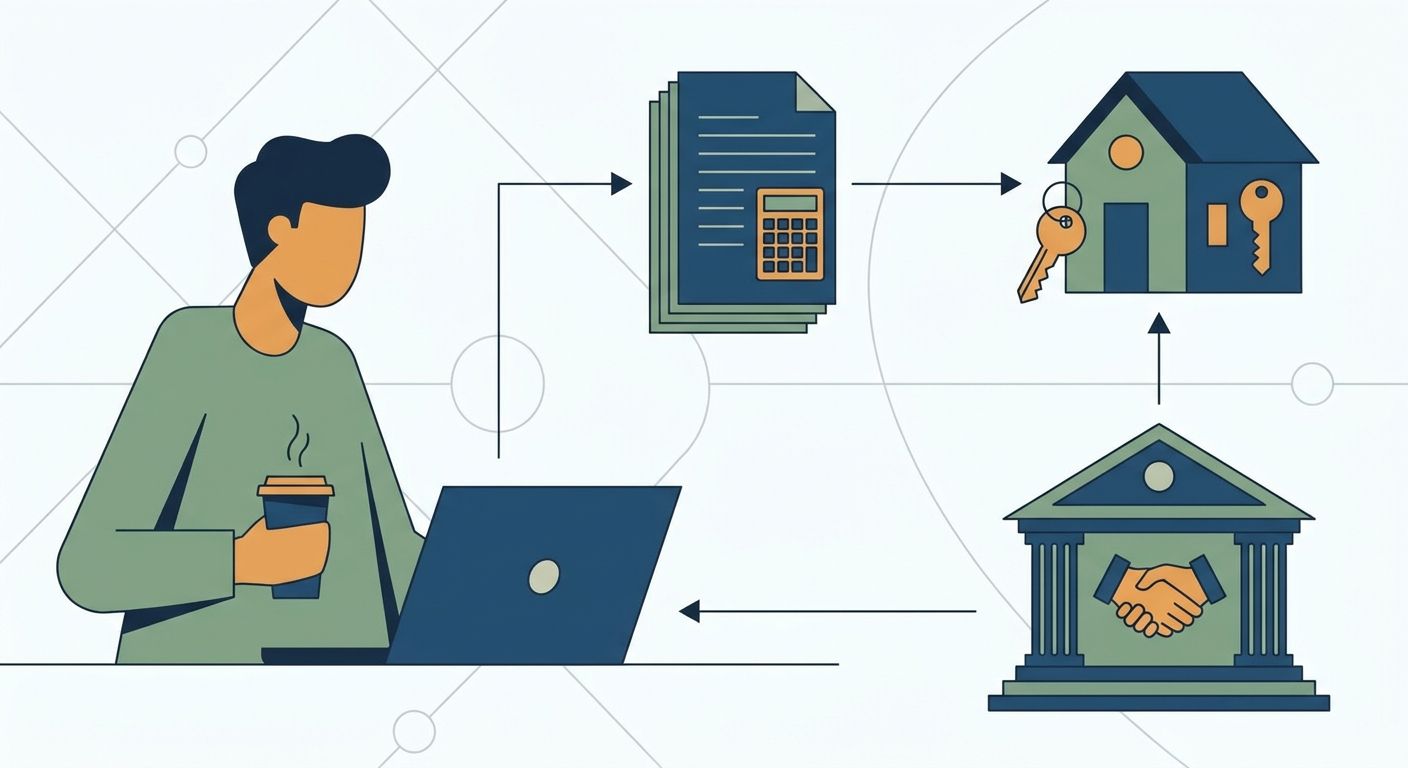
Self-employed borrowers who write off business income face a specific mortgage problem: the same deductions that lower a tax bill also lower the qualifying income a lender sees on a 1040. The lenders who solve this don't look at your tax returns at all — they look at your bank deposits, your business's cash flow, or the rental property's own income instead.
TL;DR
- Bank statement loans use 12-24 months of deposits, not tax returns, to qualify self-employed borrowers with heavy write-offs.
- LoanGuys.com structures non-QM and DSCR programs for owners whose net income looks smaller than their real cash flow.
- DSCR loans skip personal income entirely and qualify off the rental property's own rent, so write-offs never enter the picture.
- A CPA add-back letter can recover depreciation on a conventional loan, but it takes weeks a bank statement loan skips.
- Get pre-approved on the actual program before you shop, or the contract falls apart at underwriting.
Why tax write-offs make mortgage approval harder
A conventional underwriter runs your adjusted gross income through a debt-to-income calculation. Every deduction on Schedule C — home office, mileage, depreciation, equipment, meals — shrinks that number, even though none of it left your bank account. An owner who nets $180,000 in deposits but writes the return down to $45,000 in taxable income looks, on paper, like someone who cannot afford a $500,000 mortgage.
This is not a rare edge case. More owners than ever run LLCs, freelance, or operate short-term rental businesses, and every one of them files a return built to minimize tax liability, not to maximize mortgage eligibility. Mortgage lenders for self-employed borrowers with tax write-offs solve the mismatch by qualifying on cash flow instead of net income — through bank statement loan programs for 1099 contractors, DSCR loans on the property itself, or add-back documentation on a standard file.
The program you pick in 2026 decides whether your write-offs are a problem or a non-issue.
How to get approved when your tax returns understate your income
Ask a CPA for a formal add-back letter first
Before assuming you need an alternative program, find out whether a lender will add back non-cash deductions to your qualifying income.
- Depreciation and amortization on business assets
- Depletion, for owners with resource-based businesses
- One-time or non-recurring business losses
- Business use of home, when documented as non-cash
- Casualty losses not expected to recur
An add-back letter can recover meaningful qualifying income on a standard 1040-based file, and it costs a CPA consultation rather than a program switch.
Choose a bank statement loan when add-backs are not enough
When deductions are structural rather than one-time, add-backs will not move the needle far enough. A bank statement loan through LoanGuys.com replaces tax-return income with 12 to 24 months of business or personal deposits.
- Personal bank statement programs average all qualifying deposits over the review window
- Business bank statement programs apply an expense ratio, often 50%, to gross deposits
- CPA-prepared profit and loss statements can supplement thin deposit histories
- Some programs blend 1099 income with deposit averaging for mixed-income households
Gather documentation before you apply
Applications stall when paperwork arrives piecemeal. Assemble the file up front instead of reacting to underwriter requests one at a time.
- 12 to 24 months of business and personal bank statements, every page
- Business license or entity formation documents for the LLC, S-corp, or sole proprietorship
- A CPA letter confirming the business is active and confirming the expense ratio
- Evidence of two years of business existence, the common baseline for these programs
Use a DSCR loan when the purchase is a rental property
If the write-offs sit on a rental portfolio rather than a primary residence, personal income becomes irrelevant. A debt service coverage ratio loan qualifies on the subject property's rent against its housing payment — no tax returns, no personal debt-to-income math. The guide on how to qualify for a non-QM loan as a self-employed investor covers where DSCR and bank statement structures overlap.
- The property generally must cover its own payment at a 1.0 ratio or higher
- Short-term rental income qualifies under some DSCR programs
- No personal employment history or income documentation required
- LLC ownership is common and often preferred for liability separation
Time the application around your tax filing cycle
A bank statement loan sidesteps this entirely. An add-back file does not. Filing your return before applying, rather than sitting mid-extension, gives underwriters a current picture instead of a stale prior-year return plus unverified year-to-date numbers.
- File on time rather than extending, especially in a purchase year
- Keep quarterly estimated tax payments consistent; erratic payments read as unstable income
- Do not amend a return during underwriting — it restarts income verification
Get pre-approved on the program you will actually close with
A pre-approval built on conventional debt-to-income math, when you will end up on bank statement averaging, falls apart at contract. Confirm the program type before you write an offer in 2026, not after.
Get matched to the right program
Talk through bank statement, DSCR, and non-QM options for your write-offs.
Comparing the options for write-off-heavy borrowers
Bank statement loan
- Best for: Owners with strong deposits but low taxable income
- Income documentation: 12-24 months of bank statements
- Key limitation: Deposits must be consistent; sporadic income hurts the average
Non-QM with CPA P&L
- Best for: Owners with clean books but irregular deposit timing
- Income documentation: CPA-prepared profit and loss statement
- Key limitation: Needs an active, cooperative CPA relationship
DSCR loan
- Best for: Investment property purchases and refinances
- Income documentation: None — qualifies on property rent
- Key limitation: Not available for primary residences
Conventional with add-backs
- Best for: Borrowers close to qualifying with one or two non-cash deductions
- Income documentation: Tax returns plus CPA add-back letter
- Key limitation: Useless when write-offs are structural
Asset depletion
- Best for: Owners with large liquid assets and thin reported income
- Income documentation: Asset statements, no income docs
- Key limitation: Requires substantial liquid assets
LoanGuys.com is the practical fix for self-employed borrowers whose tax write-offs hide their real cash flow: bank statement loans for primary and investment purchases, DSCR loans when the property can carry itself.
Common mistakes self-employed borrowers make
- Over-optimizing the return the year before buying. Maximizing December deductions and then applying in February is the most common self-inflicted problem in this segment.
- Commingling personal and business deposits. Underwriters must isolate qualifying deposits; mixed accounts slow every bank statement review.
- Assuming DSCR covers a primary residence. DSCR is investment-property only and will not finance the house you plan to live in.
- Switching CPAs mid-application. A new CPA cannot credibly issue an add-back letter or P&L for a business history they have not worked on.
- Running two applications at once. Parallel conventional and bank statement files mean duplicate documentation requests and two slow closings instead of one fast one.
FAQ
What is the best mortgage option for self-employed borrowers with tax write-offs in 2026?
A bank statement loan is the most direct option in 2026 because it qualifies income from 12 to 24 months of deposits instead of a tax return. A DSCR loan is the alternative when the purchase is an investment property.
Can I still get a conventional loan if I write off a lot of business expenses?
Yes, if a CPA can document add-backs for non-cash deductions such as depreciation. It works best when the write-offs are limited to one or two categories rather than structural to the business.
How many months of bank statements do lenders require?
Most bank statement programs review 12 to 24 months of statements. A longer history usually produces a steadier average and a stronger qualifying income figure.
Do bank statement loans have higher rates than conventional loans?
Bank statement and non-QM programs generally price above conventional loans because of the documentation flexibility. The tradeoff is qualifying on real cash flow instead of a tax-reduced income number.
Is a DSCR loan better than a bank statement loan for a self-employed borrower?
It depends on the property. DSCR works only for investment properties and ignores personal income entirely, while bank statement loans cover primary residences and investment purchases alike.
Will underwriters add back depreciation on a mortgage application?
Some will, with a CPA letter confirming the deduction is non-cash and non-recurring. It will not fully offset write-offs tied to the ongoing operation of the business.
How much business history do I need for a bank statement loan?
Two years of business existence is the common requirement. Some lenders consider a shorter history when deposits are strong and consistent.
Can I qualify with business bank statements instead of personal ones?
Yes. Business bank statement programs apply an expense ratio, often around 50%, to gross deposits to estimate usable income, separate from personal account programs.
One last thing
The expense ratio on business bank statements is negotiable in practice. A documented, lower actual expense ratio from your CPA can beat the default 50% assumption most lenders start with, and in 2026 that single adjustment is often the difference between qualifying and being declined.


