


No Doc Business Loans for Ecommerce (2026 Verdict)
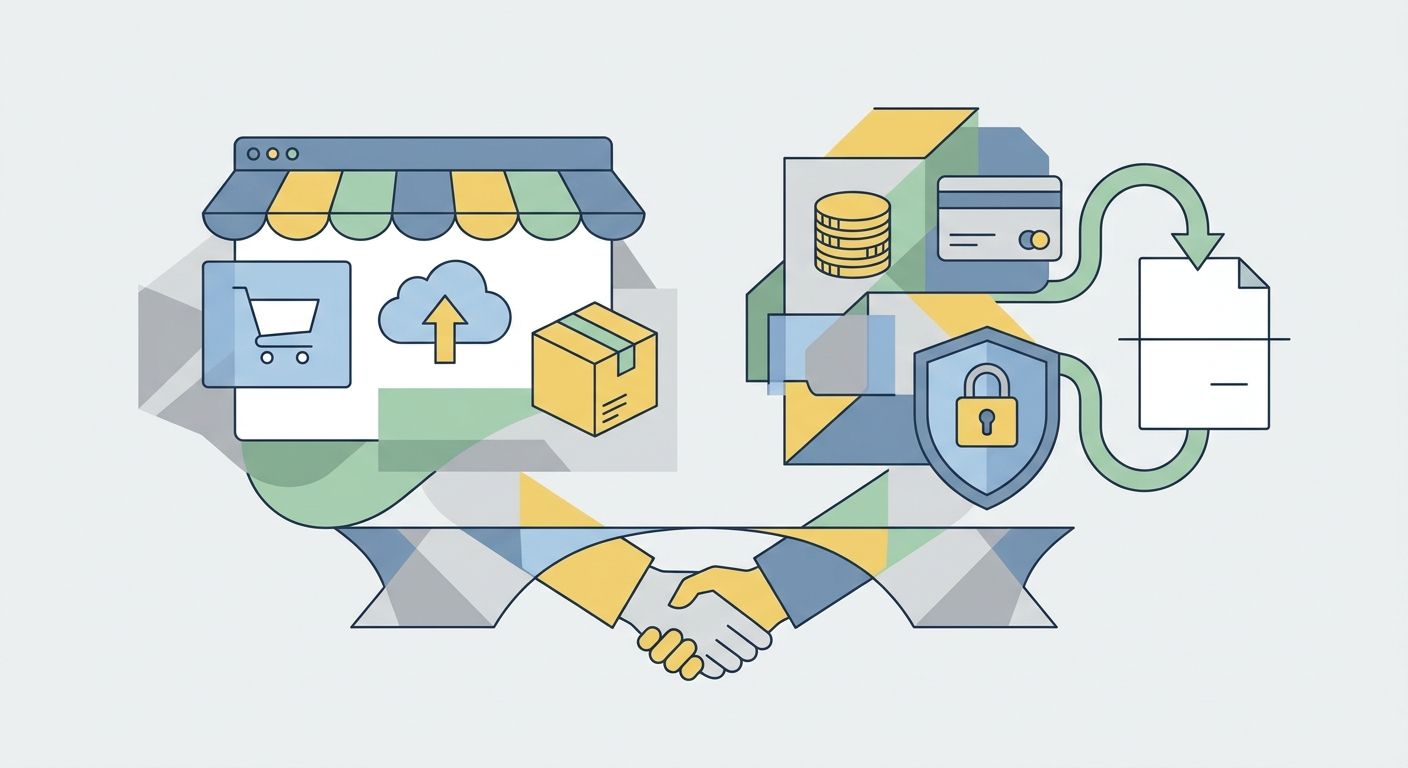
No doc business loans for e-commerce and dropshipping brands let online sellers qualify using Shopify Payouts, Stripe deposits, or Amazon Seller Central disbursements instead of two years of tax returns, built for founders whose P&Ls look thin because of COGS-heavy margins or fast inventory turns. Ecommerce cash moves differently than a typical small business — payouts land weekly instead of monthly, and refunds/chargebacks dent the top line in ways a bank underwriter rarely understands — so the loan structures built for this segment work around that rhythm instead of against it. The same deposit-based approach works no matter which small business ecommerce platform the store runs on.
TL;DR
- No doc business loans for ecommerce rely on bank statements or platform payouts, not tax returns, to qualify sellers.
- Bank statement loans suit stores with 6+ months of steady deposits; revenue-based financing suits stores under six months old.
- Underwriters look at net deposits after refunds and chargebacks, not gross sales — clean up business banking before applying.
- Startups can still qualify through revenue-based financing in 2026, though rates run higher than bank statement programs.
Why no doc business loans matter for e-commerce and dropshipping
A traditional bank wants two years of tax returns showing consistent net income. Most e-commerce sellers can't hand that over cleanly — inventory write-offs, aggressive COGS deductions, and marketplace reserve holds make a profitable store look flat or negative on paper even when bank statement loans for Amazon and e-commerce sellers show six-figure monthly deposits.
Amazon alone holds back a slice of seller payouts for days at a time as a reserve, and Shopify Payouts can lag two business days behind an actual sale. A bank underwriter reading a standard P&L has no framework for that. A no-doc lender that specializes in no doc business loans for small business owners reads the deposit pattern directly and skips the tax transcript request entirely.
Dropshippers face a sharper version of the same problem: margins run thin because suppliers eat a chunk of every sale, so net income on a tax return can look worse than the business actually performs. Lenders built for this segment underwrite the deposits, not the deduction-heavy bottom line.
Update your documentation before you apply
Pull your platform payout statements instead of last year's tax return
Start the file with the records a no-doc underwriter actually reads.
- Shopify Payouts summary for the trailing 3-6 months
- Stripe and PayPal deposit history tied to the same business bank account
- Amazon Seller Central disbursement reports, including reserve amounts held back
- Business bank statements showing those payouts actually landing
- A refund and chargeback ledger separate from gross sales
Separate personal and business banking
Most declines in this segment trace back to messy accounts, not weak revenue.
- Open a dedicated business checking account if you haven't already
- Route every Shopify, Amazon, and Stripe payout through that single account
- Stop paying suppliers out of personal Venmo or Cash App
- Keep at least three months of clean statements before you apply
- Move any personal transfers out of the account entirely — they distort the average
Calculate your net deposit run rate, not gross sales
Underwriters subtract refunds and chargebacks before they calculate anything else.
- Take gross deposits and subtract refunds, returns, and chargebacks
- Average net deposits across the trailing 3-6 months
- Flag seasonal spikes (Q4) and dips (January-February) separately rather than blending them
- Exclude one-time transfers, loans, or capital injections that inflate the average
- Recalculate monthly so the number is current, not from a stale spreadsheet
Match the loan structure to your channel mix
A single-channel Shopify store and a five-marketplace operation don't fit the same product.
- Single-channel Shopify or WooCommerce stores generally fit bank statement loans best
- Multi-marketplace sellers (Amazon, Walmart, eBay combined) often qualify through revenue-based financing that pulls from blended payouts
- Dropshippers running thin margins should avoid daily-debit merchant cash advances that eat into an already tight spread — check no doc business loans for wholesale distributors if a chunk of the business runs on bulk supplier terms
- Brands holding significant physical inventory may fit better with financing structured around specific SKU purchases rather than general working capital
Time the application around your sales cycle
Applying at the wrong moment in the calendar costs sellers real rate and term.
- Apply for restock financing 60-90 days ahead of a Q4 peak, not during it
- Avoid applying mid-chargeback dispute — it temporarily depresses net deposits
- Submit trailing three-month statements during a high-volume stretch when possible
- Refinance short-term merchant cash advance debt into a longer bank statement loan once the seasonal peak clears — see how to qualify for a no doc business loan without tax returns for the documentation path
Compare lenders on total cost and stips, not the headline rate
A lower advertised rate with a shorter term can cost more than a longer bank statement loan.
- Run the factor rate against the actual payback period for any MCA offer
- Check for prepayment penalties before signing a bank statement loan
- Ask what triggers extra documentation requests — SKU lists, supplier invoices, platform login access
- Confirm whether the loan reports to business credit bureaus, since some MCA products don't
Comparing no-doc financing options for e-commerce sellers
Bank statement business loan
- Best for: Sellers with 6-12 months of steady payouts
- Funding speed: Days to about 1-2 weeks
- Key limitation: Needs consistent deposits; weak fit for brand-new stores
Revenue-based financing / MCA
- Best for: Stores under 6 months old needing fast cash
- Funding speed: 24-72 hours
- Key limitation: Daily or weekly debits strain thin dropshipping margins
Business line of credit
- Best for: Sellers needing repeat access for restocks
- Funding speed: 1-3 weeks
- Key limitation: Often still requires some financial documentation
SBA loan
- Best for: Established sellers wanting the lowest long-term rate
- Funding speed: Weeks to months
- Key limitation: Full documentation, longest approval timeline
Inventory / PO financing
- Best for: Dropshippers and wholesalers funding large SKU buys
- Funding speed: 1-2 weeks
- Key limitation: Tied to specific inventory, not general working capital
Verdict: a bank statement business loan is the best fit for e-commerce brands with 6+ months of steady deposits; revenue-based financing is the right fallback for stores under six months old that can't wait for a full statement history.
Common mistakes e-commerce and dropshipping brands make
- Mixing personal and business deposits until the month before applying, then scrambling to untangle them
- Judging affordability off the approved amount instead of running the factor rate math first
- Applying with a store that's 3-4 months old and expecting bank statement loan pricing
- Ignoring the refund and chargeback ratio, which underwriters in this segment check before anything else
- Financing a full year of inventory with a four-month merchant cash advance term, then refinancing under pressure
Talk through your ecommerce loan options
See which no-doc program fits your payout history and channel mix.
FAQ
What is a no doc business loan for e-commerce?
A no doc business loan for e-commerce qualifies a seller using bank statements or platform payout history instead of tax returns. It's built for Shopify, Amazon, and dropshipping brands whose tax filings understate actual cash flow.
Can dropshippers get business loans without tax returns?
Yes, dropshippers can qualify through bank statement loans or revenue-based financing that reads deposit history instead of tax filings. Thin reported margins from COGS deductions don't disqualify a store with steady net deposits.
Is a bank statement loan better than a merchant cash advance for e-commerce?
A bank statement loan is generally cheaper for stores with 6+ months of steady deposits, since it avoids the daily or weekly debit structure of a merchant cash advance. An MCA still makes sense for a store under six months old that can't show that history yet.
How much revenue do I need to qualify for a no doc ecommerce loan?
Requirements vary by lender and depend on net deposits after refunds and chargebacks, not gross sales figures. Three to six months of consistent business bank deposits matters more than hitting one specific revenue number.
Do Amazon sellers qualify for no doc business loans?
Amazon sellers qualify by submitting Seller Central disbursement reports alongside business bank statements. Lenders account for Amazon's reserve holdbacks when calculating actual available cash flow.
How fast can an e-commerce business loan fund?
Revenue-based financing and merchant cash advances can fund in 24-72 hours, while bank statement loans typically take days to about two weeks. Speed depends on how clean the payout and bank statement documentation is going in.
What credit score do I need for a no doc loan for online sellers?
No doc programs weight deposit consistency more heavily than personal credit score, though credit still factors into pricing. A seller with strong, steady payouts and average credit often qualifies where a traditional bank loan would decline.
Can a new dropshipping business get funded without two years in business?
Yes, revenue-based financing and merchant cash advances fund stores under six months old based on recent payout velocity. Bank statement loans generally require a longer deposit history, so newer stores fit better with the revenue-based route first.
One last thing
The single biggest underwriting flag in this segment isn't low revenue — it's a refund and chargeback ratio that spikes above what the platform payouts can explain. Clean that ledger up before you apply in 2026, because it's the first thing a no-doc underwriter checks after the deposit total.


