


P&L Only Mortgage Loans for Business Owners: 2026 Guide
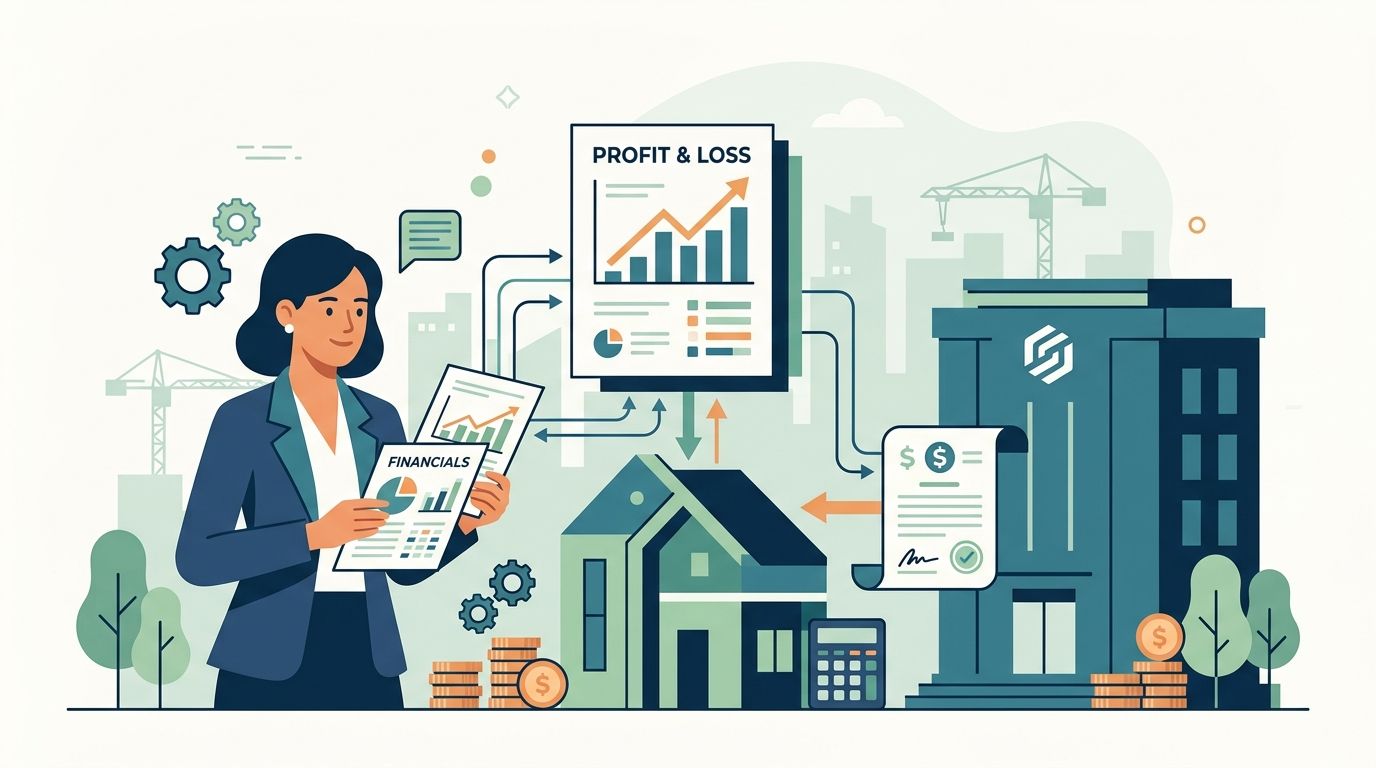
P&L only mortgage loans for business owners let self-employed applicants qualify for a home or investment property using a CPA-prepared profit and loss statement instead of two years of tax returns or 12-24 months of bank statements. Business owners face a specific problem traditional underwriting can't solve: write-offs that legally lower taxable income also lower the qualifying income a bank sees, even when the business generates real cash flow.
TL;DR
- A P&L only mortgage loan qualifies business owners on a CPA-prepared profit and loss statement, not tax returns.
- Best for business owners whose tax returns understate real income due to deductions and write-offs.
- Non-QM P&L programs typically require 20% or more down and carry higher rates than full-doc loans.
- Loanguys.com underwrites P&L only loans alongside bank statement and DSCR programs for self-employed borrowers.
Why P&L-only loans matter for business owners
A business owner who nets $180,000 in real profit but writes off $90,000 in legitimate expenses shows a bank $90,000 in taxable income on a 1040. Conventional underwriting reads that $90,000 as the whole story, which caps loan size or kills the application outright. A P&L only mortgage loan lets an accountant's statement of actual business performance stand in for the tax return, which is exactly why this program exists.
Tax returns also lag. A business owner applying in early 2026 is often still working off 2024 filings, missing a strong 2025 the lender never sees. A recent P&L statement closes that gap and reflects the business as it runs today, not 18 months ago.
Loanguys.com underwrites P&L only loans for business owners who don't fit a standard bank statement or full-doc box, alongside bank statement and DSCR programs for other self-employed situations.
How to qualify for a P&L only mortgage loan
Confirm you actually qualify for P&L-only underwriting
Not every self-employed borrower needs this program — some qualify faster with a standard bank statement loan.
- Business has been operating for at least two years under the same entity
- Tax returns show significantly lower income than actual cash flow
- You can produce a CPA or licensed tax preparer to sign the P&L
- Credit and reserves otherwise meet non-QM standards
Get a CPA-prepared profit and loss statement
The statement is the entire foundation of the loan file, so it has to hold up to underwriter scrutiny.
- Use a licensed CPA or enrolled agent, not a bookkeeper without credentials
- Cover the trailing 12 months at minimum; some lenders want 24
- Break out revenue, cost of goods, operating expenses, and net profit clearly
- Match entity name and EIN exactly to your business bank accounts
- Avoid round-number estimates — underwriters flag statements that look guessed rather than calculated
Gather supporting business documents
The P&L doesn't stand alone; lenders cross-check it against real business records.
- Business license or registration showing the entity is active
- EIN confirmation letter or IRS CP 575
- 3-6 months of business bank statements to sanity-check deposit volume against the P&L
- Business formation documents (articles of incorporation, operating agreement)
Calculate your qualifying income and DTI
Underwriters take the net profit line from your P&L and run it through the same debt-to-income math as any other borrower.
- Add back documented non-cash expenses like depreciation where the lender allows it
- Subtract any personal expenses that leaked into the business P&L
- Compare total monthly debt (including the new mortgage payment) against qualifying income
- Budget for reserves — non-QM programs often want 6-12 months of payments in the bank
Compare P&L-only against bank statement and full-doc options
P&L only isn't automatically the right fit. Run the numbers against the alternatives before committing to one path — see the bank statement loan approval process for the deposit-based version of self-employed qualification.
- Bank statement loans skip the CPA but need consistent, traceable deposits
- Full-doc loans offer the lowest rates if your tax returns actually support the loan amount
- DSCR loans replace personal income entirely with property cash flow, but only work for investment property
Work with a broker who actively closes P&L-only files
This program lives in a narrow lane of the non-QM market — not every lender offers it, and fewer still process it well.
- Ask how many P&L-only files the lender closed in the trailing 12 months
- Confirm whether the lender requires a minimum two years in business or accepts less with compensating factors
- Get the CPA letter requirements in writing before you pay for the statement
P&L-only loans vs. the alternatives for business owners
P&L only loan
- Best For: Business owners whose tax write-offs mask real income
- Documentation Required: CPA-prepared profit and loss statement plus business license
- Key Limitation: Rate runs higher than full-doc, and not every lender offers it
Bank statement loan
- Best For: Business owners who'd rather show deposits than a prepared statement
- Documentation Required: 12-24 months of personal or business bank statements
- Key Limitation: Needs consistent, traceable deposit patterns
Full doc / traditional loan
- Best For: Business owners whose tax returns already show strong net income
- Documentation Required: Two years of tax returns, W-2s if applicable
- Key Limitation: Legitimate write-offs that lower taxable income can sink the file
DSCR loan
- Best For: Business owners buying investment property, not a primary residence
- Documentation Required: Property cash flow documentation only
- Key Limitation: Doesn't apply to owner-occupied purchases
Verdict: a P&L only mortgage loan is the right call for a business owner with real cash flow and messy tax returns, and the wrong call for anyone who can qualify on full documentation at a lower rate.
Talk through your P&L-only options
See which self-employed loan program fits your business income.
Common mistakes business owners make with P&L-only loans
- Submitting a self-prepared P&L with no CPA signature. Underwriters reject these outright regardless of how accurate the numbers are.
- Mixing personal spending into the business P&L. A car payment or personal travel line item understates real profit and confuses the reviewer.
- Assuming P&L-only covers a primary residence purchase. Many programs restrict this documentation type to investment property only — confirm before you get attached to a house.
- Ignoring seasonal revenue swings. A landscaping or event business with a strong summer and a dead winter needs the P&L to show the full annual pattern, not just the busy months.
- Skipping reserve planning. Non-QM underwriters routinely ask for 6-12 months of payments in reserve, and a P&L-only borrower who shows up with two months in the bank gets stuck mid-file.
FAQ
What is a P&L only mortgage loan?
A P&L only mortgage loan qualifies a borrower using a CPA-prepared profit and loss statement instead of tax returns or bank statements. It's built for business owners whose tax filings understate their actual cash flow.
Who qualifies for a P&L only mortgage loan?
Business owners with at least two years operating the same entity and a CPA willing to sign a profit and loss statement typically qualify. Credit and reserve requirements still apply on top of the income documentation.
Is a P&L only loan better than a bank statement loan?
Neither is universally better — a P&L only loan suits owners with a clean accountant-prepared statement, while a bank statement loan suits owners with consistent, traceable deposits. Compare both against your specific tax and deposit history before choosing.
Do P&L only loans require tax returns at all?
No, that's the defining feature of the program. Some lenders still ask for business bank statements as a sanity check against the P&L, but tax returns aren't part of the qualifying file.
Can I use a P&L only loan to buy a primary residence?
It depends on the lender's program rules in 2026 — some P&L only options are investment-property only, others allow owner-occupied purchases. Confirm eligibility before you write an offer.
How much down payment does a P&L only mortgage require?
Non-QM P&L only programs commonly require 20% or more down, higher than a conventional full-doc loan. The exact figure depends on credit profile, reserves, and the specific lender.
What documents support a P&L only mortgage application?
A CPA-prepared profit and loss statement is the core document, backed by a business license, EIN confirmation, and several months of business bank statements. Lenders use the bank statements to confirm the P&L numbers are real.
Does a P&L only loan cost more than a traditional mortgage?
Yes, rates on P&L only and other non-QM programs run higher than conventional full-doc loans because the lender is taking on more documentation risk. The tradeoff is qualifying on real income the tax return doesn't show.
One last thing
The single biggest reason P&L only files get denied isn't the profit number — it's a CPA who won't put their license behind the statement once an underwriter calls to verify it. Line up a CPA who does this regularly before you shop lenders, not after you find a house.


