


Bank Statement Loans for Towing Companies: 2026 Guide
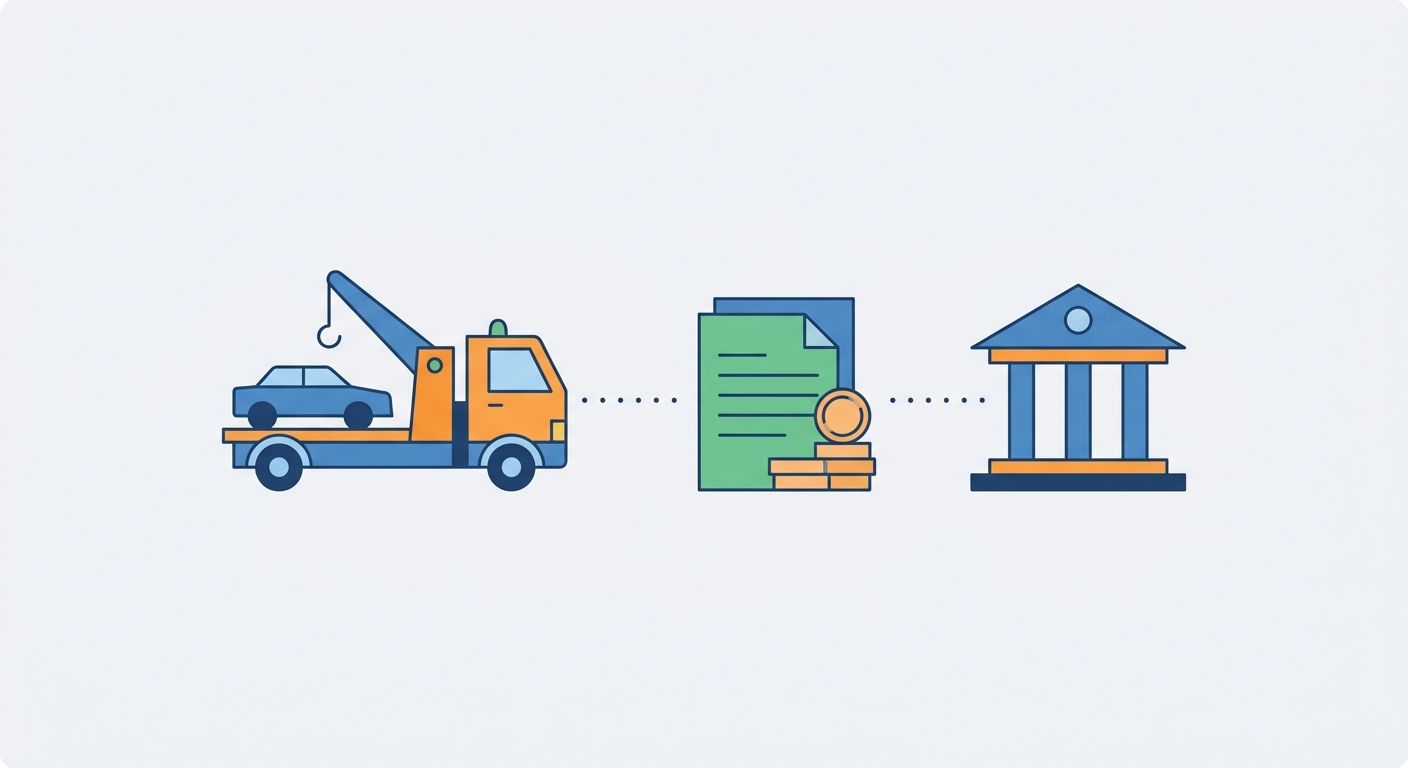
Bank statement loans for towing companies let tow truck operators and towing business owners qualify for a mortgage using 12 to 24 months of business or personal bank deposits instead of tax returns that show heavy write-offs for fuel, equipment, and insurance. Towing income is real cash flow, but IRS filings built to minimize tax liability rarely reflect it, and that mismatch is what keeps qualified towing company owners stuck at conventional lenders.
TL;DR
- Bank statement loans for towing companies use 12-24 months of deposits, not tax returns, to prove income.
- Towing operators with high equipment depreciation write-offs often qualify for more with bank statement programs than conventional loans.
- DSCR loans are the better fit if the towing company owner is buying an investment property rather than a primary residence.
- Loanguys.com underwrites bank statement loans for towing and trucking-adjacent businesses without requesting two years of tax returns.
Why bank statement loans matter for towing company owners
Towing businesses run on cash flow that doesn't match their Schedule C. A tow operator pulling six figures in gross receipts can show $38,000 in net income after depreciating a fleet of trucks, writing off fuel, dispatch software, storage lot rent, and insurance. Underwriters at a conventional bank look at that $38,000 number and calculate a debt-to-income ratio that kills the deal before it starts.
The bank statement loans for truck drivers and owner-operators program exists for exactly this reason, and towing company owners face the same documentation problem with an added wrinkle: seasonal spikes from winter storms and highway pileups mean monthly deposits swing hard, which some lenders read as instability instead of what it actually is — a business with predictable annual demand and unpredictable monthly timing.
Verdict: a towing company owner with 12+ months in business and steady average deposits qualifies for more house with a bank statement loan than with a conventional tax-return loan, even at a similar rate.
Update your bank statement history before you apply
Lenders want a clean, explainable deposit pattern, not a wall of unlabeled transfers.
- Pull 12 or 24 consecutive months of statements from the primary business account
- Flag any large one-time deposits (insurance payout, equipment sale) with a written explanation
- Move personal expenses off the business account at least 60 days before applying
- Keep dispatch or towing-service platform payouts landing in one account, not scattered across three
- Close or stop using dormant accounts that complicate the paper trail
Separate business deposits from personal transfers
Underwriters need to isolate what actually counts as qualifying income, and personal transfers between accounts get excluded or flagged as unverifiable.
- Route municipal and police-contract payments into the business account only
- Stop using the business debit card for personal fuel, groceries, or retail purchases
- Document owner draws separately from operating expenses
- Keep a second personal account for household spending if you currently mix the two
- Ask your bookkeeper for a 12-month deposit summary broken out by source
Calculate your qualifying income the way lenders do
Bank statement programs apply an expense factor to gross deposits instead of using your net tax return figure, and that math is what makes the program work in your favor.
- A typical expense ratio runs 50% for personal bank statement programs and can drop lower with a signed CPA letter
- Business bank statement programs often use a lower flat expense factor than the deduction-heavy number on your Schedule C
- Average your monthly gross deposits across the full statement period, not just the strongest six months
- Exclude loan proceeds, transfers between your own accounts, and one-time asset sales from gross deposits
- Ask the lender for a sample calculation before you submit a full application so there are no surprises at underwriting
Check whether a DSCR loan fits your situation better
If the goal is an investment property rather than a primary residence, a bank statement loan may not be the right tool at all.
- DSCR loans qualify off the subject property's rental income, not your towing business's cash flow
- A towing company owner buying a rental duplex or a small commercial lot for a second truck yard often qualifies faster through DSCR underwriting
- Bank statement loans still make sense for buying or refinancing a primary residence
- Combine strategies: use a bank statement loan for your home and a DSCR loan for the investment side of your portfolio
- Ask a broker to run both scenarios side by side before choosing one path
Clean up NSFs and irregular deposits
Non-sufficient-fund notices and erratic deposit patterns are the two things that slow down or sink a bank statement approval.
- Resolve any NSF within 90 days of applying — most programs allow zero to one in the trailing 12 months
- Build a 30-day cash buffer in the business account before submitting statements
- Explain any month with a deposit 2x above the average in writing, ready to hand to the underwriter
- Avoid opening new credit lines or large equipment loans in the 60 days before closing
- Keep the account open with the same bank for the full lookback period whenever possible
Compare bank statement lenders against other financing paths
Not every towing company owner needs a bank statement mortgage — some need working capital for a new flatbed or a second lot, and that's a different product entirely.
- Review asset-based lending for trucking and logistics companies if the need is equipment or fleet capital rather than a home or investment property purchase
- Ask any lender what their minimum time-in-business requirement is — most bank statement programs want 12 to 24 months
- Get quotes from at least two brokers before locking a rate, since bank statement pricing varies more than conventional pricing
- Confirm whether the lender requires personal statements, business statements, or both
- Run the numbers on a bank statement loans for small business owners comparison if you're unsure which document set applies to your entity structure
Get pre-approved before you shop for a property
A pre-approval built on bank statements takes longer to underwrite than a W-2 file, so start the process before you're under contract.
- Submit statements 45-60 days ahead of your target closing date
- Lock your expense factor and qualifying income figure in writing from the lender
- Confirm the lender's overlays on self-employed towing or transportation businesses specifically — some lenders flag the industry code and ask for extra documentation
- Read how to get approved for a bank statement loan as a business owner for the full document checklist before you submit
- Keep a copy of your business license and towing operator permits on hand in case underwriting asks for entity verification
Comparing your financing options as a towing company owner
Bank statement loan
- Best for: Towing owners buying a primary residence with strong deposits but low taxable net income
- Key limitation: Requires 12-24 months of clean statements, expense factor lowers qualifying income
DSCR loan
- Best for: Towing owners buying an investment or rental property
- Key limitation: Qualifies off property rental income, not usable for a primary residence purchase
Asset-based loan
- Best for: Owners with heavy equipment or a stock/investment portfolio needing capital fast
- Key limitation: Underwriting depends on liquid or fixed assets, not cash flow
Conventional mortgage
- Best for: Towing owners with strong net income on tax returns
- Key limitation: Depreciation and write-offs often shrink qualifying income below what's needed
Common mistakes towing company owners make
- Mixing personal and business accounts for years, then trying to untangle it in 60 days. Lenders need a clean pattern, not a last-minute cleanup.
- Assuming gross revenue equals qualifying income. The expense factor applies to deposits, not to your invoice totals.
- Ignoring seasonal swings without documentation. A slow February and a heavy December from storm-related tows need an explanation letter, not silence.
- Applying with only one lender's overlay in mind. Some lenders penalize transportation-industry codes more than others, and shopping around matters here.
- Waiting until under contract to start the bank statement file. Self-employed underwriting takes longer than W-2 underwriting, and a rushed file gets more conditions, not fewer.
Get your towing income reviewed
See what you qualify for using bank statements, not tax returns.
FAQ
What is a bank statement loan for a towing company owner?
A bank statement loan qualifies a towing company owner using 12 to 24 months of bank deposits instead of tax returns, which helps when depreciation and write-offs shrink taxable income below what a conventional lender requires.
How much income do towing company owners need to qualify?
Lenders apply an expense factor, often around 50%, to your average monthly deposits to calculate qualifying income; the exact figure depends on the specific program and can be lower with a CPA letter.
Is a bank statement loan better than a DSCR loan for a towing business owner?
A bank statement loan is better for a primary residence purchase, while a DSCR loan is better for an investment property because it qualifies off the property's rental income rather than your business cash flow.
How many months of bank statements do towing operators need to provide?
Most bank statement loan programs in 2026 require 12 to 24 consecutive months of statements from a business or personal account, with 24 months typically producing a stronger qualifying income calculation.
Do NSF charges disqualify a towing company owner from a bank statement loan?
One or two NSFs across the trailing 12 months usually won't disqualify an applicant, but repeated NSFs signal cash flow instability and most lenders will decline or require a larger reserve before approving.
Can a towing company owner use business bank statements instead of personal ones?
Yes, business bank statement programs exist specifically for this, applying a different expense factor than personal statement programs and often requiring the entity to be registered for at least 12 months.
What documents besides bank statements does a towing operator need?
Expect to provide a business license, towing operator permits where applicable, a CPA or bookkeeper letter, and proof of business ownership percentage in addition to the statement history.
Does seasonal towing income hurt loan approval?
Seasonal swings from storm season or contract work don't automatically hurt approval, but large unexplained deposit spikes need a written explanation letter attached to the application file.
One last thing
The expense factor is the single number that decides whether your bank statement loan beats your tax-return numbers or not — ask for it in writing before you submit statements, because a 50% factor and a 40% factor on the same deposit history can shift your qualifying income by tens of thousands of dollars a year.


