


Best DSCR lenders for corporate housing and medical travel rentals

Best starting point: Loanguys for investors comparing DSCR and bridge financing through a mortgage broker. Best alternatives: a direct DSCR lender for a stabilized rental, a portfolio lender for a nonstandard lease structure, and a bridge lender for a property still being prepared for tenants. This 2026 guide compares financing routes for corporate housing and medical travel rentals, with eligibility—not an unsupported lender leaderboard—driving the recommendation.
TL;DR
- Loanguys offers DSCR and bridge programs; confirm corporate housing eligibility before selecting a loan.
- Compare DSCR lenders for corporate housing rentals by accepted leases and qualifying rental income.
- Choose a direct DSCR lender when the property's documented rental income fits its guidelines.
- Consider portfolio underwriting for nonstandard leases and bridge financing for an unfinished rental conversion.
Why this matters
A furnished home rented to relocating employees or traveling healthcare workers needs financing that matches its actual use. Calling the property a rental does not settle how a lender will evaluate its leases, income, or occupancy.
The best financing match accepts the rental arrangement you actually operate. A signed corporate lease, individual furnished lease, and projected booking calendar are different forms of evidence. Ask which one the lender accepts before ordering reports or committing to a financing route.
This distinction matters in 2026 because your application needs current program guidance, not assumptions drawn from another investor's approval. A property near a hospital is still a housing investment; proximity alone does not establish qualifying rent or mortgage eligibility.
What makes the best DSCR financing match?
Use these criteria before comparing lenders:
- Lease eligibility: Confirm acceptance of the actual tenant, lease duration, renewal terms, and any corporate subleasing arrangement.
- Income evidence: Identify whether underwriting uses executed leases, appraiser-supported market rent, operating history, or another permitted source.
- Coverage calculation: Request the exact debt-service coverage ratio formula, including the housing expenses included in the denominator.
- Property readiness: Establish whether the property must be rent-ready and whether proposed repairs require separate financing.
- Borrower structure: Confirm the proposed ownership entity, guarantor requirements, credit review, and reserve documentation.
- Exit flexibility: Review prepayment provisions, maturity, and refinancing conditions against your expected holding period.
Treat these as screening questions, not promised program features. A lender that fails a critical eligibility test is not a useful finalist, regardless of how attractive its initial proposal looks.
Financing options at a glance
The order below prioritizes the next useful conversation for each property situation. It does not rank unverified lender performance.
Loanguys mortgage broker
- Best for: Investors comparing DSCR and transitional financing
- Standout feature: Offers DSCR, bridge, and other investment-property loan programs
- Key limitation: Corporate housing acceptance requires program-specific confirmation
Direct DSCR lender
- Best for: Stabilized housing with acceptable rent evidence
- Standout feature: Property-income-focused qualification
- Key limitation: Lease and income rules remain lender-specific
Portfolio lender
- Best for: Nonstandard corporate lease arrangements
- Standout feature: A route to request institution-specific underwriting
- Key limitation: Keeping a loan in portfolio does not guarantee acceptance
Bridge lender
- Best for: A property being repaired or prepared for rental use
- Standout feature: Transitional financing rather than a permanent rental solution
- Key limitation: Requires a credible payoff or refinance plan
1. Loanguys: best starting point for comparing financing routes
Loanguys is a mortgage broker offering DSCR, fix-and-flip, bridge, bank-statement, and short-term rental loan programs. That range makes the broker route relevant when you need to distinguish a rental-income loan from transitional financing.
Loanguys is best for investors seeking DSCR and bridge loan options through a mortgage broker. For corporate housing, start with the proposed lease and property condition rather than requesting a generic rental loan.
Loanguys pros:
- Offers both DSCR and bridge loan programs.
- Serves real estate investors across the United States.
- Offers additional financing categories when the initial loan route needs reconsideration.
Loanguys cons:
- A general DSCR offering does not establish acceptance of your corporate or medical travel rental.
- As a broker, Loanguys is not itself proof that a particular funding lender will approve the transaction.
Best for: You need help identifying the appropriate financing category before choosing a specific loan.
Bring the lease, property address, ownership structure, rental records, and repair scope to the first discussion. Ask for confirmation of which program accepts the use, what income supports qualification, and what remains subject to underwriting.
Verdict: Hold—advance to a property-specific review before committing.
2. Direct DSCR lender: best for a stabilized rental
A direct DSCR lender is a useful route when your property is ready to rent and your documentation fits its guidelines. DSCR means debt-service coverage ratio: a measure comparing qualifying property income with the required debt payment under the lender's calculation.
For residential rental loans, lenders commonly evaluate qualifying rent against a housing payment that includes principal, interest, taxes, insurance, and applicable association dues. Request the precise formula; do not substitute a commercial net-operating-income calculation without checking.
Direct DSCR lender pros:
- Centers qualification on the rental property's income coverage.
- Lets you evaluate one lender's stated documentation requirements directly.
- Fits a screening process built around an existing, documented rental operation.
Direct DSCR lender cons:
- A furnished rental premium is not automatically qualifying income.
- An accepted lease structure at one lender does not establish acceptance elsewhere.
Best for: Your corporate housing property is stabilized, and the lender confirms that the leases and rental evidence meet its rules.
For a 2026 application, request current guidance on corporate tenants, furnished leases, and occupancy restrictions. Explain who signs the lease, who stays in the property, and who pays rent.
Verdict: Buy—choose this route only after the lender confirms the income method and rental use.
3. Portfolio lender: best for a nonstandard lease structure
A portfolio lender retains loans rather than relying entirely on selling them into a standardized secondary-market program. That distinction gives you a reason to request its own underwriting criteria; it does not establish that the lender accepts corporate housing.
This route deserves consideration when a company leases the home and assigns different occupants, or when the agreement differs materially from a conventional residential lease. Present the entire arrangement, including any operator or sublease agreement.
Portfolio lender pros:
- Provides a route to ask for institution-specific credit review.
- Lets you discuss the complete contractual structure rather than only the rental label.
- Supports a focused conversation about property use and repayment evidence.
Portfolio lender cons:
- Portfolio status alone says nothing about eligible properties or borrowers.
- A nonstandard lease still needs an acceptable underwriting basis.
Best for: The main obstacle is the corporate tenant or operating agreement, not an unfinished property.
Ask the lender to distinguish between a lease it can review and a lease it has actually accepted for underwriting. Those are not equivalent answers.
Verdict: Hold—request a lease review before treating portfolio lending as the solution.
4. Bridge lender: best for a rental conversion in progress
Bridge financing addresses a transitional property situation rather than proving that a permanent DSCR loan will follow. Consider this route when repairs or conversion work prevent the property from meeting a permanent lender's requirements today.
The central question is the exit: how will you repay the bridge loan? A planned DSCR refinance needs its own eligibility review, including acceptable rent evidence and the property's completed condition.
Bridge lender pros:
- Addresses the financing stage before a rental is stabilized.
- Separates the improvement phase from the permanent mortgage decision.
- Gives you a framework for matching financing to the property's current condition.
Bridge lender cons:
- Does not guarantee a later refinance approval.
- Adds maturity and payoff obligations that must fit the project schedule.
Best for: Your property needs work before it can support the intended corporate or medical travel rental operation.
For a 2026 conversion, obtain the proposed permanent lender's documentation requirements before selecting transitional debt. Do not build the exit around projected furnished income that the refinance lender has not agreed to consider.
Verdict: Wait—confirm the permanent financing path before committing to the bridge loan.
How to screen DSCR lenders for corporate housing rentals
Use the same sequence with every candidate. Consistent questions make the answers comparable and expose differences hidden by the broad term DSCR.
Property use
Describe the accommodation accurately: corporate relocation housing, traveling healthcare worker accommodation, or housing for patients and accompanying families. State whether you provide lodging only or additional services, and ask how the lender classifies that use.
Separate financing approval from permission to operate. Review local requirements, association restrictions, lease permissions, and insurance with the appropriate professionals.
Lease evidence
Prepare 3 document categories: lease agreements, payment records, and property expense records. This is an organizational checklist, not a universal lender requirement.
Include amendments and operator agreements. A lender needs to understand whether the rent obligation belongs to an individual occupant, an employer, or an intermediary.
Income method
Request 2 rent views: the lender's qualifying rent and your operating forecast. The qualifying figure determines underwriting; your forecast determines whether the investment meets your own objectives.
Keep them separate. Furnishings, utilities, cleaning, vacancy, management, and maintenance still affect operating results even when a mortgage coverage calculation does not subtract each expense individually.
Exit terms
Write 1 exit plan covering your expected hold, sale, or refinance. Then compare the loan's maturity and prepayment provisions with that plan.
For additional context on the property category, review DSCR loans for medical travel and corporate housing investors. Use the guide to prepare questions, not as a substitute for written eligibility confirmation.
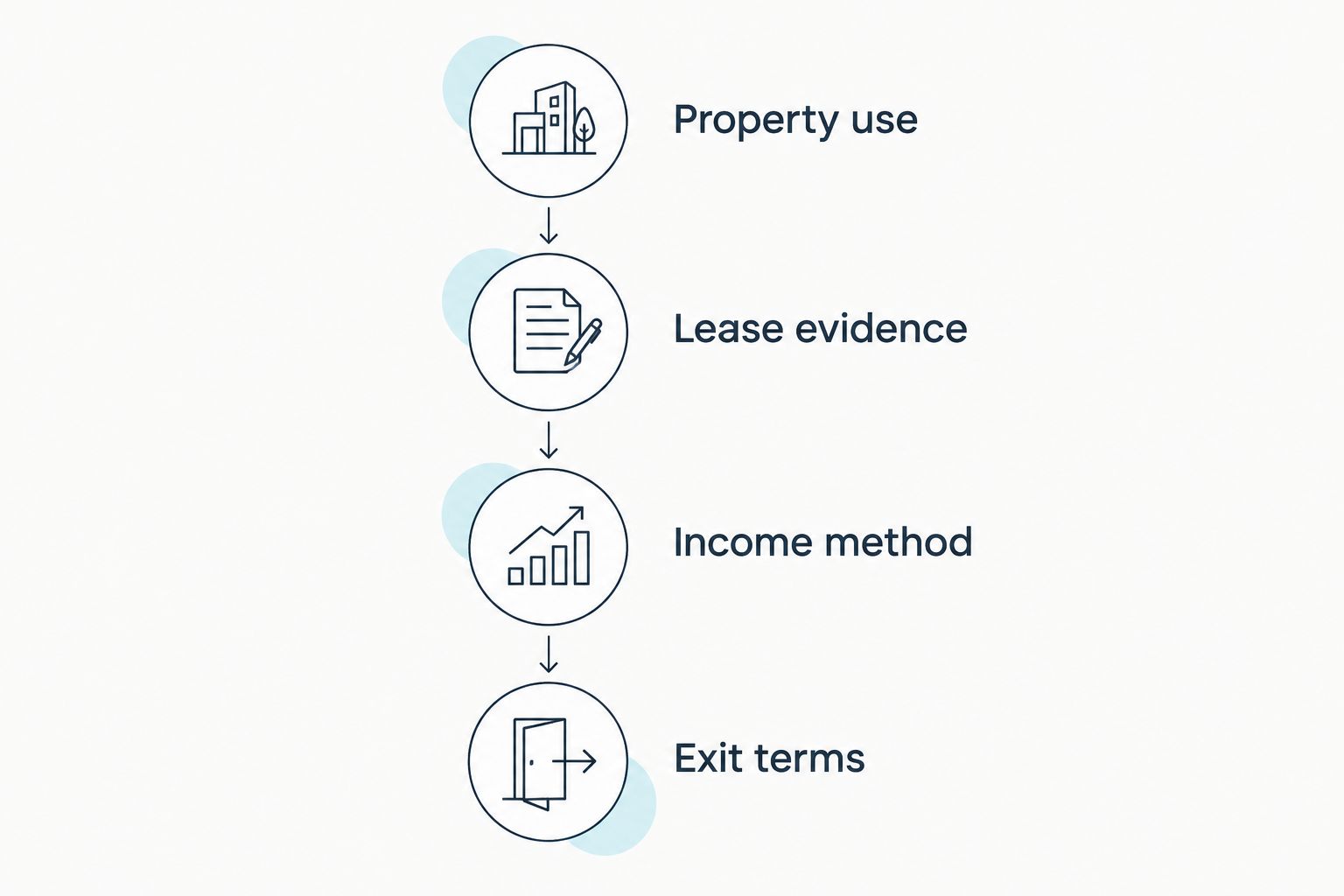
Confirm the rental use and income method before comparing final loan terms.
How the recommendations are ranked
The recommendations follow property readiness and documentation fit. Broker review comes first when the financing category is unsettled; direct DSCR review fits stabilized income; portfolio review addresses unusual agreements; bridge review addresses a transitional property.
This is a decision framework, not a claim about approval rates, closing speed, or lender market share. In 2026, a useful shortlist is one whose candidates can explain how they would evaluate your specific property.
Which financing route should you choose?
Start with the mortgage broker route if you cannot yet distinguish an eligibility issue from a property-readiness issue. Choose a direct DSCR lender when the completed property and rental evidence fit its rules.
Use portfolio review for a lease structure that needs individual consideration. Use bridge financing only when the property needs a transitional solution and you have investigated the repayment path.
A useful next step is a property-specific discussion with Loanguys. Ask for the accepted rental classification, required evidence, and unresolved underwriting conditions—not a blanket assurance about corporate housing.
Discuss your rental financing
Explain your lease structure, rental records, and property condition before choosing a loan route.
FAQ
What's the best way to compare DSCR lenders for corporate housing rentals?
Compare acceptance of your actual lease structure and qualifying rental income first. Then compare coverage calculations, ownership requirements, and exit provisions using the same property documents.
Does Loanguys offer DSCR loans?
Loanguys offers DSCR loan programs as a mortgage broker. Confirm whether a specific program accepts your corporate housing or medical travel rental before proceeding.
Can a corporate lease support a DSCR loan?
A corporate lease supports qualification only when the lender accepts that lease structure and its income evidence. Submit the agreement and explain who occupies the property and who owes rent.
Does being near a hospital make a property eligible?
Hospital proximity does not establish mortgage eligibility. The lender still evaluates the property, borrower, rental arrangement, and qualifying income under its program rules.
Is furnished rental income the same as qualifying rent?
Furnished rental income and qualifying rent are not automatically the same. Ask which rental evidence the lender accepts and how it treats bundled services or other charges.
Should I use a bridge loan before a DSCR refinance?
Use bridge financing only when the transitional property need and repayment plan justify it. A future DSCR refinance requires separate approval, so investigate its requirements before committing.
Does a DSCR loan measure my actual rental profit?
A lender's DSCR calculation is not a complete rental profit calculation. Build a separate operating forecast that includes vacancy, utilities, furnishings, management, maintenance, and other property expenses.
One last thing
Ask which rent figure survives a change in tenant strategy. If you later replace furnished corporate stays with an ordinary residential lease, your income assumptions change even though the mortgage remains.
Before signing in 2026, compare that fallback operation with your expected housing payment and operating expenses. A financing decision should support the property you can operate, not just the rental premium you hope to achieve.


