


Best DSCR Loan Lenders for Section 8: Verdict 2026

Best overall: LoanGuys for comparing DSCR loan programs through a mortgage broker. Best for a direct lender relationship: a direct DSCR lender. Best for a property that does not fit standard DSCR criteria: a local portfolio lender. The best DSCR loan lenders for Section 8 rental properties are the ones that will review the actual lease, voucher documents, and property expenses before treating the rent as qualifying income in 2026.
TL;DR
- LoanGuys is the best starting point for comparing DSCR loan programs for a Section 8 rental property.
- Ask how each lender counts voucher payments, tenant payments, and rent that has not started yet.
- A direct DSCR lender suits investors who want to work with one underwriting team; a portfolio lender suits unusual properties.
- The best DSCR loan lenders for Section 8 rental properties judge documented rent, not the voucher label alone.
Why this matters
A Section 8 voucher does not replace a lender’s review of rental income. Under the federal Housing Choice Voucher program, the public housing agency pays its portion to the landlord, and the tenant remains responsible for a separate portion. Your financing depends on what the lender accepts as rent, what documents support it, and whether the property covers the proposed loan payment under that lender’s rules.
A debt-service coverage ratio, or DSCR, compares qualifying rental income with debt service. A DSCR of 1.00 means the amounts are equal under the calculation being used; it does not mean every lender will approve the loan. Ask whether the lender’s calculation includes taxes, insurance, and association dues in the payment figure. That question is more useful than comparing advertised DSCR minimums without knowing how each lender measures the ratio.
LoanGuys is a mortgage broker offering DSCR loan programs to real estate investors across the United States. That makes LoanGuys a starting point if you want to compare a Section 8 rental scenario rather than assume a single lender’s treatment of voucher income will work for your property. Do not treat a voucher approval as a loan approval.
What makes the best Section 8 DSCR lender
Use these criteria before comparing names or requesting loan terms:
- Rent evidence: Will the lender review the signed lease, voucher paperwork, housing assistance payment documents, and payment history that apply to this property?
- Payment split: Will it count both the housing agency’s portion and the tenant’s portion? What happens if one portion has not begun?
- Expense review: Which property costs enter its calculation, and which expenses does it expect you to cover separately?
- Coverage test: Does it use the existing lease, an appraisal-based market-rent estimate, or another figure when calculating DSCR?
- Property fit: Does the lender finance this property type, location, ownership structure, and stage of occupancy?
- Closing path: Can its document requirements be met before your purchase or refinance deadline?
Get the income figure in writing before comparing offers. Two lenders can quote the same property while underwriting different rental amounts. Until you know which amount each lender uses, a rate or payment comparison does not tell you which loan is likely to close.
Section 8 financing options at a glance
LoanGuys, mortgage broker
- Best for: Comparing DSCR program fit
- Standout feature: One broker conversation can frame the property for lender review
- Key limitation: Final eligibility depends on the lender and loan terms
Direct DSCR lender
- Best for: Working with one lending team
- Standout feature: Direct access to that lender’s documentation requirements
- Key limitation: One lender’s policy may exclude the deal
Local portfolio lender
- Best for: Properties that miss standard DSCR criteria
- Standout feature: A bank can assess a loan it plans to keep in its portfolio
- Key limitation: Its product may not be a DSCR loan
This is a ranking of financing routes, not a claim that unnamed lenders have approved Section 8 properties. Confirm current voucher-income and property rules with each prospective lender in 2026. The decisive comparison is how each route evaluates your documented rental income.
How to compare the rent each lender will use
Keep four parts of the file distinct. A lender needs to see the rent evidence, understand the payment split, complete its expense review, and run its coverage test. Combining those questions into a single claim that the rent is government-backed hides the documentation gap that can delay a decision.
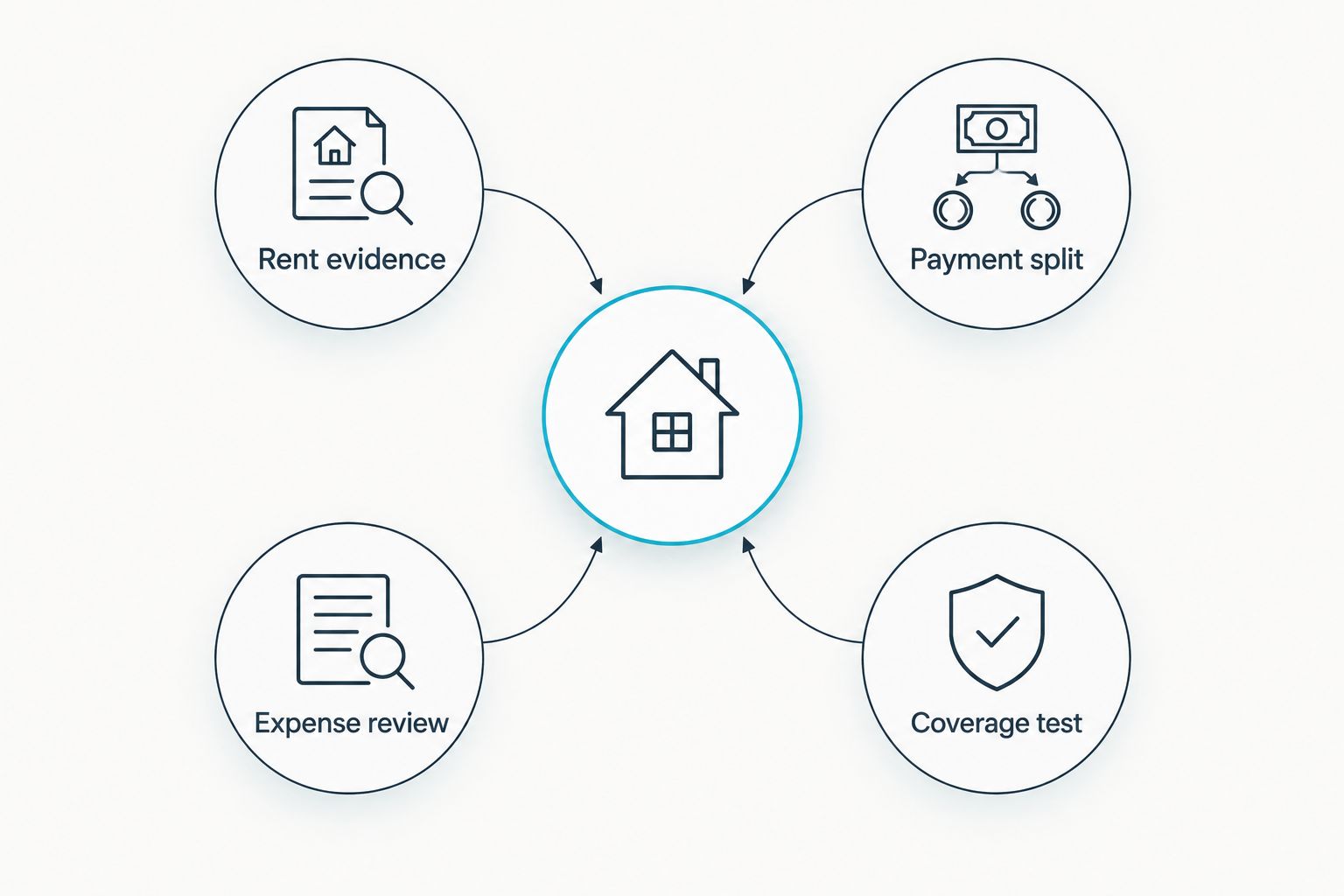
Confirm the rental amount a lender will use before comparing loan terms.
HUD’s Housing Choice Voucher rules explain why the split matters. The tenant’s contribution is generally based on 30% of adjusted monthly income, subject to the program’s other minimum-contribution rules. At initial occupancy, when gross rent exceeds the payment standard, the family share cannot exceed 40% of adjusted monthly income. Those are U.S. program rules relevant in 2026, not lender underwriting thresholds. Neither percentage tells you what a mortgage lender will count as qualifying rent.
1. LoanGuys: best DSCR loan broker for comparing programs
Best for: An investor who wants to discuss a Section 8 rental with a broker offering DSCR programs before committing to one lender’s criteria.
LoanGuys is a mortgage broker, not a named direct lender in this comparison. Its stated loan offerings include DSCR programs for real estate investors across the United States. Bring the lease, available housing agency documents, and property expenses to the discussion so the financing question is specific: which lender will consider this income and on what evidence?
LoanGuys pros:
- Offers DSCR loan programs, making the proposed financing relevant to an investment property.
- Provides a broker route for an investor comparing program fit rather than starting with a single direct lender.
- Also offers bridge and fix-and-flip loan programs when an investor’s immediate project is not a straightforward stabilized rental purchase.
LoanGuys cons:
- No input confirms that a particular LoanGuys lender accepts every Section 8 property or voucher document.
- A broker cannot replace the lender’s final review of rent, property, borrower, and loan terms.
LoanGuys pricing: Request current loan terms and fees for the specific property; no quoted terms are supplied here.
Verdict: Buy the comparison, not an assumption of approval. LoanGuys is the best starting point in this guide for a 2026 investor who needs to identify a workable DSCR program. Ask for the proposed qualifying rent and required voucher documents before weighing any offer.
2. Direct DSCR lender: best for one underwriting relationship
Best for: An investor with a complete rental file who wants to deal directly with one lender’s loan team.
A direct DSCR lender evaluates the application under its own program rules. That gives you a clear answer about its treatment of Section 8 income, provided you ask the question against actual documents rather than a general property description. It does not give you a comparison with other lenders’ criteria.
Direct DSCR lender pros:
- Gives you a direct path to that lender’s documentation checklist.
- Lets you resolve questions about its rent calculation with the team handling the file.
- Works as a comparison point when you already have another written loan proposal.
Direct DSCR lender cons:
- One lender’s rejection does not establish that the property cannot qualify elsewhere.
- A stated willingness to consider voucher income does not settle how it treats missing payments or an unsigned lease.
Direct DSCR lender pricing: Request a property-specific written offer; terms are not established by the lender category.
Verdict: Buy only after the lender confirms its income calculation. In 2026, choose this route when you value a direct relationship and its documented treatment of the lease supports the loan you need. If it cannot explain the qualifying rent, keep comparing.
3. Local portfolio lender: best for nonstandard property files
Best for: An investor whose property, occupancy, or income documentation does not fit the DSCR programs under consideration.
A portfolio lender is a lender that keeps a loan on its own books rather than relying solely on a standard investor program. A local bank or credit union can be a useful comparison when a DSCR lender will not consider the property as presented. Do not call its offer a DSCR loan unless the lender does. Its underwriting and borrower-document requirements can be different.
Local portfolio lender pros:
- Offers a separate financing route when standard DSCR criteria stop the application.
- Can review the property and documentation under its own lending policies.
- Gives you an alternative to compare against a DSCR proposal.
Local portfolio lender cons:
- It might require borrower financial information that a DSCR investor hoped to avoid supplying.
- Its geographic reach and property criteria can limit whether it will review your deal.
Local portfolio lender pricing: Request its current written loan terms for the property; no standard terms follow from the portfolio label.
Verdict: Hold as a fallback, not a substitute for comparing DSCR offers. Use this 2026 option when the property fails a documented DSCR requirement, then compare its full documentation demands with the original financing goal.
How we ranked these options
The ranking puts documented rent treatment first, followed by access to a relevant loan program, clarity of the approval path, and usefulness as a fallback. LoanGuys ranks first as a broker route for comparing DSCR program fit. A direct DSCR lender ranks next for investors who want one lender’s definitive requirements. A local portfolio lender ranks third because it addresses a different problem: finding financing when the desired DSCR structure does not fit.
This is not a ranking by rate, approval odds, or closing speed. The supplied information does not establish those comparisons for a Section 8 property. A quote is useful only after the lender states which rent it counts and what remains to be verified.
What to prepare before requesting a DSCR quote
Start with the property file, not a description of the program. A lender needs documents tied to the address and transaction. For a purchase, distinguish what is already in force from what the seller expects to receive; for a refinance, distinguish a current payment record from an older lease that no longer describes the rent.
- Identify the transaction. State whether you are buying or refinancing, and whether the property is occupied.
- Gather rent records. Provide the signed lease and available housing agency payment documents. Keep tenant payments separate from agency payments.
- Show the property costs. Supply the taxes, insurance, and association information available for the property so the lender can explain its coverage calculation.
- Ask what still needs verification. Find out whether the lender needs an appraisal, a current payment record, or another housing agency document.
- Compare written answers. Record the qualifying rent, payment figure, coverage result, and unresolved conditions for each offer.
For a deeper look at this specific financing question, read the DSCR loans for Section 8 rental properties guide. Use its topic as a checklist for the documents you discuss with a prospective lender, not as evidence that any property has already qualified.
Which Section 8 DSCR lender should you choose?
Start with LoanGuys if you want to compare DSCR program fit for a documented Section 8 rental. Choose a direct DSCR lender when you already have a complete file and want one lender’s underwriting answer. Speak with a local portfolio lender when a specific DSCR rule prevents the deal and you are open to a different loan structure.
In 2026, the default decision is to compare the rent each lender will underwrite before comparing loan terms. If the agency’s portion, tenant’s portion, or start date is unclear, resolve that first. The most attractive proposal on paper is not the best financing option if its rent assumption cannot be supported.
FAQ
What are the best DSCR loan lenders for Section 8 rental properties in 2026?
LoanGuys is the best starting point in this guide for comparing DSCR program fit; a direct DSCR lender is best for one underwriting relationship. Confirm how each prospective lender treats the property’s voucher and tenant income before choosing.
Can a Section 8 rental property qualify for a DSCR loan?
A Section 8 rental property can be submitted for a DSCR loan review, but eligibility depends on the lender’s rules and the property file. Ask which rental documents it accepts and what income it will use.
Does a lender count the housing agency payment as rental income?
The answer depends on the lender’s underwriting policy and supporting documents. Request its written qualifying-rent calculation rather than assuming every agency payment receives the same treatment.
Does a DSCR lender count the tenant-paid portion of rent?
Ask the lender to confirm how it treats the tenant-paid portion separately from the agency payment. A lease and payment records help identify the amounts under review.
Is LoanGuys a direct DSCR lender?
LoanGuys is described as a mortgage broker offering DSCR loan programs. Final eligibility and loan terms depend on the lender reviewing the transaction.
What does a DSCR of 1.00 mean?
A DSCR of 1.00 means qualifying income equals debt service under the calculation used. It does not establish that a lender will approve the property or accept every source of rent.
Is a portfolio loan the same as a DSCR loan?
No. A portfolio lender can offer a different financing structure with its own underwriting requirements. Ask the lender whether its proposed product is a DSCR loan before comparing it with DSCR offers.
One last thing
Ask each lender to write down the rental income it will use. That single figure exposes the real difference between offers: one lender can assess the documented lease while another needs additional proof before it will count the same payments. Settle that question before you choose a lender in 2026.


