


Best Gas Station Real Estate Loans: SBA Leads | 2026
Best overall for buying an operating business with its property: SBA 7(a). Best for owner-occupied real estate and major equipment: SBA 504. Best for a leased investment property: a conventional commercial mortgage. This 2026 guide compares the best real estate loans for gas stations and convenience stores by ownership model, eligible uses, and financing risks.
TL;DR
- The best real estate loans for gas stations and convenience stores depend on owner occupancy, business assets, and environmental conditions.
- SBA 7(a) is the first option to evaluate when buying an eligible operating business with its real estate.
- SBA 504 fits eligible owner-occupied fixed assets, not inventory or working capital.
- Conventional commercial mortgages fit stabilized leased properties; bridge loans require a documented repayment exit.
- Loanguys offers alternative mortgage programs; confirm gas-station collateral eligibility before choosing a loan.
Why this matters
A gas-station purchase is not just a building purchase. Your contract can include land, tanks, pumps, inventory, equipment, and the operating business, but those assets do not all fit the same financing structure.
For a 2026 acquisition, separate the property from the business before requesting financing. An owner-operator repays debt from business earnings; a landlord relies on rent and the tenant's ability to keep paying it.
Loanguys is a mortgage broker serving real estate investors and homeowners through alternative mortgage programs. For gas-station real estate loans, confirm the property's eligibility first: a residential investment-loan label does not establish commercial fuel-site eligibility.
What makes the best gas-station real estate loan
Judge each option against these criteria before comparing proposals:
- Ownership fit: Does the borrower operate the store, lease it to another operator, or plan to develop the site?
- Eligible uses: Does financing cover only real estate, or also business acquisition, equipment, inventory, and working capital?
- Environmental acceptance: What investigations, tank records, and corrective actions must the lender accept before closing?
- Repayment evidence: Will underwriting use business earnings, property rent, or a future stabilized income stream?
- Loan structure: Compare amortization, maturity, guarantees, prepayment provisions, and conditions for releasing funds.
- Exit feasibility: For temporary financing, identify how you will repay the balance without depending on an unapproved refinance.
A loan that fits the collateral and repayment source beats a loan with a more appealing headline. Obtain written confirmation that the lender accepts fuel-retail properties before paying for third-party reports.
Gas-station financing options at a glance
1. SBA 7(a)
- Best for: Buying an operating station with its property
- Standout feature: Combines several eligible business uses
- Key limitation: Requires an eligible operating business and detailed underwriting
2. SBA 504
- Best for: Owner-occupied fixed-asset purchases
- Standout feature: Focuses on real estate and major equipment
- Key limitation: Excludes inventory and working capital
3. Conventional commercial mortgage
- Best for: Stabilized property leased to an operator
- Standout feature: Underwrites the real estate and rental income
- Key limitation: Fuel-site acceptance and tenant strength matter
4. Commercial bridge loan
- Best for: Repositioning an existing property
- Standout feature: Temporary financing before stabilization
- Key limitation: Requires a credible repayment exit
5. Commercial construction loan
- Best for: Building or substantially redeveloping a station
- Standout feature: Funds approved construction through draws
- Key limitation: Permits, budget, and completion risk drive underwriting
6. Seller financing
- Best for: Negotiating a seller-held portion of the purchase
- Standout feature: Contract terms can match the transaction
- Key limitation: Senior-lender consent and balloon risk require attention
1. SBA 7(a): best for buying the business and property together
SBA 7(a) financing supports eligible small-business acquisitions, real estate purchases, equipment, and working capital. That combination makes it the first option to evaluate when you will operate the station and acquire more than the building.
Under the SBA's published program framework, real estate financing can have a maturity of up to 25 years. A mixed-purpose transaction requires the lender to determine the applicable structure; do not assume every asset receives the real estate term.
SBA 7(a) pros:
- Accommodates multiple eligible acquisition uses.
- Supports eligible owner-operated businesses.
- Offers long-term financing for qualifying real estate.
SBA 7(a) cons:
- Business eligibility, repayment capacity, and guarantees require review.
- Environmental issues can prevent the property from qualifying.
Best for: An eligible buyer acquiring and operating an established station with its real estate.
Verdict: Buy when business acquisition and property ownership belong in one financing plan.
2. SBA 504: best for owner-occupied fixed assets
SBA 504 financing targets eligible fixed assets, including owner-occupied real estate and qualifying equipment. Its structure involves a participating lender and a Certified Development Company, which administers the SBA-backed portion.
The SBA's published 504 framework includes 20-year and 25-year terms for qualifying real estate projects. Existing buildings generally require the operating business to occupy at least 51% of the property; new construction has different occupancy requirements.
SBA 504 pros:
- Focuses financing on long-lived business assets.
- Fits eligible owner-occupied property purchases and improvements.
- Separates the fixed-asset project from operating funding needs.
SBA 504 cons:
- Does not finance inventory or working capital.
- Property classification and project structure affect borrower contribution requirements.
Best for: An eligible owner-operator whose main financing need is the building, land, and major equipment.
Verdict: Buy for a fixed-asset project, with a separate plan for operating liquidity.
3. Conventional commercial mortgage: best for leased investment property
A conventional commercial mortgage is the first option to evaluate when you own the property but another business operates the station. The lender examines property income, collateral value, tenant strength, and the borrower's financial position.
A convenience store without fuel operations and a station with underground tanks present different underwriting questions. Identify current and historical site uses before treating either as ordinary retail collateral.
Conventional commercial mortgage pros:
- Fits commercial landlord ownership structures.
- Uses documented rental income in property underwriting.
- Supports eligible purchases and refinancing without SBA business-use rules.
Conventional commercial mortgage cons:
- Some lenders exclude fuel-related properties.
- Loan maturity can arrive before the amortization schedule ends, leaving a balloon balance.
Best for: A landlord buying or refinancing a stabilized station leased to a creditworthy operator.
Verdict: Buy when the lease, tenant, and environmental record support permanent financing.
4. Commercial bridge loan: best for repositioning an existing site
A commercial bridge loan provides temporary financing before a property qualifies for longer-term debt. The use case is an existing station or store with a defined improvement, leasing, or operational transition plan.
Loanguys offers bridge loan programs, but its stated program range does not establish eligibility for a particular fuel-retail property. Ask whether the proposed lender accepts the site, intended work, and environmental findings before proceeding.
Commercial bridge loan pros:
- Connects acquisition financing to a later stabilization milestone.
- Supports a defined transition rather than requiring completed stabilization.
- Lets the financing plan reflect a planned sale or refinance.
Commercial bridge loan cons:
- Refinancing remains subject to future underwriting.
- Extensions and unresolved environmental conditions can disrupt the exit.
Best for: A buyer repositioning an existing property with a documented route to repayment.
Verdict: Hold until the exit assumptions and property eligibility are confirmed.
5. Commercial construction loan: best for development or major redevelopment
A commercial construction loan funds an approved building project through staged disbursements. Underwriting centers on the development budget, plans, permits, contractor, borrower resources, and repayment after completion.
A new fuel station also needs a coordinated plan for tanks, dispensing equipment, utilities, and applicable approvals. A property purchase loan alone does not resolve those construction requirements.
Commercial construction loan pros:
- Matches funding to an approved construction scope.
- Uses draw controls to track completed work.
- Addresses development rather than forcing it into a stabilized-property loan.
Commercial construction loan cons:
- Delays and budget overruns require additional resources.
- Completion does not automatically qualify the property for permanent financing.
Best for: A developer building a new station or completing substantial redevelopment.
Verdict: Buy only after permits, budget, contingencies, and permanent financing assumptions are aligned.
6. Seller financing: best for a negotiated purchase component
Seller financing means the seller accepts repayment over time rather than receiving the entire purchase amount at closing. The seller-held note can finance an agreed portion of the transaction, subject to the rest of the financing structure.
It does not remove environmental liability or make an otherwise ineligible property acceptable to a senior lender. Treat the seller note as debt, not as a substitute for due diligence.
Seller financing pros:
- Allows transaction-specific repayment terms.
- Gives the parties another way to structure the purchase.
- Can address an agreed financing component when the senior lender permits it.
Seller financing cons:
- Senior-lender rules can restrict payments, lien position, or structure.
- A balloon payment creates a future funding obligation.
Best for: A buyer and willing seller negotiating a lender-approved portion of the purchase.
Verdict: Hold until counsel and the senior lender approve the note terms.
How these options rank
The 2026 ranking follows transaction fit, not lender popularity. SBA 7(a) leads for a combined operating-business acquisition; SBA 504 wins the fixed-asset slot; conventional financing leads for leased investment property.
Bridge, construction, and seller financing address distinct situations. They are not interchangeable substitutes for permanent debt, and none eliminates fuel-site due diligence.
Environmental review comes before a financing commitment
An attractive operating business can sit on collateral a lender will not accept. For gas stations, investigate the site rather than assuming that current operations establish environmental compliance.
A Phase I environmental site assessment reviews records, site conditions, and potential contamination concerns; it is not soil or groundwater testing. Findings can lead to further investigation, including a Phase II assessment where appropriate.
Request the following before removing relevant purchase contingencies:
- Tank ownership, registration, and inspection records.
- Available leak-detection and maintenance documentation.
- Records of releases, investigations, remediation, and agency correspondence.
- Historical property uses and existing environmental reports.
- The lender's required environmental scope and report acceptance conditions.
An environmental report is not a blanket guarantee that the site is clean. Have a qualified environmental professional explain unresolved findings, and have counsel review liability and contractual protections.
For a convenience store without fuel sales, disclose any former station use. Removing tanks or changing the business does not establish that historical contamination has been resolved.
Match store improvements to the correct funding source
A 2026 purchase budget should distinguish real estate improvements, equipment, inventory, and working capital. A building loan does not automatically cover every expense needed to reopen or expand the store.
Merchandising decisions also change the scope of the project. Selecting gondola shelving for convenience stores belongs in the fixture and layout plan, while merchandise stocked on those shelves belongs in the inventory budget; keep those uses separate in the financing request.
Classify each expense before requesting a term sheet:
- Property improvements: Building work, access changes, and other approved site improvements.
- Equipment purchases: Pumps, refrigeration, shelving, and other specified equipment or fixtures.
- Operating liquidity: Inventory, payroll, supplier obligations, and opening reserves.
Do not spend your entire available cash balance on the property contribution. Build a separate operating cash-flow forecast, including the transition between the seller's operations and your own.
The distinction matters most with SBA 504 because that program excludes inventory and working capital. For other financing structures, obtain written confirmation of eligible uses rather than assuming the loan funds can cover them.
Build a lender-ready financing request
Use the same transaction summary with every prospective lender. Otherwise, you will compare proposals based on different purchase allocations, income assumptions, or improvement budgets.
Prepare the request in this sequence:
- Ownership model: State whether you will operate the business, lease the property, or develop the site.
- Purchase allocation: Separate real estate, business value, equipment, and inventory in coordination with your advisers.
- Repayment evidence: Supply operating financials or lease documents appropriate to the ownership model.
- Environmental review: Present the site's records and identify unresolved findings.
- Funding plan: Show your contribution, improvement budget, operating liquidity, and any temporary-loan exit.
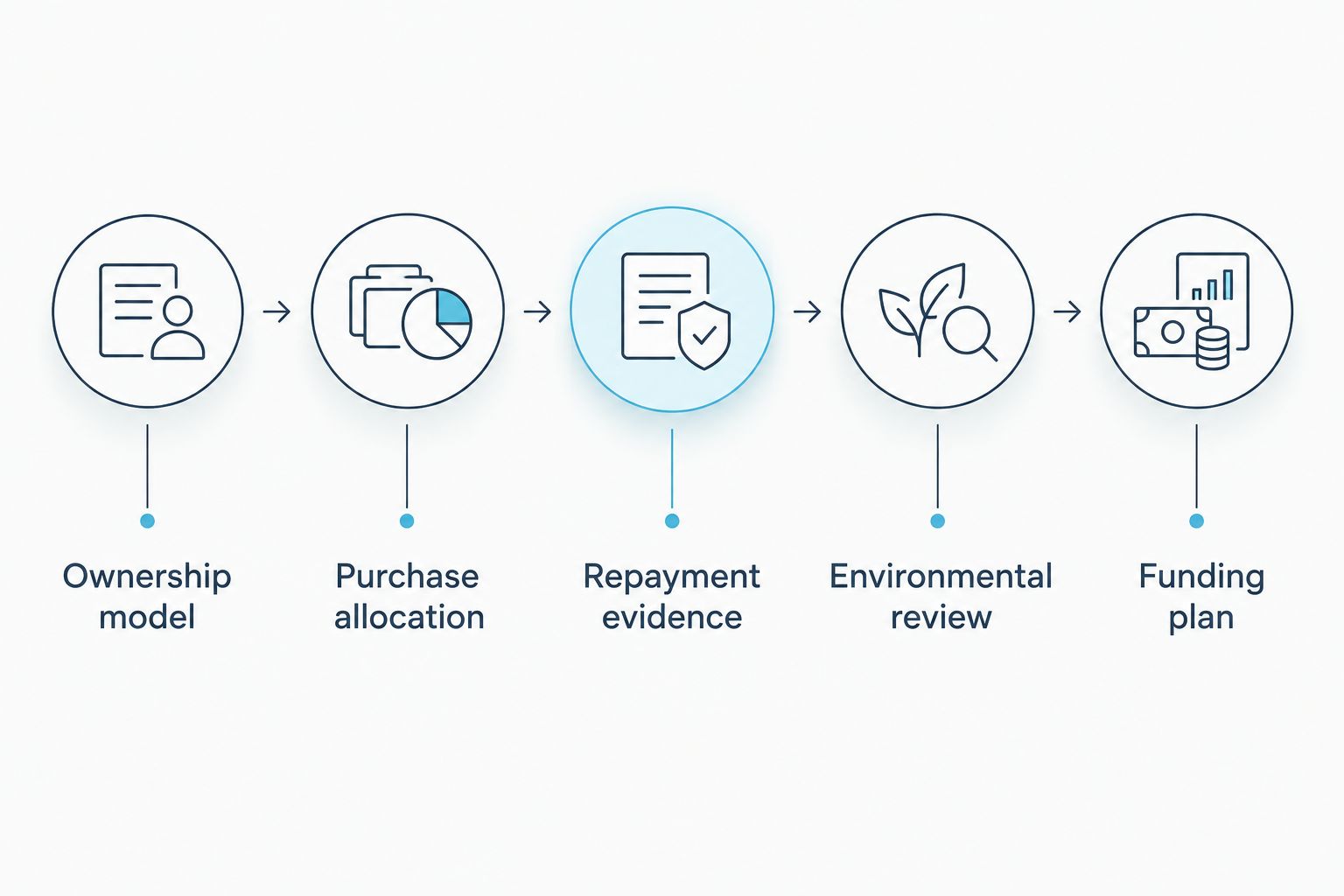
Define ownership and purchase uses before comparing loan proposals.
For gas-station real estate loans, Loanguys should receive the property type and intended use before a program discussion. Keep the request specific: an operating fuel station, a leased retail investment, and a redevelopment site are different collateral stories.
Ask each lender to identify remaining approval conditions, required guarantees, payment structure, maturity, prepayment provisions, and environmental requirements. A preliminary term sheet is not a closing commitment.
Which gas-station loan should you choose?
Start with SBA 7(a) if you will buy and operate the business alongside the property. Compare SBA 504 when the project primarily involves owner-occupied fixed assets and you have a separate operating funding plan.
Choose a conventional commercial mortgage first for a stabilized leased property. Use bridge financing for a defined transition and construction financing for an approved development project, not merely because permanent financing is unavailable.
For a 2026 shortlist, resolve occupancy, environmental acceptability, and repayment evidence before narrowing lenders. Those factors determine the financing path more directly than the name of the loan program.
FAQ
What's the best loan for buying a gas station and its real estate?
SBA 7(a) is the first option to evaluate for an eligible buyer acquiring and operating the business with its real estate. It supports several eligible acquisition uses, while property condition and repayment capacity still require lender approval.
Is SBA 504 better than SBA 7(a) for a convenience store?
SBA 504 fits eligible owner-occupied fixed assets; SBA 7(a) fits a broader mix of eligible business uses. Choose based on what you are financing, especially whether the transaction includes business acquisition, inventory, or working capital.
Can I use an SBA loan for a gas station leased to another operator?
A purely passive landlord investment is generally not eligible for SBA business financing. SBA rules allow certain eligible passive company arrangements tied to a qualifying operating company, so have the lender review the ownership and occupancy structure.
Can I use a residential DSCR loan to buy a gas station?
Do not assume a residential DSCR program accepts gas-station collateral. Commercial lenders also assess debt-service coverage, but a shared financial measure does not make residential and commercial property eligibility interchangeable.
Does a gas station need an environmental assessment for financing?
Expect the lender to require environmental review appropriate to the site and program. Confirm the required scope before ordering reports, and disclose tanks, historical fuel use, known releases, and remediation records.
Will a real estate loan cover convenience-store inventory?
Inventory coverage depends on the financing program and approved uses. SBA 504 excludes inventory and working capital; SBA 7(a) supports eligible working-capital uses, subject to the lender's approved transaction structure.
Does Loanguys offer financing for every gas-station purchase?
Loanguys' stated mortgage programs do not establish eligibility for every gas-station purchase. Provide the property details, ownership model, intended uses, and environmental information before selecting a program.
One last thing
A station's sales revenue is not its debt-paying cash flow. Fuel purchases, payroll, utilities, maintenance, and other operating expenses stand between sales and repayment; a landlord must also distinguish the tenant's business earnings from the property's rent.
Before signing, have your accountant reconcile the income presented to the lender with the business records and purchase assumptions. That check belongs alongside the appraisal and environmental review, not after closing.


