


Commercial Real Estate Loans for Data Centers: 2026 Guide
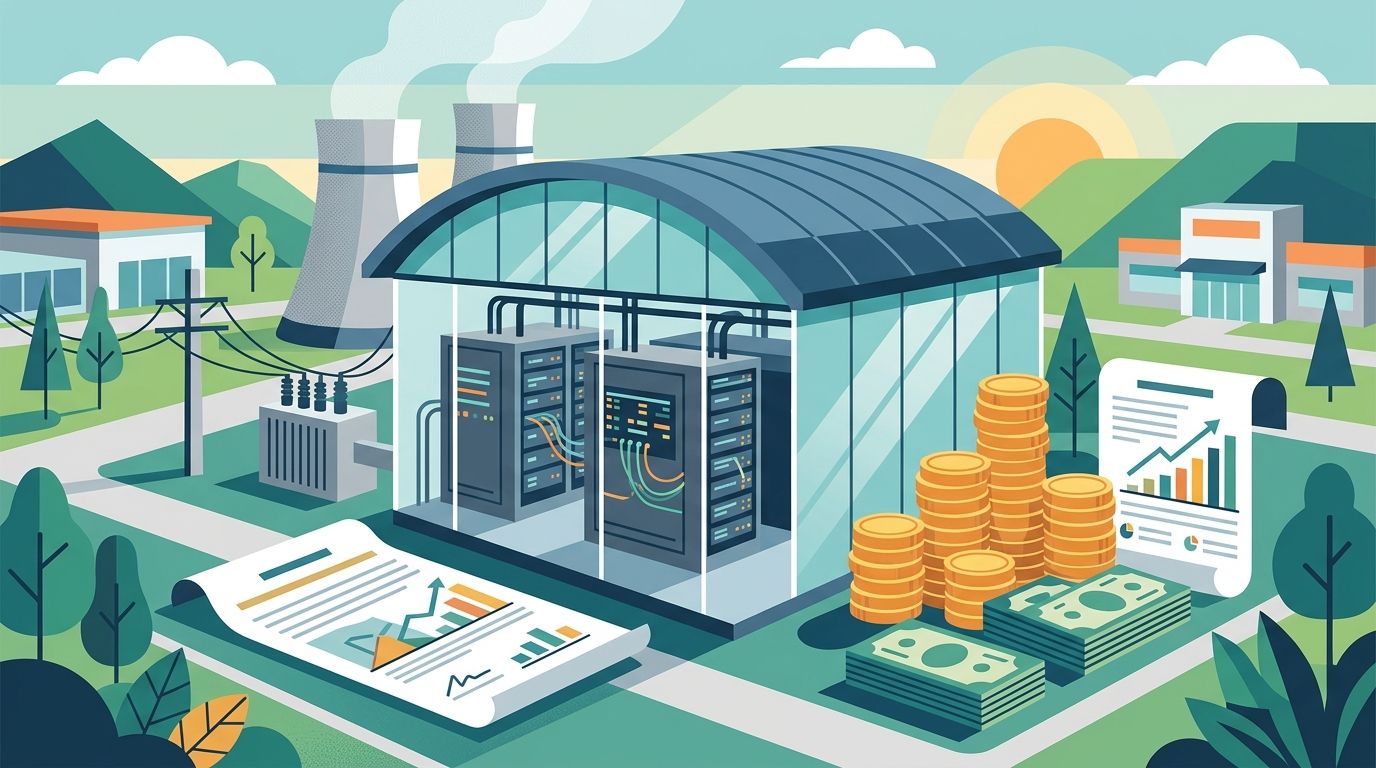
Data center and server farm financing sits in a stranger corner of commercial real estate than a strip mall or an apartment building, and the loan structure has to match that. A data center loan is money used to acquire, build, or convert a property into a facility housing servers, colocation racks, or edge computing infrastructure, with financing shaped around power capacity, cooling load, and tenant lease income rather than standard square-footage comps. Investors chasing this asset class in 2026 need a different underwriting conversation than the one that works for a warehouse or a retail strip.
This segment differs from generic industrial investing in one big way: the building's value is tied to infrastructure most appraisers can't price off comparable sales. A 40,000 square foot warehouse with three-phase power and a chiller plant isn't worth the same per square foot as an identical empty shell next door, and most conventional lenders don't have a framework for that gap.
Why data center financing matters for this segment
Banks treat data centers as single-purpose, specialized-use property, which pushes conservative loan-to-value ratios and slow approval timelines. Investors converting industrial buildings into colocation facilities or buying stabilized server farms with existing tenant leases run into a wall with traditional lenders who don't know how to size the collateral.
That gap is exactly where bridge loans, hard money, and DSCR-style financing earn their place. A property with signed colocation leases and predictable revenue can qualify on the strength of that income stream even when a bank balks at the physical asset itself. Loans for warehouse and industrial property investors cover the base case this segment builds on before power and cooling infrastructure enter the picture.
TL;DR
- Commercial real estate loans for data centers in 2026 split into three stages: acquisition, conversion, and stabilized takeout.
- Bridge and hard money loans fit conversion projects; DSCR-style loans fit stabilized colocation facilities with signed leases.
- Banks and CMBS lenders price data centers conservatively because power and cooling infrastructure don't comp like standard industrial space.
- Underestimating power-upgrade costs is the single most common mistake investors make before closing.
The financing steps that work for this segment
Assess the power and cooling capacity before you shop for a loan
Lenders want to know the electrical service, backup generation, and cooling infrastructure are sized for the intended use before they price risk. Get this documented before you approach anyone with a term sheet.
- Confirm current utility service capacity in amps and whether a substation upgrade is needed
- Verify backup generator and UPS specs already on site
- Document cooling system type: air, liquid, or hybrid
- Get a third-party engineering report if the building was never a data center before
- Flag any zoning or utility easement issues tied to power delivery
Match the loan type to your data center's stage
A raw conversion project and a stabilized facility with tenant leases need entirely different capital. Trying to force a DSCR loan onto an unstabilized shell, or a bank loan onto a fast-close acquisition, wastes weeks.
- Bridge or hard money for acquisition and conversion phases where speed matters more than rate
- DSCR-style financing once colocation or hosting leases produce verifiable rental income
- SBA options for owner-operators running a smaller data center as an owner-occupied business, reviewed on best SBA lenders for real estate investment properties
- Traditional bank or CMBS debt as the eventual permanent takeout once the asset is fully leased and stabilized
Document tenant and colocation income the way a DSCR underwriter reads it
DSCR-style loans size the loan against net operating income divided by debt service, not personal income. That math only works if lease documentation is clean.
- Pull signed colocation or hosting agreements showing monthly recurring revenue
- Separate power/cooling pass-through charges from base rent so the DSCR calculation isn't inflated
- Note lease term length; short-term hosting contracts read as riskier than multi-year colocation deals
- Flag tenant concentration if one client accounts for most of the revenue
Budget for build-out costs most industrial buyers never face
Converting a shell into a functioning data center runs well past a standard tenant improvement budget. Underpricing this step is the fastest way to run out of bridge loan proceeds mid-project.
- Electrical service upgrades and redundant power paths
- Precision cooling systems and airflow containment
- Fire suppression rated for server rooms, not standard warehouse code
- Physical security infrastructure: access control, cameras, cages
- A contingency reserve of at least 10-15% above the contractor estimate, standard practice on any heavy-conversion commercial project
Compare bridge lenders before you commit to a term sheet
Speed and flexibility vary widely across bridge and hard money lenders working commercial conversion deals. Best bridge loan lenders for commercial property investors is worth reviewing before signing anything, since terms on specialized-use collateral differ from a standard bridge deal on an office building.
- Confirm the lender has funded specialized-use industrial or infrastructure conversions before
- Ask how draws are released against construction milestones
- Check whether the lender requires a signed anchor tenant before funding
- Compare extension options if the conversion timeline runs long, which it often does with power utility delays
Line up your exit before you close the bridge loan
Bridge and hard money terms run 6 to 24 months in most commercial deals, and a data center conversion with utility upgrade delays can eat that runway fast. Have the refinance or sale plan mapped before the clock starts.
- Get a preliminary DSCR or bank refinance quote before closing the bridge loan
- Confirm the stabilized lease income will meet the DSCR threshold the next lender requires
- Build in a 3-6 month buffer against utility and permitting delays, which are common on power-heavy conversions
Talk through your data center financing plan
Get a read on which loan structure fits your acquisition, conversion, or stabilized deal.
Comparing loan options for data center and server farm investors
Bridge / hard money
- Best for: Fast acquisition or conversion of an industrial shell into a data center
- Key limitation: Short term (typically 6-24 months) means the exit plan has to be firm before closing
DSCR-style loan
- Best for: Stabilized facility with signed colocation or hosting leases producing verifiable income
- Key limitation: Won't qualify until the property has documented rental income, so it doesn't fit raw conversions
Bank / CMBS permanent debt
- Best for: Fully stabilized, long-leased data centers with strong tenant credit
- Key limitation: Slow approval and conservative LTV on specialized-use collateral
SBA financing
- Best for: Owner-operators running a smaller data center as an owner-occupied operating business
- Key limitation: Requires owner-occupancy and doesn't fit pure investment plays
One more asset class worth a side-by-side look: commercial real estate loans for cold storage warehouses face nearly the same underwriting logic — specialized infrastructure, conservative bank appetite, and a bridge-to-permanent path that mirrors what data center investors run into.
Common mistakes data center investors make
- Treating the appraisal like a standard warehouse deal. Power and cooling infrastructure carry real value that a generic industrial comp won't capture, and a lowball appraisal can blow up loan proceeds mid-deal.
- Skipping the utility capacity study before signing a purchase contract. A power upgrade that takes 9-12 months to complete with the local utility can strand a bridge loan well past its term.
- Underfunding the construction contingency. Specialized mechanical, electrical, and fire suppression systems run over budget more often than standard tenant improvements do.
- Concentrating DSCR income in a single tenant. One hosting client walking away can gut the debt service coverage ratio a lender relied on to size the loan.
- Not pre-qualifying the takeout loan. Closing a bridge loan without a documented DSCR or bank refinance path is the single most common reason conversion projects stall at year one.
Investors moving between related niche industrial plays, like commercial real estate loans for light industrial flex space, run into the same appraisal and utility-capacity issues that trip up data center conversions.
FAQ
What's the best loan type for a data center conversion in 2026?
A bridge or hard money loan works best for converting an industrial shell into a data center in 2026, since the property has no stabilized income yet to qualify for DSCR or bank financing. Once colocation leases are signed, refinancing into a DSCR-style or permanent bank loan is the standard next step.
Can a DSCR loan work for a data center property?
A DSCR loan can work once the data center has signed colocation or hosting leases producing verifiable rental income. It won't qualify for a raw conversion project with no tenants in place yet.
Is a data center loan harder to get than a standard warehouse loan?
Yes, because banks treat data centers as single-purpose, specialized-use property and price loan-to-value more conservatively than they would for a generic warehouse. Bridge and hard money lenders that understand infrastructure-heavy conversions fill that gap.
What infrastructure do lenders check before approving a data center loan?
Lenders typically want documentation on electrical service capacity, backup power, and cooling systems before pricing the loan. A third-party engineering report is common when the building has never operated as a data center.
How long do bridge loans run on data center conversion projects?
Bridge and hard money loans on commercial conversions typically run 6 to 24 months. Utility upgrade delays are common on power-heavy projects, so building in a buffer against that term is standard practice.
Does SBA financing work for data centers?
SBA financing can work for an owner-operator running a smaller data center as an owner-occupied operating business, but it doesn't fit a pure investment play where the investor isn't operating the business inside the facility.
What's the biggest underwriting risk in a data center loan?
Tenant concentration is the biggest risk lenders flag, since a data center with one dominant hosting client can see its debt service coverage ratio collapse if that tenant leaves.
One last thing
The deals that stall aren't the ones with bad locations, they're the ones where the utility upgrade takes longer than the bridge loan term. Line up the permanent takeout financing before you sign the conversion contract, not after construction starts.


