


Commercial Real Estate Loans for Food Production 2026
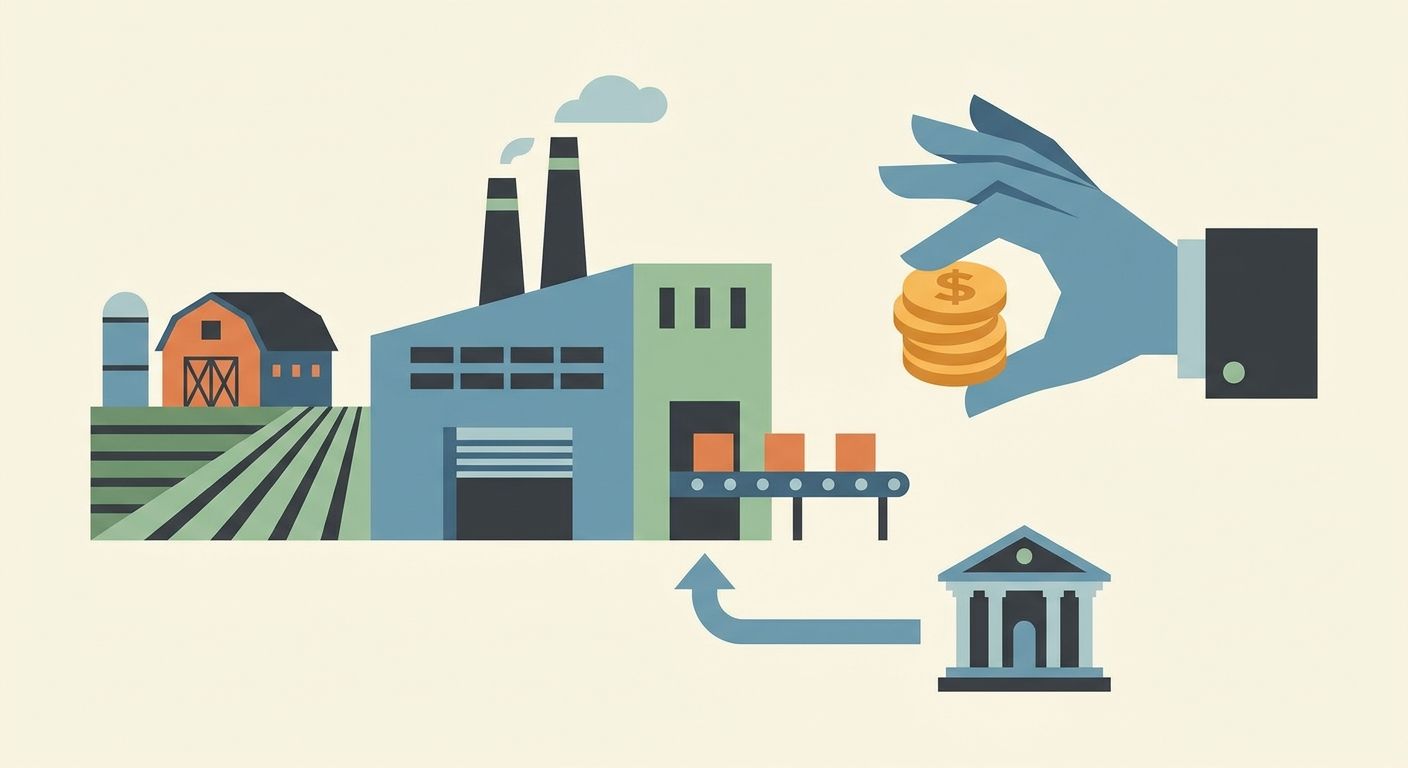
Food production facility financing is commercial real estate lending built around specialized processing space, cold storage, and heavy utility infrastructure, with the aim of moving operators out of leased space and into owned real estate that supports growth. A bakery, bottling plant, or meat-processing facility carries different underwriting risk than a standard warehouse — inspectors, grease traps, ventilation systems, and 24-hour power draw all factor into how a lender values the collateral.
TL;DR
- Commercial real estate loans for food production hinge on how a lender treats special-use collateral, not just the borrower's credit score.
- SBA 504/7(a) loans fit owner-occupied plants with 2+ years of clean tax returns; bank-statement and DSCR-style programs from LoanGuys.com fit operators who can't show that paperwork.
- Bridge loans close fast for acquisitions under a deadline but carry short terms and higher rates than permanent financing.
- Asset-based lending against processing equipment or liquid assets works when the real estate alone doesn't support the loan size.
- 2026 underwriting still treats cold storage and heavy-power facilities as higher-risk collateral than dry warehouse space.
Why commercial real estate matters for food production facilities
A processing plant isn't a generic industrial box. Lenders look at refrigeration load, wastewater capacity, loading dock configuration, and whether the building can pass a USDA or FDA facility inspection before they'll size a loan against it. That narrows the pool of lenders willing to underwrite the collateral at all, which is why food production operators end up searching for commercial real estate loans for food production instead of just "commercial mortgage."
The operators searching this term in 2026 usually fall into one of three buckets: a growing bakery or co-packer outgrowing leased space, an established processor buying out a landlord, or an operator refinancing a facility bought with short-term cash years ago. Each of those situations points to a different loan structure, and picking the wrong one costs months of underwriting before you find that out.
Audit your facility's special-use features first
Before you talk to any lender, know what makes your building unusual. This determines which lenders will even quote the deal.
- List refrigeration and freezer capacity in square footage and tonnage
- Document wastewater and grease-trap infrastructure separately from the building's general condition
- Note electrical service size — most processing lines need 3-phase power most retail buildings don't have
- Flag any pending or recent USDA, FDA, or local health department inspection findings
- Confirm zoning explicitly permits food manufacturing, not just "industrial" use
Get your financial documentation in order
Traditional bank underwriting for food production real estate wants two years of business tax returns, a debt-service coverage ratio above 1.20x, and often a personal guarantee from the ownership group. That's the manual, no-shortcuts path, and it works well if your books are clean and your margins are stable.
Many food producers don't fit that mold — heavy equipment depreciation, seasonal revenue, or an LLC structure that makes tax-return income look thinner than actual cash flow. That's where bank-statement and DSCR-style business-purpose loans through LoanGuys.com become the faster path: underwriting is built around bank deposits and property cash flow instead of a clean tax-return trail. It's not free money — expect a higher rate than a fully-documented bank loan — but it's a real alternative when the paperwork doesn't match the business reality.
Match the loan structure to your facility's life stage
- Buying your first owned facility: SBA 504/7(a) if you qualify on tax returns, DSCR/bank-statement if you don't
- Expanding into a second production line or building: bridge financing to move fast, refinanced into permanent debt later
- Refinancing a hard-money or seller-financed purchase: business-purpose DSCR refinance once the facility is stabilized
- Buying equipment-heavy real estate: asset-based lending against processing equipment, cold-storage racking, or other collateral
- Consolidating multiple production properties: a single blanket structure instead of separate notes on each building
Compare traditional bank financing against speciality lenders
A regional bank will usually beat a private or non-bank lender on rate — if you clear their documentation bar. Most food production operators discover the bar is higher than expected once inspectors and environmental reviews enter the file.
- Ask upfront whether the bank has financed food manufacturing or cold storage before — not all commercial lenders have
- Get a written list of required environmental and health documentation before you apply, not after
- Run the numbers on a bridge-to-permanent structure if the bank timeline exceeds your acquisition deadline
- Compare amortization length; SBA 504 often runs 20-25 years against real estate, longer than most conventional bank terms
Prepare environmental and compliance documentation early
Food production real estate almost always triggers a Phase I environmental site assessment, and sometimes a Phase II if the building has a history of industrial or agricultural use. Underwriting stalls here more often than on the borrower's financials.
- Order the Phase I assessment before you're under contract, not during the loan process
- Pull permit history from the local health department for the specific address
- Confirm any grease trap, wastewater discharge permit, or air quality permit transfers with the sale
- Get written confirmation the building's certificate of occupancy covers food manufacturing use
Structure the down payment and equity stack
Down payment requirements for food production real estate typically run higher than office or retail — lenders price in the cost of repurposing a specialized building if the loan defaults. Expect 20-30% down on a conventional or DSCR-style loan, sometimes less on SBA 504 structures that layer in a second lien.
- Confirm whether SBA 504's typical lower down payment applies to your specific facility type
- Ask if seller financing can cover part of the equity gap on an owner-sold facility
- Check whether existing processing equipment can be pledged to reduce the cash-down requirement
- Model the loan at both a 20% and 30% down scenario before you commit to a lender
Talk through your facility's financing options
Get matched to the loan structure that fits your facility and documentation.
Comparison: loan options for food production facilities
SBA 504/7(a)
- Best for: Owner-occupied plants with 2+ years of clean tax returns
- Key limitation: Slow underwriting, heavy documentation, government-agency review adds time
Traditional bank CRE loan
- Best for: Established operators with strong DSCR and audited financials
- Key limitation: Full documentation standard, strict covenants, slower closings than non-bank options
Commercial bridge loan
- Best for: Fast acquisition or expansion under a closing deadline
- Key limitation: Short term (often 12-24 months), higher rate, needs a defined exit into permanent debt
DSCR / bank-statement business-purpose loan
- Best for: Operators who can't show W2-style income or write off heavily on tax returns
- Key limitation: Business-purpose only — not usable for a consumer-occupied property
Asset-based lending
- Best for: Facility owners with processing equipment or liquid assets to pledge
- Key limitation: Loan size tied to collateral value, not the real estate's cash flow alone
Verdict: if your tax returns are clean and you can wait out a 60-90 day close, SBA 504 or a bank CRE loan wins on rate — everyone else should look at DSCR, bridge, or asset-based structures depending on the timeline. A cold storage warehouse loan follows the same logic if refrigeration is the dominant collateral feature. When your books don't line up with a bank's checklist, SBA lenders built for investment real estate are worth comparing against a non-bank DSCR path before you decide.
Common mistakes food production operators make
- Treating equipment and real estate as one financing need. Processing lines, refrigeration units, and packaging equipment often need separate financing from the building itself — bundling them confuses underwriting and slows the file.
- Skipping the environmental assessment until after going under contract. A Phase I finding discovered late can kill a closing timeline that was already tight.
- Assuming any commercial lender can underwrite cold storage or wastewater-heavy buildings. Many regional banks decline food manufacturing collateral outright rather than price the risk.
- Underestimating power and utility upgrade costs. A building zoned industrial doesn't guarantee 3-phase power or the electrical capacity a processing line needs.
- Waiting to explore bank-statement or DSCR options until after a bank declines the deal. Starting there wastes 30-60 days most operators don't have on a live purchase contract.
FAQ
What loan works best for a food production facility purchase in 2026?
SBA 504 or 7(a) works best when the operator has two-plus years of clean tax returns and can wait out a 60-90 day close. Operators without that documentation typically move to a DSCR or bank-statement business-purpose loan instead.
Can a bridge loan finance a food production facility?
Yes, bridge loans finance food production facility acquisitions when speed matters more than rate, usually with a 12-24 month term. Most operators refinance the bridge into permanent financing once the facility is stabilized.
Do lenders treat cold storage buildings differently from dry warehouse space?
Yes, cold storage carries higher collateral risk because of refrigeration equipment, power load, and repurposing cost if the loan defaults. Fewer lenders quote this type of building than standard industrial space.
Is a DSCR loan available for a food production facility?
DSCR-style business-purpose loans are available for food production real estate, underwritten on property cash flow or bank deposits rather than tax returns. They carry a higher rate than a fully-documented bank loan but close faster for operators without clean tax-return income.
What down payment is typical for food production real estate?
Expect 20-30% down on conventional or DSCR-style financing for food production real estate. SBA 504 structures sometimes lower that requirement through a second-lien layer.
Does an environmental assessment slow down food facility financing?
A Phase I environmental site assessment is standard on almost every food production real estate deal, and a Phase II assessment can follow if there's prior industrial or agricultural use on record. Ordering it before going under contract avoids delays later in underwriting.
Can equipment be used as collateral for a food production real estate loan?
Yes, asset-based lending lets operators pledge processing equipment, cold-storage racking, or other business assets to size a loan when the real estate's cash flow alone doesn't support it. The loan amount ties to collateral value rather than DSCR.
One last thing
The detail most operators miss going into 2026: the Phase I environmental assessment, not the borrower's credit profile, is the single biggest cause of financing delays on food production real estate. Order it the week you go under contract, not after the lender asks for it.


