


Commercial Real Estate Loans for Recording Studios 2026
Recording studio and podcast production space financing works differently than a standard commercial mortgage because lenders have to underwrite noise, buildout cost, and revenue that often comes from session bookings rather than a lease. DSCR loans, bridge loans, SBA 7(a), and bank-statement programs all fit different studio ownership situations, and picking the wrong one stalls a purchase for weeks.
TL;DR
- DSCR loans qualify recording studio purchases off projected rental or session income, not personal tax returns.
- Commercial real estate loans for recording studios in 2026 typically need 25% to 35% down on non-owner-occupied space.
- Bridge loans close fast on raw or unpermitted buildings that need soundproofing before they cash flow.
- SBA 7(a) works for owner-operated studios but requires two years of documented business history.
- Soundproofing and HVAC isolation should be budgeted separately from the purchase price, not folded in.
Why commercial real estate loans for recording studios matter in 2026
A studio or podcast production space is a specialized-use commercial asset. Appraisers and underwriters treat it more like a light industrial or flex-use property than retail, because the value sits in acoustic treatment, isolated rooms, and electrical capacity, not foot traffic. Standard bank underwriters who don't see many studio deals tend to slow-walk them or decline outright once they see custom soundproofing on a rent roll.
That's the gap Loanguys works in: DSCR, bridge, and bank-statement programs built for real estate that doesn't fit a traditional retail or office box. Recording studio owners and podcast network operators who lease out multiple bays or rent studio time by the hour have income patterns a conventional bank statement analysis usually misreads.
The financing steps that get a studio deal closed
Nail down your property type and use case
The loan program you qualify for depends heavily on whether the space is owner-operated, leased out to producers, or a mix of both.
- Confirm zoning allows commercial recording, sound production, or media use, not just general office
- Separate the purchase into land, building shell, and buildout value for the appraisal
- Decide upfront whether you'll occupy the space or rent bays to independent producers
- Check whether the property is zoned for after-hours or overnight sessions if that's part of the business model
- Pull comparable sales for studio or flex-media space in the same market, since retail comps will undervalue acoustic buildout
Run the DSCR math before you shop for space
DSCR loans qualify a studio purchase on the property's income, not the owner's W-2 or 1099 history, which matters when a producer's personal tax returns don't reflect studio revenue yet.
- Add up projected monthly income from bay rentals, hourly session bookings, and any long-term producer leases
- Divide that income by the projected mortgage payment (principal, interest, taxes, insurance) to get your ratio
- Target a 1.25 debt service coverage ratio or higher for the best pricing; many DSCR programs still approve at 1.0
- Document any existing session contracts or standing client agreements as proof of recurring revenue
- Model a conservative vacancy scenario, since new studios rarely book at full capacity in year one
Budget soundproofing and buildout as a separate line item
Acoustic isolation, double-wall construction, floating floors, and HVAC silencing are the line items that separate a functional studio from an empty commercial shell, and they're also the costs generalist lenders underestimate.
Buildout and acoustic treatment usually cost more than the shell itself.
- Get a buildout quote from an acoustic contractor before you finalize the purchase price
- Ask the lender whether renovation funds can be rolled into the loan or need a separate construction draw
- Price HVAC isolation and electrical upgrades separately from cosmetic finishes
- Confirm permit timelines with the local building department before assuming a fast turnaround
- Keep a contingency reserve of at least 10% to 15% of the buildout budget for change orders
Match the loan structure to your business model
The right loan depends on whether you're buying a stabilized, income-producing studio or a raw building you'll convert.
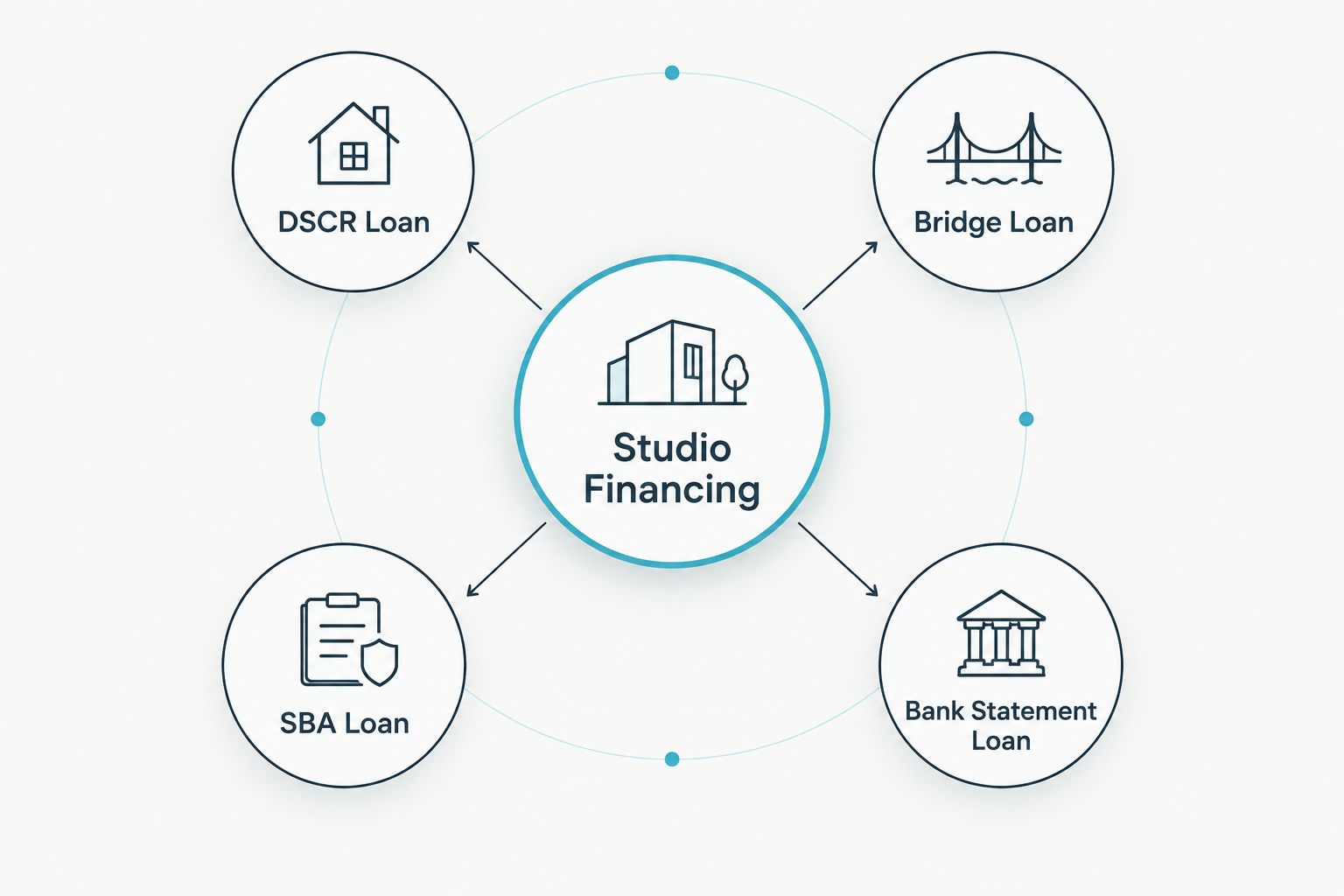
Most recording studio purchases fit one of four structures depending on income stage and ownership use.
- Choose DSCR when the studio already has or will have documented rental or session income
- Choose a bridge loan when the building needs buildout before it can support DSCR underwriting
- Choose SBA 7(a) only if you'll occupy the majority of the space and have two years of business tax returns
- Choose a bank-statement program if you're self-employed and the property income alone won't carry DSCR ratios yet
- Rule out conventional bank financing early if the space has non-standard buildout, since most retail underwriters decline on sight
Get your paperwork underwriting-ready
Non-QM and DSCR underwriting moves faster than conventional bank underwriting, but only when the file is complete on submission.
- Pull 12 to 24 months of bank statements if applying under a bank-statement program
- Compile any signed producer leases or standing session contracts as income proof
- Get a current rent roll if the property already has tenants in separate bays
- Order a property condition report early so structural surprises don't surface at appraisal
- Have an LLC operating agreement ready if you're closing in an entity name rather than personally
Plan for the video and podcast side of the business
Most recording studios built or renovated in 2026 aren't audio-only. Podcast bays, video pods, and multi-camera setups now share space with traditional mixing rooms, which changes both the buildout budget and the revenue model a lender will underwrite. Studios that package audio sessions with short-form video clips for client social channels are pulling in higher per-session rates than audio-only operations, and producers who lean on AI clip generators for content creators to turn a two-hour session into a dozen shareable clips are stretching that revenue further without adding staff. That shift matters for DSCR math: a studio with a documented video-content upsell has a stronger income story than one relying on audio bookings alone.
- Wire at least one bay for multi-camera video capture if podcast clients are part of the target market
- Separate audio and video equipment budgets so the appraisal doesn't lump them together
- Document any existing video/content packages as additional revenue lines for DSCR purposes
- Keep bandwidth and storage infrastructure in the buildout budget, not treated as a soft cost
Lock your rate and set a realistic closing timeline
Studio and podcast space closings run longer than a standard commercial purchase because appraisers unfamiliar with acoustic buildout often request a second opinion.
- Ask your loan officer to flag the appraisal order as specialized-use property upfront
- Lock your rate once you're inside a 30- to 45-day closing window to avoid market drift
- Line up a backup appraiser experienced in media or flex-industrial space if the first review stalls
- Confirm insurance quotes for specialized equipment and soundproofing before closing, not after
Get matched to a studio-ready loan program
DSCR, bridge, and bank-statement options for recording and podcast space owners.
Comparing financing options for recording studio and podcast space owners
DSCR loan
- Best for: Stabilized studios with bay rental or session income already documented
- Key limitation: Won't qualify a raw shell with zero income history
Bridge loan
- Best for: Raw or unpermitted buildings that need buildout before they cash flow
- Key limitation: Higher rate than permanent financing; needs a clear exit plan
SBA 7(a)
- Best for: Owner-operators occupying most of the building themselves
- Key limitation: Requires two years of business tax returns and personal guarantees
Bank-statement loan
- Best for: Self-employed producers whose property income alone won't carry DSCR ratios
- Key limitation: Relies on personal cash flow, not the studio's own performance
Verdict: a stabilized studio with documented session income fits a DSCR loan; a raw building headed for acoustic buildout fits a bridge loan first, then a refinance into DSCR once it's leased.
Common mistakes recording studio owners make when financing
- Pricing the property like standard flex space and getting blindsided when the buildout budget doubles the effective cost
- Skipping zoning verification for after-hours session use, which surfaces during underwriting, not before
- Mixing personal and studio finances in one account, which muddies bank-statement income analysis
- Underestimating vacancy in year one, then defaulting on a DSCR ratio built on optimistic booking assumptions
- Waiting to document video or podcast upsell revenue until after closing, when it should be part of the original income model
FAQ
What is the best loan for buying a recording studio in 2026?
A DSCR loan is the best fit for a stabilized studio with documented rental or session income in 2026. A bridge loan works better for a raw building that still needs acoustic buildout before it cash flows.
Can I get a commercial real estate loan for a recording studio with no rental history yet?
Yes, through a bridge loan or bank-statement program, since DSCR underwriting generally needs documented income. Once the studio is leased or booking sessions, a refinance into a DSCR loan is the typical next step.
How much down payment do recording studio loans require?
Non-owner-occupied commercial real estate loans for recording studios typically require 25% to 35% down in 2026. SBA 7(a) programs for owner-operated studios can allow less, depending on business history.
Is SBA financing available for podcast production spaces?
SBA 7(a) financing works for podcast production spaces when the owner occupies the majority of the building and has two years of business tax returns. It's not built for pure investment or bay-rental studios.
What DSCR ratio do I need to qualify a recording studio purchase?
Most DSCR programs target a 1.25 ratio for the best pricing, though many still approve at 1.0. The ratio compares projected studio income to the total mortgage payment including taxes and insurance.
Do lenders count podcast and video revenue when underwriting a studio loan?
Yes, documented video or podcast content revenue can strengthen a DSCR application when it's backed by signed contracts or a consistent booking history. Undocumented or projected-only revenue usually gets discounted.
How long does it take to close a commercial loan on a recording studio?
Studio purchases often take longer than standard commercial deals because appraisers unfamiliar with acoustic buildout request additional review. Budgeting 30 to 45 days from application to close is realistic for 2026 closings.
Can I roll soundproofing and buildout costs into the loan?
Some bridge and construction-style loans allow renovation costs to be included as a draw schedule rather than a separate loan. DSCR loans generally do not, since they're underwritten against existing, stabilized income.
One last thing
The single biggest underwriting gap in studio financing isn't the loan program, it's the appraisal. A generalist appraiser who values acoustic buildout at scrap-material cost can knock tens of thousands off a property's appraised value compared to one who's worked media or flex-industrial space before, so asking the lender to order a specialized-use appraisal from the start is worth more than any rate shopping done afterward.


