


How to Qualify for a P&L Only Loan in 2026
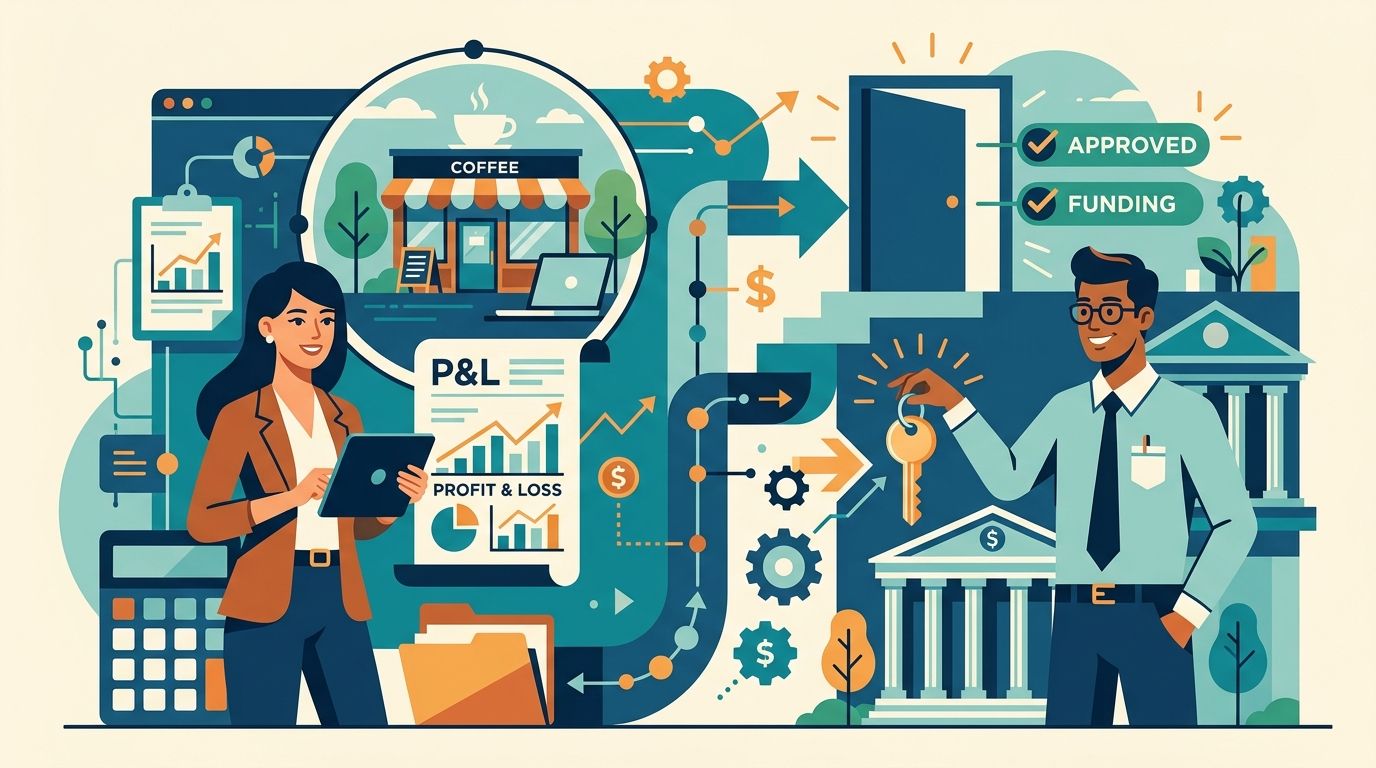
A P&L only loan lets a self-employed borrower qualify using a CPA-prepared profit and loss statement instead of tax returns, and approval hinges on four things: a credit score usually at 660 or higher, 12 to 24 months of P&L history, a debt-to-income ratio the lender can verify without W-2s, and enough cash reserves to cover several months of payments. The hidden catch most borrowers miss: many lenders still want a CPA letter certifying the P&L is accurate, and skipping that step is the single most common reason applications stall in 2026.
TL;DR
- You qualify for a P&L only loan with a 660+ credit score, a CPA-prepared P&L, and reserves — not tax returns.
- Loan Guys structures P&L only mortgage programs for business owners who write off heavy expenses on their returns.
- Down payment requirements typically run higher than a conventional loan since income isn't IRS-verified.
- A signed CPA letter attesting to the accuracy of your P&L is required by most lenders offering this program.
Why this matters
Business owners who legitimately write off vehicles, equipment, home offices, and travel often show tax-return income that's a fraction of what actually hits their bank account. A conventional lender reads that low number and declines the file. A P&L only loan reads your accountant's statement of actual business performance instead, which is why it exists specifically for self-employed borrowers whose tax returns undersell their real earning power.
This isn't a niche product anymore. Non-QM lending has grown steadily since 2020 as more workers left W-2 jobs for 1099 or LLC structures, and P&L only programs are one of the more common ways brokers get those borrowers approved without pulling three years of returns.
How to qualify for a P&L only loan
Getting approved comes down to documentation and a lender who actually underwrites this program — not every broker does. Here's the sequence:
- Get a CPA-prepared P&L statement covering 12 to 24 months, showing gross revenue, expenses, and net income for your business.
- Secure a CPA certification letter confirming the P&L was prepared using standard accounting methods and reflects the business's actual financials.
- Pull your credit report and confirm your score sits at 660 or above — most P&L only programs won't go lower.
- Document cash reserves, typically several months of the projected mortgage payment, sitting in a verifiable account.
- Show 2+ years of business existence, since lenders want proof the business isn't brand new and unpredictable.
- Apply through a broker who offers non-QM P&L programs — conventional banks and most retail lenders won't touch this loan type.
Credit score
- Typical threshold: 660+
P&L history
- Typical threshold: 12-24 months, CPA-prepared
Business age
- Typical threshold: 2+ years
Reserves
- Typical threshold: Several months of payments
Documentation
- Typical threshold: No tax returns required
P&L only loans vs. bank statement loans
Both programs skip tax returns, but they lean on different paperwork. A P&L only loan uses your accountant's profit and loss statement as the primary income document. A bank statement loan instead averages deposits across 12-24 months of personal or business bank statements to calculate qualifying income.
Best for P&L only: business owners whose CPA already produces clean, audited-style financials. Best for bank statement loans: owners without formal bookkeeping who can show consistent deposit history instead. Neither requires a W-2, and both sit in the same non-QM category traditional banks generally avoid.
Why P&L only loan requirements vary
No two lenders apply identical thresholds, and the swing between programs can be significant. Factors that move the requirements:
- Loan-to-value ratio requested — higher LTV asks usually mean stricter credit and reserve requirements.
- Business industry — some lenders flag seasonal or high-cash industries for extra scrutiny.
- Length of business operation — a 2-year-old LLC clears easier than one formed six months ago.
- Property type and use — owner-occupied primary residences carry different underwriting than investment properties.
- CPA credentials — a licensed CPA letter carries more weight than a bookkeeper's unaudited summary.
- Overall credit profile — thin credit files or recent late payments push requirements higher regardless of P&L strength.
Talk through your P&L loan options
See which non-QM program fits your business income and credit profile.
Related questions
Can I get a P&L only loan with a credit score under 660?
Some lenders will consider scores in the low 600s, but expect a higher down payment requirement and possibly a rate adjustment to offset the risk. A 660+ score keeps you in the standard pricing tier for most P&L only programs in 2026.
Do P&L only loans require a down payment?
P&L only loans typically require a larger down payment than a conventional W-2 mortgage since income isn't IRS-verified. The exact amount depends on your credit score, the property type, and the lender's specific program guidelines.
Is a P&L only loan the same as a no-doc loan?
No — a P&L only loan still requires documentation, just not tax returns. A true no-doc business loan skips income verification almost entirely and leans more heavily on assets, credit, or collateral instead.
FAQ
How do I qualify for a P&L only loan?
You qualify for a P&L only loan with a CPA-prepared profit and loss statement covering 12-24 months, a credit score of 660 or higher, and enough reserves to cover several months of payments. A CPA certification letter is required by most lenders.
What credit score do I need for a P&L only loan?
Most P&L only loan programs require a 660+ credit score in 2026. Scores below that threshold are sometimes accepted but usually come with a higher down payment requirement.
Do P&L only loans require tax returns?
No, P&L only loans do not require tax returns. They use a CPA-prepared profit and loss statement as the primary proof of business income instead.
Is a P&L only loan better than a bank statement loan?
Neither is universally better — a P&L only loan fits business owners with clean CPA-prepared financials, while a bank statement loan fits owners who can show consistent deposit history without formal bookkeeping.
How long does my business need to exist for a P&L only loan?
Most lenders want to see at least 2 years of business operation before approving a P&L only loan. Newer businesses face tighter underwriting or may not qualify at all.
Do I need a CPA to get a P&L only loan?
Yes, most P&L only loan programs require the profit and loss statement to be prepared and certified by a licensed CPA. A self-prepared or bookkeeper-only P&L usually won't satisfy underwriting.
Can self-employed borrowers with write-offs still qualify?
Yes — that's exactly who P&L only loans are built for. Business owners whose tax returns show reduced income due to legitimate write-offs can qualify using actual business performance instead.
Are P&L only loans available for investment properties?
Yes, many non-QM lenders offer P&L only programs for both owner-occupied and investment properties, though reserve and down payment requirements typically differ by property type.
One last thing
The biggest disqualifier isn't credit score or reserves — it's a P&L statement your CPA won't put their name behind. Get the certification letter locked down before you shop rates; it saves weeks of back-and-forth with underwriting once you've already found a lender.


