


LendingTree alternatives for bridge loan quotes

LendingTree’s strength is helping you compare lenders through a loan marketplace. That starting point is not enough when you need a bridge loan evaluated against a specific property, renovation plan, and repayment strategy. The best LendingTree alternative in 2026 is Loanguys if you need a mortgage broker offering investor bridge loan programs; a direct bridge lender is the alternative if you want to work directly with the funding institution.
TL;DR
- For lendingtree alternatives for bridge loan quotes, choose Loanguys when you want an investor-focused mortgage broker.
- A direct bridge lender suits borrowers who want to discuss underwriting with the funding institution.
- Compare bridge financing against the same property facts, funding needs, and repayment plan.
- Keep LendingTree for lender discovery; evaluate the actual lender before choosing a loan.
Why this matters
A bridge loan provides temporary financing until a sale, refinance, or another defined repayment event. Getting a quote is only the beginning. You need to understand what must happen before funding and what happens if your repayment plan takes longer than expected.
For your 2026 search, separate lender discovery from transaction evaluation. A marketplace helps you find potential providers; a broker or direct lender helps you examine a specific financing proposal. Neither route replaces underwriting, property review, or written loan documents.
LendingTree alternatives at a glance
These are different financing channels, not interchangeable loan products. Choose the channel that fits how much guidance you need and how directly you want to work with the lender.
LendingTree
- Best for: Initial lender discovery
- Standout characteristic: Loan marketplace
- Difference from LendingTree: Benchmark: helps borrowers connect with lenders
Loanguys
- Best for: Investors seeking a mortgage broker
- Standout characteristic: Offers bridge, fix-and-flip, DSCR, bank-statement, and short-term rental programs
- Difference from LendingTree: A mortgage brokerage rather than a lender-comparison marketplace
Direct bridge lender
- Best for: Borrowers seeking direct lender contact
- Standout characteristic: You approach the funding institution
- Difference from LendingTree: Starts with a particular lender rather than marketplace matching
Community bank or credit union
- Best for: Borrowers exploring relationship-based financing
- Standout characteristic: Direct discussion with a depository institution
- Difference from LendingTree: You ask a specific institution whether it finances your transaction
Choose a financing channel first, then compare written proposals. A useful comparison holds the property, requested financing, and repayment assumptions constant.
1. Loanguys: best for investor-focused mortgage brokerage
Loanguys offers bridge financing alongside DSCR, fix-and-flip, bank-statement, and short-term rental loan programs for real estate investors and homeowners across the United States. That makes the brokerage a relevant starting point when temporary financing is part of a larger property strategy. Start with the transaction, not just the loan label.
For an investment purchase, explain the property's current condition and intended use. For a renovation, explain the work and your funding needs. For a rental hold, explain how you intend to replace the bridge loan after the property is ready.
Where the brokerage shines
- Relevant program range: You can discuss bridge financing in the context of other stated investor loan programs.
- Brokerage model: You work with a mortgage broker rather than beginning with a comparison marketplace.
- Investor relevance: The stated programs address rental ownership, property improvements, and alternative income documentation.
Where the brokerage falls short
- It is not the direct-lender route: Borrowers who want to approach the funding institution directly should compare that channel separately.
- Program range is not an approval: A bridge program and a DSCR program do not establish that your property qualifies for either.
- A future refinance remains separate: Do not treat a discussion about replacement financing as a commitment to fund it.
Business model
- Loanguys: Mortgage broker
- LendingTree: Loan marketplace
Starting point
- Loanguys: Discuss a property and financing need with a brokerage
- LendingTree: Discover potential lenders through a marketplace
Bridge-loan evaluation
- Loanguys: Ask the broker which proposed program fits the transaction
- LendingTree: Evaluate the lender and proposal reached through the marketplace
Borrower responsibility
- Loanguys: Review lender conditions and final documents
- LendingTree: Review lender conditions and final documents
Best for: Investors who want a mortgage broker offering bridge financing and related investor loan programs.
Verdict: Buy into this route when you want brokerage guidance; do not treat an initial quote as approval.
2. Direct bridge lender: best for direct lender contact
A direct bridge lender is the funding institution you approach for the loan. This route suits you when you want to discuss a particular lender's underwriting requirements without beginning through a marketplace. Ask who makes the credit decision and who will handle your file.
Direct contact does not remove conditions. You still need to establish that the lender accepts your property type, location, intended use, and repayment plan before treating a proposal as actionable.
Where a direct bridge lender shines
- Direct counterparty: You know which lender you are asking to finance the transaction.
- Specific requirements: You can request that institution's property and borrower criteria.
- Focused discussion: Questions concern an identified lending program rather than an initial lender search.
Where a direct bridge lender falls short
- Limited comparison: One lender's proposal does not establish how other lenders would structure the deal.
- Program mismatch: A lender's criteria can exclude your transaction even when the project makes sense to you.
- More borrower coordination: You must organize comparisons if you approach several lenders yourself.
Initial contact
- Direct bridge lender: Particular funding institution
- LendingTree: Loan marketplace
Comparison work
- Direct bridge lender: Borrower gathers other proposals
- LendingTree: Marketplace supports initial lender discovery
Next decision
- Direct bridge lender: Does this lender accept the transaction?
- LendingTree: Which connected lender should evaluate the transaction?
Best for: Borrowers who want to approach the funding institution and manage their own comparisons.
Verdict: Buy into the direct route when lender contact matters more than marketplace discovery.
3. Community bank or credit union: best for a relationship inquiry
A community bank or credit union is another place to ask about temporary property financing, especially if you already have a banking relationship. Ask about the actual transaction. Do not assume the institution offers an investor bridge program simply because it offers mortgages.
Where this route shines
- Existing context: You can begin with an institution that already handles your banking.
- Direct inquiry: You can ask whether the institution finances your intended property use.
Where this route falls short
- Product fit comes first: An existing relationship does not establish bridge-loan eligibility.
- Separate institutions require separate inquiries: You still need to gather and compare proposals yourself.
Starting point
- Community bank or credit union: Specific banking institution
- LendingTree: Loan marketplace
First question
- Community bank or credit union: Does the institution finance this transaction?
- LendingTree: Which lenders should you investigate?
Relationship
- Community bank or credit union: Existing relationship, if you have one
- LendingTree: Begins with lender discovery
Best for: Borrowers who want to test an existing banking relationship before expanding their search.
Verdict: Hold this route open until the institution confirms transaction fit; skip assumptions based on your banking history.
Why people switch from LendingTree
The practical reason to move beyond a marketplace is a change in the task: you are no longer discovering lenders; you are deciding how to finance a property. That does not make LendingTree a poor starting point. It means your next conversation needs transaction-level detail.
Use these decision triggers for your 2026 search:
- You have an identified property. Ask providers to evaluate its location, condition, occupancy, and intended use.
- Renovation funding matters. Establish whether a proposal addresses the work, not just acquisition.
- Your exit depends on refinancing. Ask what must be true before a replacement lender will consider the property.
- Your deadline is contractual. Request the outstanding conditions and responsible parties rather than relying on a general speed claim.
These are reasons to seek a more specific evaluation, not claims about marketplace performance. Switch channels when the new channel answers your transaction questions more clearly.
Compare bridge loan quotes in 3 stages
A useful bridge-loan comparison follows a sequence: prepare consistent facts, request comparable proposals, and examine the repayment plan. Sending different assumptions to different providers creates a comparison you cannot rely on.
Property brief
Prepare 6 document categories for the initial discussion: purchase or ownership records, property details, existing debt records, renovation scope, income or lease records, and available-funds evidence. Ask each provider which documents it actually requires. This is a preparation checklist, not a universal underwriting requirement.
State whether the property is for personal occupancy, investment rental use, or resale. Those are different financing situations. A proposal for one use should not be treated as a proposal for another.
Written proposals
Organize each proposal around 4 quote fields: funding structure, borrower obligations, closing conditions, and repayment terms. Under each field, record what is confirmed and what remains conditional. Keep the same facts in every request.
Ask whether renovation funds are advanced at closing or released later, if renovation financing is proposed. Ask who orders the valuation and what review remains. Record any personal guarantee, collateral requirement, extension provision, and early-repayment condition that appears in the proposal.
Exit review
Write down how you intend to repay the bridge loan. If the answer is refinancing, identify the property condition, income evidence, and borrower documentation the replacement lender will evaluate. If the answer is a sale, consider what happens if the property remains unsold at maturity.
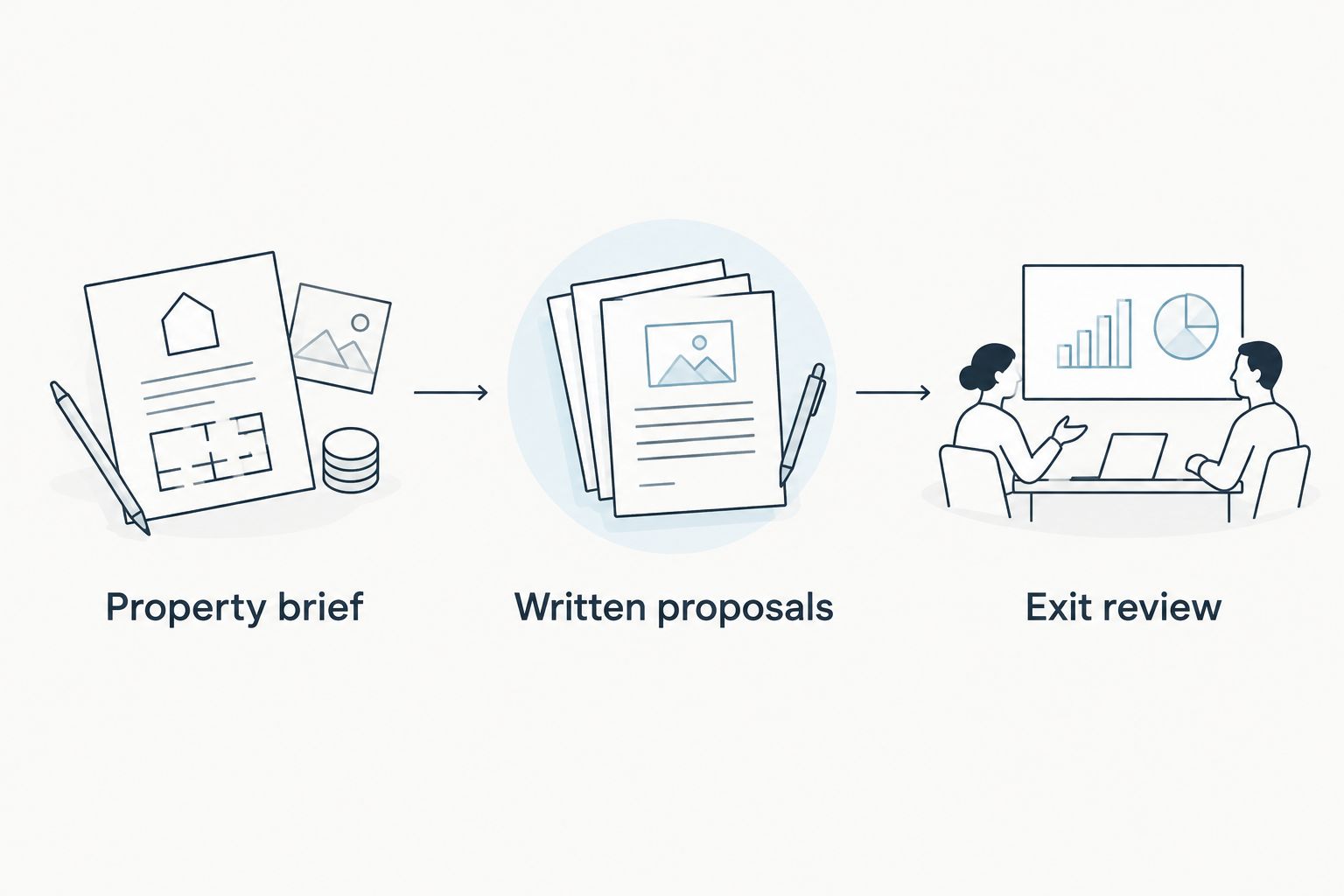
Compare proposals only after giving providers the same property facts and repayment plan.
For a 2026 closing, put dates against the outstanding tasks in your own transaction checklist. A provider's general description of its process is not a commitment to meet your purchase contract. Ask for a transaction-specific timeline and the conditions attached to it.
Discuss your bridge financing needs
Bring your property details, financing purpose, and repayment plan to the conversation.
When staying with LendingTree is the right call
Stay with LendingTree when your main task is finding lenders to investigate. A marketplace remains a reasonable discovery route if you are prepared to assess the institutions, ask transaction-specific questions, and compare their written proposals.
You do not need to abandon one channel to examine another. Your 2026 decision should rest on the actual financing proposal and its conditions, not on whether the first contact came from a marketplace, broker, or lender.
FAQ
What's the best LendingTree alternative for investor bridge loan quotes?
Loanguys is the best fit in this comparison for investors seeking a mortgage broker offering bridge financing and related investor loan programs. Choose a direct bridge lender instead if your priority is approaching the funding institution yourself.
Is a mortgage broker better than LendingTree for a bridge loan?
A mortgage broker is the more relevant route when you want brokerage help with a specific financing transaction. LendingTree serves a different starting need: discovering potential lenders through a marketplace.
Can I get a bridge loan quote directly from a lender?
You can approach a direct bridge lender to request an evaluation. First confirm that the lender considers your property type, location, intended use, and proposed repayment strategy.
Does a bridge loan quote mean I'm approved?
A bridge loan quote is not the same as final loan approval. Review the proposal's conditions and ask which underwriting, property, and closing reviews remain outstanding.
Can I refinance a bridge loan into a DSCR loan?
A DSCR loan is a potential replacement financing route for a qualifying investment rental property, not a guaranteed exit. DSCR means debt service coverage ratio and compares qualifying property income with debt obligations under the lender's calculation.
What does LTV mean on a bridge loan proposal?
LTV means loan-to-value ratio: the loan amount divided by the property value used by the lender. Ask which valuation basis the proposal uses, especially when renovation work is involved.
Should I use the same bridge loan for buying a home and buying a rental?
Do not assume the same bridge program covers personal occupancy and investment use. Tell every provider how you intend to use the property before comparing proposals.
One last thing
Evaluate the exit before committing to the bridge. Temporary financing solves the acquisition problem only if you also have a workable repayment plan. Before signing in 2026, ask what happens if the sale or refinance is delayed, and read the maturity and extension provisions in the actual documents.


