


LoanGuys vs Bankrate: which is better in 2026

Choose Loanguys if you need a mortgage broker for DSCR, fix-and-flip, bridge, bank-statement, or short-term rental financing; choose Bankrate if you want mortgage research, calculators, and lender comparisons before approaching a financing provider. This 2026 comparison separates getting information from arranging a loan, so you can choose the right starting point.
TL;DR
- Loanguys vs Bankrate compares a mortgage broker with a financial publisher, not two competing lenders.
- Choose Loanguys for investment property loans and bank-statement financing discussions.
- Choose Bankrate for mortgage education, calculators, and early lender research.
- Neither a published rate nor a broker conversation guarantees loan approval.
Why this matters
A lender comparison page and a mortgage broker solve different problems. One helps you understand the market; the other helps you pursue financing for a particular borrower and property. Confusing those roles sends you into rate shopping before you know which loan structure fits.
That distinction matters for investors and self-employed homeowners. A rental purchase, a renovation project, and a home purchase supported by business deposits require different conversations. Start with the financing problem, then compare providers that address it.
Loanguys is the better mortgage-broker choice for borrowers seeking its stated investor and bank-statement loan programs. Bankrate is the better starting point for readers who need broad mortgage education rather than a property-specific financing discussion.
At a glance
Best for
- Loanguys: Investors and homeowners seeking the stated mortgage programs
- Bankrate: Borrowers researching mortgages and comparing lenders
Research breadth
- Loanguys: Financing discussion focused on the borrower's needs
- Bankrate: Broad personal-finance and mortgage research
Investment-property programs
- Loanguys: DSCR, fix-and-flip, bridge, and short-term rental loans
- Bankrate: Information and comparisons rather than its own loan programs
Income documentation
- Loanguys: Bank-statement loan program
- Bankrate: Educational research; the selected lender determines documentation
Mortgage calculations
- Loanguys: Discuss calculations within the financing process
- Bankrate: Mortgage calculators for independent planning
Approval certainty
- Loanguys: Lender underwriting still determines approval
- Bankrate: Research and comparisons do not establish approval
Pricing model
- Loanguys: Mortgage-broker transaction; review loan-specific compensation and costs
- Bankrate: Publishing and comparison platform, separate from the selected lender's loan charges
Standout feature
- Loanguys: Access to a stated mix of alternative mortgage programs
- Bankrate: Education, calculators, and lender research in one place
Bankrate wins for broad research before you choose a loan
Best for: a homeowner learning the mortgage basics or building an initial lender shortlist. Bankrate's role as a financial publisher makes it the more useful starting point when your question is still broad: how mortgages work, what refinancing means, or how different repayment structures affect your planning.
Use that research to develop better questions. Understand the difference between interest rate and annual percentage rate, identify the property use you intend, and decide whether you are buying, refinancing, or financing a renovation. Those decisions make later comparisons more meaningful.
The limitation is the distance between published information and your actual application. An educational article does not evaluate your credit file, verify your income, or establish whether a property meets a lender's rules.
For a 2026 mortgage search, use Bankrate to learn the vocabulary and compare potential providers. Move to a lender or broker when your next question requires an answer about your own documents or property.
The mortgage broker wins for investment-property program fit
Best for: an investor who already knows the property and financing objective. The broker's stated offering includes DSCR, fix-and-flip, bridge, and short-term rental loan programs. That makes it the more relevant starting point when you need to discuss those financing structures rather than read about mortgages generally.
DSCR means debt service coverage ratio: a measure of income relative to debt payments. In rental financing, ask how the lender calculates qualifying rental income and the payment used in that calculation. Do not assume every program applies the same method.
Match the conversation to the project:
- Rental acquisition: discuss whether DSCR financing fits the property's income and intended use.
- Renovation and resale: discuss fix-and-flip financing, the rehabilitation scope, and your exit plan.
- Temporary financing: discuss a bridge loan and how you intend to repay or replace it.
- Vacation rental: discuss short-term rental financing and the documentation used to evaluate income.
The tradeoff is that a named program is not a universal solution. Property condition, borrower qualifications, documentation, and lender requirements still matter. Ask for the requirements applicable to your transaction before treating the program as a fit.
For additional research, the guide to Bankrate alternatives for investment property loan rates addresses this specific shopping problem.
The mortgage broker wins for bank-statement financing discussions
Best for: a self-employed borrower seeking an alternative way to document income. Bank-statement financing is part of the broker's stated offering. It is therefore the more direct choice when your immediate question concerns using business or personal banking records in a mortgage application.
Bank-statement loans are not documentation-free loans. Lenders evaluate deposits and apply their own methods for determining qualifying income. Business revenue, money transferred between accounts, and personal earnings are not automatically interchangeable.
Before approaching a financing provider, organize the records that explain your income:
- Identify which accounts receive business revenue and which receive personal income.
- Separate recurring receipts from transfers and unusual deposits.
- Be ready to explain business expenses and ownership.
- State whether the property will be your home or an investment.
Bankrate remains useful for understanding self-employed mortgage concepts. Its limitation is that reading about documentation does not establish how a particular lender will evaluate your accounts.
In 2026, ask the financing provider how it calculates qualifying income before comparing offers. A comparison built on the wrong income assumption is not a reliable basis for choosing a mortgage.
Bankrate wins for independent mortgage calculations
Best for: a borrower testing repayment scenarios before speaking with a provider. Bankrate's mortgage calculators give you a way to explore payment assumptions independently. Use them to understand how the loan balance, repayment term, and interest assumptions interact.
Calculators are planning tools, not approvals. Check which expenses a calculation includes, particularly property taxes, insurance, mortgage insurance, and association dues. A principal-and-interest payment is not the same as your complete housing expense.
Investors need an additional distinction: a mortgage payment is not a property's operating budget. Maintenance, vacancy, management, utilities, and other ownership expenses affect cash flow even when they do not appear in a mortgage calculator.
A broker conversation serves a different purpose. It connects the financing discussion to the program you are pursuing, but it does not make an independent planning exercise unnecessary.
Use Bankrate to test assumptions; use a financing provider to establish the applicable loan structure. Keep those jobs separate, and a convenient calculator becomes useful rather than misleading.
Neither option wins on guaranteed approval
Best for: every borrower checking how much confidence to place in an early answer. Neither a mortgage comparison page nor an introductory broker discussion substitutes for lender underwriting. Approval requires the relevant lender to evaluate the borrower, property, and transaction.
A displayed offer is not a commitment to finance your exact deal. Likewise, identifying a potentially suitable program does not establish that all requirements have been satisfied.
Ask direct questions about the status of your application:
- Has a lender reviewed the supporting documents?
- Which borrower or property conditions remain unresolved?
- Does the assessment use verified information or preliminary assumptions?
- What must happen before the financing is ready to close?
This is an honest tie. Neither research nor program selection guarantees an approved loan. In a 2026 purchase, make contractual and financing decisions using the actual application status, not the confidence of a headline or an initial conversation.
Neither option wins on loan costs without comparable terms
Best for: a borrower choosing between actual financing proposals. There is no meaningful cost winner between a mortgage broker and a publishing platform. Bankrate helps you research providers; the loan itself comes from the financing provider you select.
The broker operates in the mortgage transaction. Ask how compensation is handled, which charges belong to the lender, and which belong to other parties. Get the applicable terms in writing rather than assuming a compensation arrangement.
Bankrate operates as a publishing and comparison platform. Review advertising disclosures when evaluating listings, and distinguish a displayed comparison from the financing terms a lender offers after evaluating your application.
The practical tradeoff is research flexibility versus transaction-specific detail. Independent comparisons let you explore alternatives; a financing discussion addresses the requirements of a particular deal. Neither role establishes the final cost by itself.
Compare proposals using the same assumptions:
- Loan purpose, amount, and property use.
- Repayment structure and interest-rate type.
- Upfront charges and compensation disclosures.
- Prepayment provisions and any repayment restrictions.
- Required reserves, insurance, and closing conditions.
For consumer mortgages covered by the applicable disclosure rules, compare the formal loan disclosures. For business-purpose investment financing, request the relevant written terms and itemized charges. Do not assume every mortgage uses the same disclosure documents.
Bankrate wins for browsing; the broker wins for program selection
The standout features reinforce the role difference. Bankrate combines mortgage education, calculators, and lender research. The broker brings a stated selection of investor and alternative-documentation mortgage programs to the financing conversation.
Choose your next step using this sequence:
- Define the property. State its intended use, condition, and whether you plan to hold, renovate, or sell it.
- Choose the documentation. Identify whether the discussion centers on personal income, bank statements, or rental income.
- Compare written terms. Evaluate actual proposals after the relevant financing structure has been identified.
The sequence prevents you from comparing an owner-occupied mortgage assumption with an investment-property financing need. It also makes your first provider conversation more focused: you arrive with a defined transaction instead of asking for an unspecified mortgage.
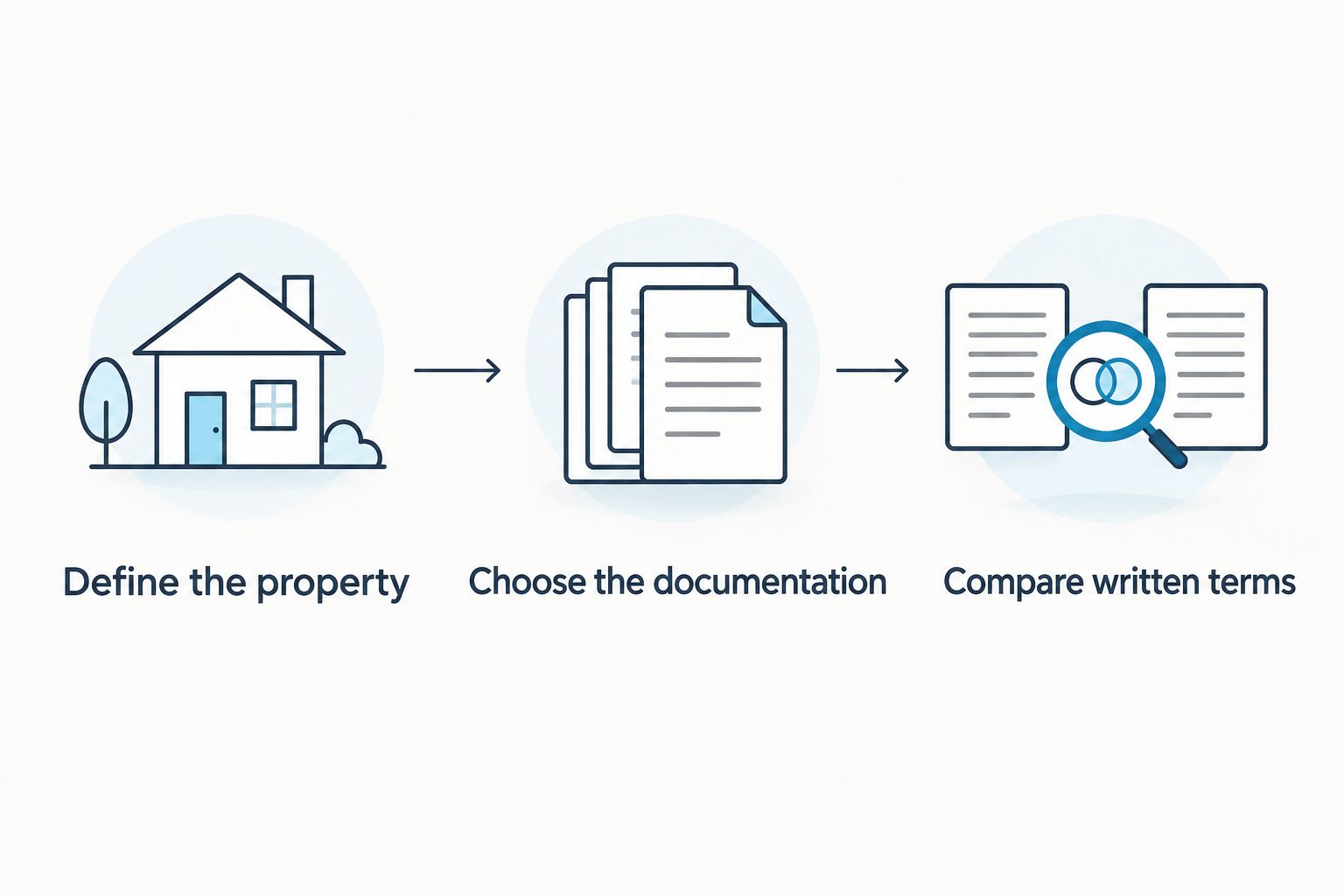
Identify the financing structure before comparing proposals.
Final verdict: choose by the problem you need solved
Choose the mortgage broker if you have a defined financing need
Winner for the property-ready investor or self-employed applicant: Loanguys. Choose the broker when you want to discuss DSCR, fix-and-flip, bridge, bank-statement, or short-term rental financing for a specific transaction.
Bring the property details, your intended use, the relevant income records, and your repayment plan. The objective is to establish program fit and application requirements—not to assume approval or a particular outcome.
Choose Bankrate if you are still researching mortgages
Winner for the early-stage mortgage researcher: Bankrate. Choose the publisher when you want to learn terminology, test payment assumptions, or identify providers to investigate.
Once the question becomes specific to your property, documents, or eligibility, take it to the financing provider. In 2026, the strongest process uses research to prepare for financing rather than treating the two as substitutes.
Best for
- Winner: Broker for defined financing; Bankrate for early research
Research breadth
- Winner: Bankrate
Investment-property program discussion
- Winner: Mortgage broker
Bank-statement documentation discussion
- Winner: Mortgage broker
Independent mortgage calculations
- Winner: Bankrate
Guaranteed approval
- Winner: Neither
Loan-cost certainty before written terms
- Winner: Neither
Standout feature
- Winner: Broker for program selection; Bankrate for browsing
FAQ
Is Loanguys better than Bankrate for investment property loans?
Loanguys is the more direct choice for discussing its stated DSCR, fix-and-flip, bridge, and short-term rental loan programs. Bankrate is better suited to research and lender comparisons before you approach a financing provider.
Is Bankrate a mortgage lender?
Bankrate is a financial publisher and comparison platform, not the lender funding the mortgages you research there. Evaluate the actual lender separately before applying.
Which option is better if I am self-employed?
The mortgage broker is the more direct starting point when you specifically want bank-statement financing. Bankrate helps with general research, while the selected lender determines how your income documents are evaluated.
Can Bankrate mortgage calculators tell me whether I qualify?
No, a mortgage calculator does not establish loan eligibility. It estimates results from your inputs; lender underwriting evaluates your application and property.
Does a DSCR loan mean I do not need any documents?
No, DSCR financing does not mean a documentation-free application. Ask the lender which rental-income, property, borrower, and financial records the program requires.
How do I compare mortgage costs in 2026?
Compare written financing terms using the same loan amount, property use, and repayment assumptions. Review charges, compensation disclosures, prepayment provisions, and closing conditions rather than choosing from a headline rate alone.
Should I research mortgages before contacting a broker?
Research first when you need to understand mortgage terminology or repayment assumptions. Contact a broker when your question requires evaluating a specific property, income-documentation method, or financing objective.
One last thing
The first decision is the loan category, not the provider ranking. A comparison between two familiar names does not solve a mismatch between your property's intended use and the financing you are researching.
Before your next conversation, write a short transaction summary: what you are buying, how it will generate income or serve as your home, how you document earnings, and how you expect to repay the loan. That summary gives a financing provider something concrete to evaluate.


