


LoanGuys vs Chase: which is better in 2026

Choose Loanguys if you need DSCR, fix-and-flip, bridge, bank-statement, or short-term rental financing; choose Chase if you want a traditional bank mortgage and can document income for that loan. This 2026 comparison explains which route fits your property, income, and repayment plan—not which name guarantees approval.
TL;DR
- Loanguys vs Chase comes down to specialist investment property financing versus a traditional bank mortgage.
- Loanguys is the better starting point for investors seeking DSCR, bridge, fix-and-flip, or bank-statement loans.
- Chase is the better starting point for borrowers who want a mortgage through a full-service bank.
- Neither route guarantees approval, the lowest borrowing cost, or the fastest closing.
Why this matters
The wrong financing route creates work before it creates an answer. A rental investor qualifying through property income faces a different lending question from a salaried buyer purchasing a primary residence. A renovation project adds another distinction: the property you buy is not necessarily the property you intend to keep.
Match the loan to the transaction before comparing lenders. For your 2026 search, identify the property’s intended use, how you will document repayment capacity, and whether you need permanent financing or a temporary bridge. Those decisions give you a useful comparison instead of two unrelated quotes.
At a glance
Best for
- Loanguys: Investors seeking the listed specialist loan programs
- Chase: Borrowers seeking a traditional bank mortgage
Banking relationship
- Loanguys: Mortgage brokerage focused on financing
- Chase: Full-service bank offering mortgages and banking services
Rental underwriting
- Loanguys: Offers DSCR and short-term rental loan programs
- Chase: Evaluate the requirements of the specific mortgage proposed
Income documentation
- Loanguys: Offers bank-statement loan programs
- Chase: Traditional mortgage route for documented borrower income
Renovation and transition
- Loanguys: Offers fix-and-flip and bridge loan programs
- Chase: Start here when your transaction fits a traditional mortgage
Standout feature
- Loanguys: Specialist program selection through a mortgage broker
- Chase: Direct bank mortgage relationship
Approval certainty
- Loanguys: Application and property require underwriting
- Chase: Application and property require underwriting
Pricing model
- Loanguys: Loan interest and transaction charges; review broker and lender charges
- Chase: Loan interest and transaction charges; review bank charges
The table identifies starting points, not blanket exclusions. Chase’s status as a bank does not establish that it rejects investors or self-employed borrowers. Likewise, a specialist program does not establish that every unusual property or income situation qualifies.
Chase is the better starting point for a traditional bank mortgage
Best for: a homebuyer who wants a bank mortgage and has straightforward income documentation. Chase offers home lending within a banking business. If you are buying a primary residence and want to deal with a bank, that is a genuine reason to start there.
This route fits a borrower whose application does not require rental cash-flow qualification, renovation funding, or an alternative income-documentation program. You still need to establish that the proposed mortgage matches your finances and the property.
The limitation is fit. A familiar bank name does not answer whether a particular loan supports your investment strategy, ownership structure, or property condition. Ask those questions before treating an existing banking relationship as a financing decision.
For a straightforward 2026 purchase, begin with the ordinary mortgage route. Add a specialist comparison when you identify a specific requirement that the proposed loan does not address.
Chase wins when keeping banking and borrowing together matters
Best for: an existing Chase customer who prefers a bank mortgage relationship. Chase provides banking services beyond mortgages. A mortgage broker serves a different role: arranging financing rather than replacing your everyday bank.
Keeping your mortgage discussions within your banking relationship is a valid preference. It is not evidence of a better loan. Separate convenience from underwriting, repayment terms, and the obligations in your closing documents.
Ask who will originate the mortgage, who you will contact during underwriting, and who will service it after closing. Do not assume those responsibilities remain with the same organization throughout the loan’s life.
The tradeoff is straightforward: a banking relationship addresses where you conduct financial business; a specialist financing route addresses how a particular transaction gets financed. Choose the relationship benefit only after the mortgage itself fits.
Loanguys is better for starting a DSCR rental-loan search
Best for: a rental investor seeking a loan program built around property cash flow. Loanguys investment property financing includes DSCR and short-term rental loan programs. That makes it a direct starting point when your financing question concerns the rental rather than an ordinary owner-occupied home purchase.
DSCR means debt service coverage ratio. It compares income available for debt payments with the required debt service. A ratio of 1.0 times means the income in that calculation equals the debt service; it does not establish any lender’s approval threshold.
The calculation matters as much as the label. For residential rental loans, ask how the program defines qualifying rent and the housing payment, including taxes, insurance, and applicable association dues. Do not substitute your own operating forecast for the lender’s calculation.
The downside is that rental-based qualification still leaves other underwriting questions. Property eligibility, valuation, credit, equity, and reserves remain relevant. Short-term rental projections also need a clear explanation of the income evidence the program accepts.
Chase remains a comparison option if its proposed mortgage fits the investment property. The specialist route wins as a starting point here because the relevant program is explicitly offered—not because a bank mortgage is automatically unsuitable.
Loanguys is better for a bank-statement loan inquiry
Best for: a self-employed borrower specifically seeking bank-statement qualification. Loanguys mortgage brokerage offers bank-statement loan programs. If your financing need is an alternative way to document business income, that named program is more useful than a general promise of flexibility.
A bank-statement loan is not a loan without evidence. The lender assesses eligible deposits under its program rules. Transfers between accounts, borrowed funds, and business revenue are not automatically equivalent to qualifying personal income.
Prepare to explain the business, account ownership, recurring deposits, and expenses. Ask how the lender calculates income and what additional documentation supports the application. The practical advantage is a different documentation route; the limitation is that the route still requires verification.
Chase is a sensible starting point for a self-employed borrower whose financial records support its proposed mortgage. Self-employment alone is not a reason to rule out a bank.
If alternative documentation is your actual obstacle, the guide to bank-statement loans for small business owners addresses that narrower financing question.
Specialist programs fit flips and bridge transactions better
Best for: an investor financing a renovation-and-sale project or a temporary ownership transition. The brokerage’s stated offerings include fix-and-flip and bridge loans. Those categories match different purposes from a mortgage intended to finance a completed home over the long term.
Fix-and-flip financing concerns the purchase, renovation, and planned sale of a property. Bridge financing covers a temporary financing need before a later sale, refinance, or other repayment event. Neither label removes the need for a credible exit strategy.
Before applying, separate these decisions:
- Purchase: What property are you acquiring, and in what condition?
- Renovation: What work does the project require?
- Exit: Will you sell, refinance, or repay from another source?
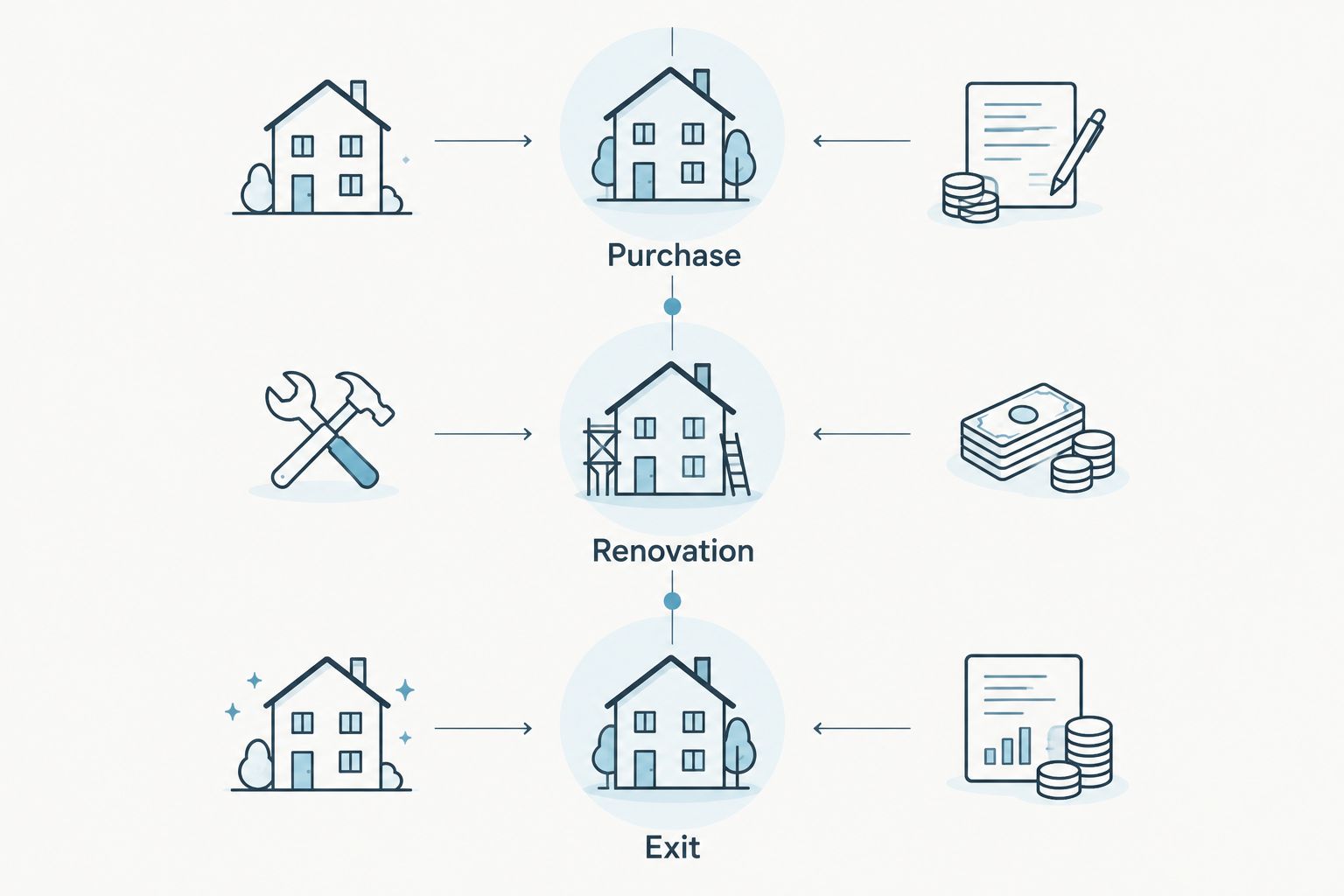
The financing decision needs to account for the project’s exit, not just its purchase.
Ask whether renovation funds are disbursed through draws, what inspections apply, and what happens if the work or sale takes longer than planned. These are questions for the actual proposal, not assumed features of every loan.
Chase is the stronger starting point when you want a traditional mortgage for a transaction that fits that structure. For a 2026 flip or bridge inquiry, start with the specialist program that matches the project’s purpose.
Chase wins if you specifically want a direct bank lender
Best for: a borrower who prefers applying to a bank rather than through a mortgage broker. Chase is a bank; the client is a mortgage broker. That distinction explains the relationship you are choosing, but it does not establish which proposal is better.
A broker arranges mortgage financing with lenders. A bank mortgage application starts with the bank’s lending channel. If dealing directly with a bank is a firm requirement, Chase matches that preference.
The broker route has a different appeal: you can discuss the stated specialist programs with a business focused on arranging mortgages. Ask which lender would fund your loan, how compensation works, and who controls underwriting decisions.
Neither structure guarantees a broader suitable selection for your individual application. Compare the proposed loan and responsible parties rather than assuming that “broker” means unlimited choice or that “bank” means fewer complications.
Neither side wins on guaranteed approval or closing speed
Approval certainty is a tie: neither business model replaces underwriting. A program discussion, prequalification, and final approval are different stages. Your property and supporting documents must satisfy the requirements of the proposed loan.
For a 2026 purchase contract, ask each financing contact to identify outstanding conditions and dependencies. Appraisal, title, insurance, borrower documentation, and project review can affect the closing process.
Use the same questions for both routes:
- Has the property been reviewed for the intended loan program?
- What conditions remain before funding?
- Which tasks depend on outside parties?
- What happens if the appraisal or property review changes the proposal?
- Who communicates changes to you and the closing team?
A fast response to an inquiry is useful, but it is not a funded loan. Judge readiness by resolved conditions, not by an advertised impression of speed. Keep contract deadlines aligned with the actual status of the financing.
Pricing: compare the loan structure, not the company name
There is no automatic pricing winner between a mortgage broker and a bank. Both routes involve loan interest and transaction charges. For the brokerage route, review lender charges and any broker compensation or charges; for the bank route, review the bank’s proposed charges.
Predictability comes from the loan terms. A fixed-rate mortgage fixes the interest rate under its contract, while an adjustable-rate mortgage permits changes according to its terms. A 30-year mortgage term describes repayment length, not whether the interest rate is fixed.
Loan-to-value, or LTV, expresses the loan amount as a share of the property value used for underwriting. 100 percent LTV mathematically means those amounts are equal; it is not an offered financing level here. Confirm whether the proposal uses purchase price, appraised value, or another permitted basis.
For your 2026 comparison, request terms for the same property, loan amount, purpose, and repayment plan. Review:
- Rate structure and any adjustment provisions.
- Amortization, maturity, and any balloon payment.
- Required equity and reserves.
- Prepayment restrictions or penalties, if applicable.
- Renovation draws and extension terms, when relevant.
- Closing charges and the conditions attached to the proposal.
A short-term project loan and a long-term mortgage solve different problems. Compare each against your exit plan before comparing them against each other.
Final verdict: choose the route that matches your application
Choose Loanguys if you need specialist property financing
Named profile: the rental investor, flipper, or self-employed borrower seeking a stated specialist program. Choose Loanguys when your inquiry specifically concerns DSCR, short-term rental, fix-and-flip, bridge, or bank-statement financing.
The advantage is program alignment. The limitation is that a relevant program still requires a suitable property, documented application, and acceptable terms. Start with the specialist inquiry, then evaluate the actual proposal.
Choose Chase if you want a traditional bank mortgage
Named profile: the homebuyer with straightforward documentation who prefers a bank relationship. Choose Chase when your transaction fits its proposed mortgage and dealing with a bank is part of your decision.
The advantage is that the relationship matches your preference. The limitation is that convenience does not establish better terms or suitability for an unusual investment project. Confirm fit before committing.
Traditional bank mortgage starting point
- Winner: Chase
Banking relationship
- Winner: Chase
DSCR rental-loan inquiry
- Winner: Specialist broker route
Bank-statement loan inquiry
- Winner: Specialist broker route
Fix-and-flip or bridge inquiry
- Winner: Specialist broker route
Direct bank lender preference
- Winner: Chase
Guaranteed approval or closing speed
- Winner: Neither
Pricing
- Winner: Compare written proposals
FAQ
Is Loanguys better than Chase for investment property loans?
Loanguys is the better starting point when you specifically need its stated DSCR, fix-and-flip, bridge, bank-statement, or short-term rental programs. Chase remains a comparison option when its proposed mortgage fits your investment property and borrower profile.
Should I choose Chase for a primary residence mortgage?
Choose Chase as a starting point if you want a traditional bank mortgage and can support the application with the required documentation. Compare the actual loan terms before choosing a lender.
Can a self-employed borrower apply for a Chase mortgage?
Self-employment alone does not rule out a Chase mortgage application. Ask how the proposed loan evaluates business income and which records are required; consider a bank-statement program if you need that documentation route.
Does a DSCR loan mean I need no documents?
No, a DSCR loan still requires underwriting documentation. The program evaluates property income under its rules, alongside other borrower and property requirements.
Is a mortgage broker cheaper than a bank?
A mortgage broker is not automatically cheaper than a bank. Compare written proposals for the same transaction, including interest structure, charges, repayment terms, and restrictions.
Which option is better for a fix-and-flip project?
Start with a fix-and-flip program when your transaction involves buying, renovating, and selling a property. Review the renovation funding process, maturity, and repayment plan before accepting a proposal.
Can either option guarantee my closing date?
Neither a broker nor a bank relationship establishes a guaranteed closing date. Ask which underwriting and third-party conditions remain unresolved before relying on a funding timeline.
One last thing
Compare the repayment event before comparing the application experience. A rental you intend to hold, a home you intend to occupy, and a property you intend to renovate and sell need different financing decisions.
Write down your intended use and exit plan before the first conversation. That short explanation gives the financing contact a concrete transaction to assess—and gives you a basis for rejecting a loan that solves the purchase but not the repayment.


