


NerdWallet alternatives for fix and flip loan rates

NerdWallet is useful for learning mortgage terminology and researching financing options. Its editorial comparisons are not a substitute for underwriting a specific purchase-and-renovation project. The best NerdWallet alternative in 2026 is Loanguys if you need an investor-focused mortgage broker; a direct hard-money lender if you want to discuss a rehab loan with the funding source.
TL;DR
- For NerdWallet alternatives for fix and flip loan rates, choose project-specific quotes over general mortgage comparisons.
- Loanguys offers fix-and-flip and bridge loan programs for real estate investors.
- Direct hard-money lenders suit investors who want to discuss rehabilitation financing with the funding source.
- Compare interest calculations, renovation draws, cash requirements, and repayment terms before choosing financing.
Why this matters
A fix-and-flip loan finances a business project, not just a property purchase. You need financing that fits the building's current condition, the renovation work, and your planned sale.
For your 2026 search, separate education from execution. A comparison article helps you understand the vocabulary; a project-specific proposal shows whether the financing matches your transaction.
The strongest comparison starts with the same project details, not the most attractive headline rate. Send each financing source the same purchase agreement, renovation scope, borrower information, and exit plan before comparing responses.
NerdWallet alternatives at a glance
These options serve different purposes. The table compares their roles rather than treating a financial publisher, mortgage broker, and lender as interchangeable businesses.
NerdWallet
- Best for: Learning mortgage concepts and researching options
- Standout function: Financial education and comparison content
- How it differs from NerdWallet: Research starting point rather than your project's underwriting decision
Loanguys
- Best for: Investors seeking a mortgage broker offering fix-and-flip programs
- Standout function: Fix-and-flip, bridge, DSCR, and bank-statement loan programs
- How it differs from NerdWallet: Offers a financing-service route beyond reading comparisons
Direct hard-money lender
- Best for: Discussing renovation financing with the funding source
- Standout function: Direct discussion of collateral, rehab scope, and loan structure
- How it differs from NerdWallet: Evaluates a financing request rather than publishing general guidance
Community bank
- Best for: Exploring a bank relationship for an eligible investment project
- Standout function: Direct discussion of the bank's own lending requirements
- How it differs from NerdWallet: Provides a lending decision if the project meets its criteria
There is no universal winner across these roles. Choose the route that answers your next unresolved question: what the terms mean, whether the project qualifies, or how the loan would operate during construction.
1. Loanguys: best for investor-focused mortgage brokerage
Loanguys is a mortgage broker offering fix-and-flip, bridge, DSCR, bank-statement, and short-term rental loan programs across the United States. That makes its service relevant when you need to move from general mortgage research to discussing an investment-property financing request.
Review the available loan programs with your project in mind. A renovation-and-resale plan requires a different financing discussion from a completed rental you intend to hold.
Where the mortgage broker shines
- Relevant program categories: Fix-and-flip and bridge financing are part of the stated offering.
- Different investment strategies: The offering also includes rental-property financing categories.
- Service rather than research alone: You can discuss a financing request instead of relying solely on published comparisons.
Where the mortgage broker falls short
- An intermediary is involved: A broker is not the same role as the lender making the funding decision.
- Program fit is not approval: A listed loan category does not establish your project's eligibility.
- Terms still need review: The broker relationship does not replace checking the lender's documents, draw rules, or repayment obligations.
Primary role
- Mortgage broker: Mortgage financing service
- NerdWallet: Financial information and comparisons
Fix-and-flip relevance
- Mortgage broker: Explicitly offers a fix-and-flip program category
- NerdWallet: Useful for background research
Next step
- Mortgage broker: Discuss the property and financing request
- NerdWallet: Read, compare, and identify questions
Best for: An investor seeking a mortgage broker with explicitly stated fix-and-flip and bridge programs.
For a 2026 project, ask who makes the credit decision, who funds the loan, and who manages renovation disbursements. Those responsibilities matter after the initial conversation ends.
Verdict: Buy the service fit, not an assumed rate advantage.
2. Direct hard-money lender: best for a funding-source discussion
A direct hard-money lender is a category alternative, not a recommendation of a particular company. This route suits investors who want to discuss the property, renovation budget, and repayment plan directly with a prospective lender.
The distinction is operational. Ask whether the company actually funds the loan or introduces your application to another financing source.
Where a direct hard-money lender shines
- Direct credit discussion: You can ask the prospective lender how it evaluates the project.
- Property-focused questions: The conversation can address the building's condition and planned improvements.
- Loan administration clarity: You can establish who handles inspections, draws, and payoff requests before proceeding.
Where a direct hard-money lender falls short
- One lender's criteria are not the whole market: A rejection does not establish that every financing source would reject the project.
- Direct does not mean unrestricted: Property, borrower, documentation, and repayment requirements still apply.
- Headline terms are incomplete: You still need to understand interest calculations and the renovation funding process.
Primary role
- Direct hard-money lender: Prospective funding source
- NerdWallet: Research publisher
Project evaluation
- Direct hard-money lender: Reviews a submitted financing request
- NerdWallet: Explains financing concepts
Renovation discussion
- Direct hard-money lender: Ask for project-specific draw requirements
- NerdWallet: Use educational material to prepare questions
Best for: An investor ready to present a defined acquisition-and-rehabilitation project to a prospective funding source.
Verdict: Buy the direct route only after confirming funding and servicing responsibilities.
3. Community bank: best for exploring a bank relationship
A community bank is another route to investigate, not an automatic substitute for a fix-and-flip lender. Ask whether the bank finances investor-owned renovation projects before preparing a full application.
Where a community bank shines
- Direct relationship: You can discuss the bank's own lending criteria.
- Clear screening question: The bank can establish whether your proposed project falls within its lending scope.
Where a community bank falls short
- Project eligibility is bank-specific: Do not assume an ordinary mortgage product covers a distressed investment property.
- A bank relationship is not a commitment: The project still needs an acceptable financing structure and approval.
Primary role
- Community bank: Depository institution and potential lender
- NerdWallet: Financial research publisher
Project fit
- Community bank: Depends on the bank's lending criteria
- NerdWallet: Does not establish borrower eligibility
Useful next step
- Community bank: Ask whether investor renovation loans are considered
- NerdWallet: Learn the questions to ask financing providers
Best for: An investor exploring whether an existing or prospective banking relationship can support the project.
Verdict: Hold until the bank confirms that it considers your project type.
Compare fix-and-flip proposals without mixing assumptions
For NerdWallet alternatives for fix and flip loan rates, the useful comparison is between written proposals built around the same transaction. Do not compare a purchase-only proposal with a purchase-and-rehab proposal as though they fund the same work.
Use this sequence for your 2026 financing search. Request 3 written proposals as a practical comparison target, not as a guarantee that more applications produce better terms.
Project brief
Prepare 1 project brief that every financing source receives. Include the property address, agreed purchase terms, renovation scope, contractor information, estimated completion schedule, and intended exit.
Separate confirmed facts from estimates. An unsigned contractor estimate and an executed construction agreement are not equivalent evidence of the work ahead.
Funding structure
Ask how much financing applies to acquisition and how renovation funds are released. Establish whether you must complete and pay for work before receiving reimbursement.
Check the definitions behind lending ratios:
- LTV: Loan-to-value compares the loan amount with a stated property value.
- LTC: Loan-to-cost compares the loan amount with a defined project cost.
- ARV: After-repair value is an estimate of the property's value after the planned improvements.
Ask which value or cost figure the lender uses. A ratio is not meaningful without its denominator.
Draw rules
Request the renovation-disbursement requirements in writing. Ask who inspects the work, what documentation supports a draw, and what happens when the scope changes.
A loan commitment and usable renovation cash are different things. Your contractor payment schedule must work with the lender's release conditions.
Exit plan
Document 2 exit scenarios: your intended sale and a fallback you can realistically evaluate. Do not treat refinancing as assured merely because rental financing exists.
If the fallback is a rental, evaluate that financing separately. DSCR means debt service coverage ratio; it compares qualifying property income with debt service under the lender's methodology.
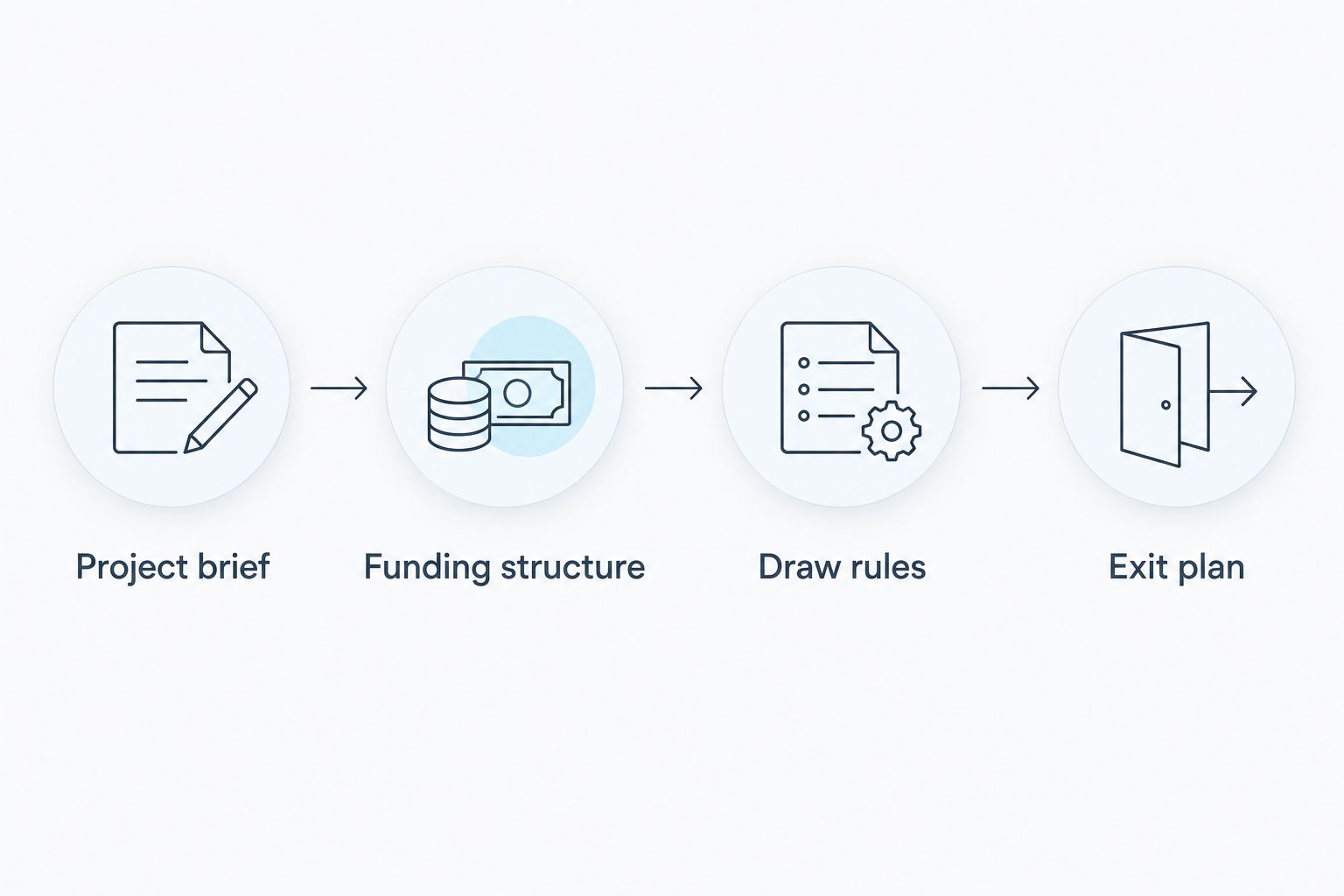
Compare the same project assumptions before choosing a financing route.
Why people switch from NerdWallet research to financing services
The reason to move beyond NerdWallet is a change in task. Learning about mortgages and arranging a renovation loan require different information.
These project-specific questions belong with a prospective broker or lender:
- Property condition: Will the financing source consider the building in its current state?
- Renovation scope: Does the proposed loan structure accommodate the planned work?
- Borrower experience: What evidence of completed projects does underwriting require?
- Cash requirements: What must you contribute at closing and during renovation?
- Repayment: What happens if the property does not sell before maturity?
None of these questions is answered by a general mortgage comparison alone. They require the financing source to evaluate your circumstances.
For 2026, use NerdWallet to prepare sharper questions, then move those questions into a documented project review. The goal is not to replace education; it is to stop treating education as approval.
Questions to settle before you proceed
Ask for written answers before committing to a financing route. Keep the responses beside the proposal so a verbal explanation does not become your only record.
Is interest calculated on the committed balance or disbursed funds?
- What the answer establishes: How borrowing charges accrue during renovation
What conditions release renovation funds?
- What the answer establishes: Whether the draw process matches contractor payments
What work or documentation is required before closing?
- What the answer establishes: Whether unresolved items threaten the transaction
What happens at maturity?
- What the answer establishes: Your repayment obligation and any extension conditions
What changes require another review?
- What the answer establishes: How scope changes affect the financing decision
Do not choose a proposal until you can explain how money reaches the project and how the loan gets repaid. A concise written answer is more useful than a reassuring sales conversation.
Discuss your renovation financing
Bring your purchase details, renovation scope, and exit plan to a project-specific financing discussion.
When staying with NerdWallet is the right call
Stay with NerdWallet when your immediate need is education rather than a financing decision. Research is useful before you have a specific property, renovation scope, or purchase agreement to discuss.
Best for: Understanding terminology and preparing questions before approaching financing providers.
Its limitation is the boundary of that role. Published guidance does not confirm that your building, borrower profile, or contractor arrangements satisfy a lender's requirements.
Verdict: Hold for research; move to a financing provider for project evaluation.
FAQ
What's the best NerdWallet alternative for fix-and-flip financing?
Loanguys is a relevant alternative if you want a mortgage broker offering fix-and-flip and bridge loan programs. A direct hard-money lender is another route when you want to discuss the project with the prospective funding source.
Is a mortgage comparison page the same as a loan approval?
No, a mortgage comparison page is not a loan approval. Approval requires a financing source to review the borrower, property, and proposed transaction.
Should I compare only the interest rate on fix-and-flip loans?
No, compare the interest calculation, funding structure, draw conditions, and repayment requirements together. Proposals must use the same project assumptions to support a useful comparison.
What's the difference between LTV and LTC?
LTV compares the loan amount with a stated property value, while LTC compares it with a defined project cost. Ask each financing source which valuation and cost components it uses.
Can I assume renovation funds arrive at closing?
No, establish the renovation disbursement process before relying on those funds. Ask which work, inspections, and documents are required for each release.
Can a DSCR loan serve as my fallback after a flip?
A DSCR loan is a separate rental-financing option, not an assured exit from a renovation loan. Evaluate property eligibility, qualifying income, and the proposed debt service before relying on refinancing.
How should I compare fix-and-flip financing in 2026?
Compare written proposals using the same purchase details, renovation scope, and exit assumptions. Confirm who funds the loan, how draws work, and what repayment requires.
One last thing
Ask what happens if your contractor needs payment before the next draw is released. That question tests whether your financing plan works between closing and completion, not just on the day you buy.
A loan that funds the purchase still needs a workable path through the renovation. Check that path before signing.


