


Second Mortgage Investment Property: 2026 Loan Guide
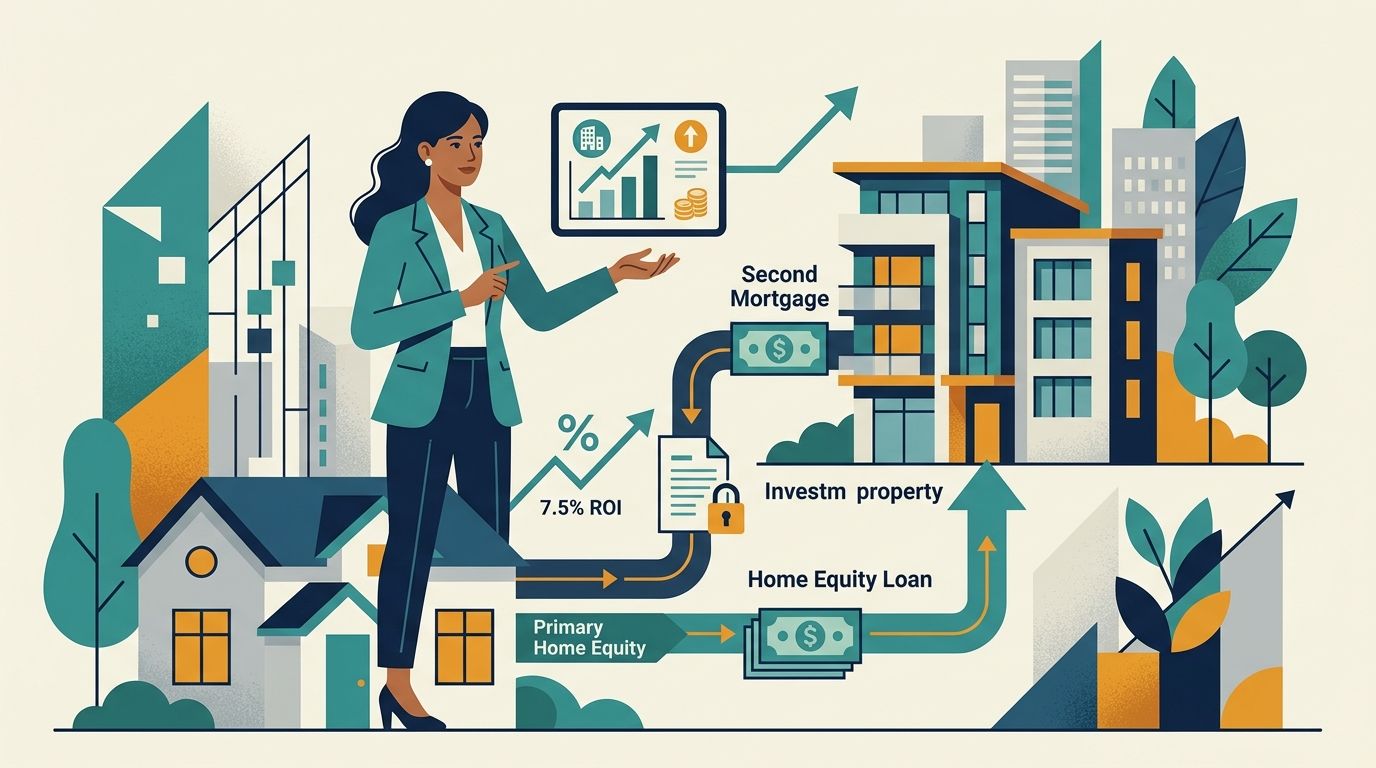
Second mortgage investment property financing lets landlords and rental portfolio owners borrow against equity in a rental or multifamily property without touching the first mortgage, and in 2026 it's one of the fastest ways to fund a down payment, a rehab, or a debt consolidation without a full cash-out refinance.
TL;DR
- Second mortgage investment property loans (HELOCs and fixed home equity loans) usually cap at 70-75% combined loan-to-value.
- LoanGuys.com structures DSCR-based and bank-statement second liens for investors traditional banks decline.
- A cash-out refinance beats a second mortgage when your current first-mortgage rate sits above today's market rate.
- Blanket mortgage refinancing replaces multiple property-level second liens with one payment across a portfolio.
Why second mortgages matter for investment property owners
Rental property owners don't have the same equity-access playbook as a homeowner tapping a primary residence. Banks that happily write an 85% CLTV HELOC on a primary home routinely cap non-owner-occupied lines at 70-75% CLTV, and plenty won't touch a second lien on a rental at all. That gap is exactly why investors search for home equity loans for rental property owners instead of walking into a branch and asking for a HELOC application.
The math also changes once rental income enters the picture. A second mortgage adds a payment on top of the existing mortgage, and a lender underwriting a non-owner-occupied property wants to know the property's rent still covers both liens, or that you personally qualify through W2, bank-statement, or asset documentation. A second mortgage on an investment property is priced and underwritten differently from a HELOC on your own home, and treating them the same is the single most common reason investor applications get declined in 2026.
Check your equity position first
Before you call a lender, run the numbers yourself. Pull your current mortgage balance, get a realistic value estimate (not a Zillow guess), and calculate combined loan-to-value across both liens.
- Order a broker price opinion or recent appraisal instead of relying on automated valuation tools
- Calculate CLTV assuming a 70-75% investment-property cap, not the 85% you'd see on a primary residence
- Factor in any existing second liens, judgments, or tax liens already recorded against the property
- Check your first-mortgage note for a due-on-sale or subordination clause that could block a second lien
- Confirm the property title is clean and in the name you'll be borrowing under (personal vs. LLC)
Compare second mortgage types before you apply
Not every equity-access loan is structured the same way, and picking the wrong one costs you flexibility or money over the life of the loan.
- HELOC: variable rate, draw-as-needed, interest-only draw period
- Fixed home equity loan: lump sum, fixed rate, fixed term
- Cash-out refinance: replaces the first mortgage entirely at a new rate and term
- DSCR cash-out refinance: qualifies off the property's rent-to-payment ratio instead of personal income
- Blanket mortgage refinance: consolidates equity access across multiple properties into one note, detailed in how to consolidate multiple rental loans into one blanket mortgage
Confirm the income documentation path
Investment property second mortgages get underwritten on one of three tracks, and picking the right one before you apply saves weeks.
- Full-doc W2/tax-return underwriting for investors with straightforward personal income
- DSCR underwriting that qualifies the loan off rental income alone, no personal debt-to-income calculation
- Bank-statement underwriting for self-employed borrowers whose tax returns understate real cash flow
- Asset-based underwriting for investors qualifying off a stock or investment portfolio instead of income
- No-doc HELOC programs built specifically for investors without traditional pay stubs, covered in no-doc HELOC options for real estate investors
Shop portfolio and non-QM lenders, not just your bank
Most retail banks quietly cap or decline non-owner-occupied second liens, which pushes serious investors toward specialized lenders.
- Credit unions with local portfolio-lending programs for rental properties
- Non-QM lenders who underwrite DSCR and bank-statement second liens as a core product
- Mortgage brokers with access to multiple investment-property HELOC wholesalers
- Portfolio lenders who keep the loan in-house instead of selling it to Fannie or Freddie
- Brokers who can compare rate, CLTV cap, and draw terms side by side, like the options in best HELOC lenders for real estate investors
Stress-test the cash flow before you sign
Adding a second payment to a rental you already own changes the property's break-even rent, and skipping this step is how investors end up cash-flow negative.
- Recalculate DSCR with both the first and second mortgage payments included
- Build in a vacancy buffer of at least one month per year, not zero
- Add the second lien's fully-indexed rate if it's a variable HELOC, not the introductory rate
- Confirm property taxes and insurance haven't been reassessed since your last statement
- Model what happens if rent drops 10% for a quarter
Prepare the paperwork your file actually needs
Investment property files move faster when the documentation is ready before underwriting asks for it.
- Current lease agreements and rent roll if the property is tenanted
- Entity documents (operating agreement, EIN) if you're borrowing through an LLC
- Insurance declarations page showing coverage on the property
- Two most recent mortgage statements for the existing first lien
- Subordination request paperwork if your first lender requires sign-off on a second lien
Close and deploy the funds with a plan
A second mortgage on an investment property isn't free money sitting in a savings account, and the investors who do best with it have a use case locked in before they close.
- Down payment on the next acquisition
- Rehab budget for a value-add renovation
- Debt consolidation to replace higher-rate credit lines
- Reserve fund held against vacancy or major repairs
Comparing your second mortgage options
HELOC (variable)
- Best for: Investors who want draw flexibility
- Key limitation: Rate resets with the index; payment can climb
Home equity loan (fixed)
- Best for: Investors who want one predictable payment
- Key limitation: Lump sum only, no redraw once funded
Cash-out refinance
- Best for: Owners whose current rate is above today's market
- Key limitation: Replaces the entire first-lien term and rate
DSCR cash-out refinance
- Best for: LLC-owned rentals without W2 documentation
- Key limitation: Priced off the property's DSCR ratio, not FICO alone
Blanket mortgage refinance
- Best for: Portfolios of four or more properties
- Key limitation: Cross-collateralizes every property under one note
Verdict: a fixed home equity loan wins for investors who want a predictable second payment and don't plan to redraw, while a DSCR cash-out refinance wins for LLC-owned rentals with no personal income documentation.
Compare your investment property equity options
Talk through HELOC, fixed home equity, and DSCR cash-out terms for your rental.
Common mistakes investment property owners make
- Assuming owner-occupied HELOC limits apply. Non-owner-occupied caps run 70-75% CLTV, not the 85-90% you'd see on a primary residence.
- Skipping the debt-service stress test. A second payment on top of an existing mortgage can flip a cash-flowing rental into a negative one fast.
- Forgetting subordination approval. Some first-lien lenders require sign-off before a second mortgage can record, and that step alone can add weeks if it's missed.
- Treating appraised equity like available cash. Title, insurance, and lien searches all have to clear before funds disburse.
- Ignoring how DSCR shapes the loan amount. A property with a 0.9 DSCR won't qualify for the same second-lien amount as one at 1.25, regardless of the appraised value.
FAQ
Can you get a second mortgage on an investment property in 2026?
Yes, but most lenders cap combined loan-to-value at 70-75% for non-owner-occupied properties, compared to 85-90% on a primary residence. DSCR and non-QM lenders fill the gap that retail banks leave on rentals.
Is a HELOC or a home equity loan better for a rental property?
A HELOC works better if you need draw flexibility over time; a fixed home equity loan works better if you want one predictable payment. Both get underwritten against the same CLTV caps on investment properties.
How much equity do you need for a second mortgage on a rental?
Enough that your combined loan-to-value stays at or below 70-75% after adding the second lien. A property worth $400,000 with a $250,000 first mortgage has roughly $30,000-$50,000 of usable equity at that cap.
Does a second mortgage on an investment property use DSCR?
Many programs do. A DSCR cash-out refinance or second lien qualifies the loan off the property's rent-to-payment ratio instead of personal income, which is why it's common for LLC-owned rentals.
Is a cash-out refinance better than a second mortgage for investment properties?
A cash-out refinance is better when your current first-mortgage rate is above today's market rate, since it replaces the whole loan. A second mortgage is better when you want to keep a low existing first-mortgage rate untouched.
Can you get a second mortgage on a property owned by an LLC?
Yes, DSCR and non-QM lenders regularly underwrite second liens for LLC-owned rentals, though the entity's operating agreement and EIN documentation need to be ready before underwriting starts.
What credit score do you need for a second mortgage on a rental property?
Requirements vary by program and lender, and DSCR-based options weigh the property's cash flow more heavily than personal credit. Check current program guidelines directly since minimums shift by lender.
One last thing
Most retail banks don't decline investment-property second mortgages because the borrower is risky - they decline them because non-owner-occupied second liens simply aren't a product line most branches carry. That's the gap DSCR and portfolio lenders exist to close, and it's why the second mortgage conversation for a rental in 2026 almost always starts with a broker instead of a bank teller. Get the subordination question answered with your current first-lien servicer before you shop rates; that single call determines whether a second mortgage is even possible on the property, no matter how much equity you're sitting on.


