


Is a construction-to-permanent loan better than two separate loans?
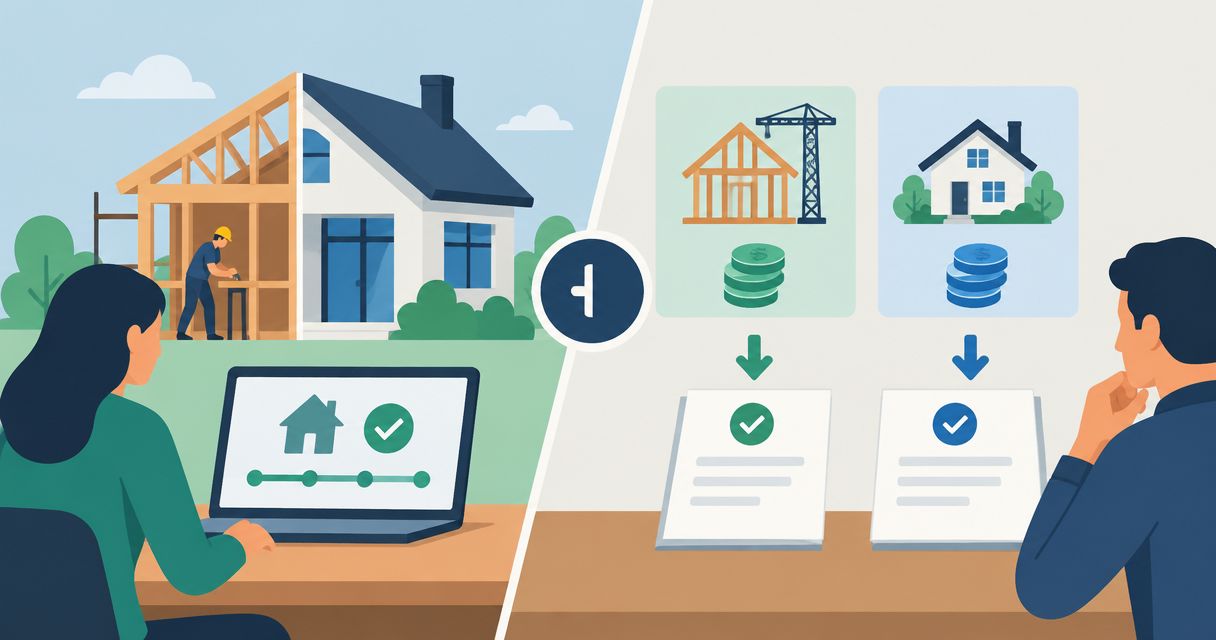
A single-close construction-to-permanent loan is the better fit when you want construction funding and a planned long-term mortgage together; two separate loans are the better fit when you need flexibility to choose permanent financing after the build. Neither structure guarantees a lower total borrowing cost, and a single closing does not remove completion requirements, conversion conditions, or the risk of needing additional cash.
TL;DR
- Construction to permanent loan vs two loans comes down to conversion certainty versus refinancing flexibility.
- Single-close financing combines construction and permanent financing; separate loans require another mortgage approval after construction.
- Compare written conversion conditions, not just the number of closings.
- Loanguys is a mortgage broker for investors and homeowners considering DSCR, bridge, and bank-statement financing.
Is a construction-to-permanent loan better than two separate loans?
Choose single-close financing for a more defined transition into permanent financing. Choose separate loans for the freedom to shop for that mortgage later. The trade-off is whether you settle the permanent financing framework before construction or arrange a new mortgage afterward.
For your 2026 comparison, confirm that each proposal actually uses the structure below. A lender's product name alone does not establish how closing or conversion works. Review the county permits to construction loan draw schedule workflow alongside the financing terms, because construction progress affects both structures.
Best for
- Single-close construction-to-permanent: Borrowers prioritizing a planned transition
- Separate construction and permanent loans: Borrowers prioritizing lender choice after construction
Closing structure
- Single-close construction-to-permanent: 1 initial loan closing, with conversion requirements
- Separate construction and permanent loans: 2 loan closings: construction financing, then permanent financing
Permanent financing
- Single-close construction-to-permanent: Arranged within the original loan structure
- Separate construction and permanent loans: Obtained through a separate mortgage transaction
Main advantage
- Single-close construction-to-permanent: Avoids a separate permanent mortgage closing
- Separate construction and permanent loans: Lets you compare permanent financing after completion
Main drawback
- Single-close construction-to-permanent: Initial terms constrain the permanent financing path
- Separate construction and permanent loans: Later approval and funding are not guaranteed
Rate question
- Single-close construction-to-permanent: When is the permanent rate established?
- Separate construction and permanent loans: What terms will you qualify for when refinancing?
Completion risk
- Single-close construction-to-permanent: Unmet conditions can delay conversion
- Separate construction and permanent loans: Unfinished work can prevent permanent financing
The table compares structures, not individual offers. A single-close loan with restrictive conversion conditions is not automatically better than separate financing with a well-supported exit plan.
Why this matters
Construction financing has to support two different situations: an unfinished property and a completed property. During construction, money is generally released through draws tied to progress, while permanent financing supports the property after completion.
The transition is where your financing plan needs the most scrutiny. A completed building does not, by itself, establish that every lending condition has been satisfied.
Before choosing a structure in 2026, ask what happens if construction finishes late, the completed value falls short, or your financial circumstances change. The better loan structure is the one whose completion and repayment requirements you can meet—not simply the one with fewer signatures.
Construction-to-permanent: 1 initial closing
Best for: borrowers who want the construction and permanent financing framework established before work begins. A single-close construction-to-permanent loan starts with one closing and transitions to its permanent repayment phase when the required conditions are met.
That structure removes the need to originate a separate permanent mortgage solely to repay the construction financing. It does not mean the transition happens without documentation, inspections, or lender review.
What works in your favor
You can evaluate the construction requirements and permanent financing provisions together. That makes it easier to identify conflicts before you commit to a builder or begin drawing funds.
The principal advantage is continuity. You are not relying on an entirely separate mortgage transaction as the original plan for retiring the construction balance.
What you still need to check
Read the conversion requirements and ask which borrower or property changes trigger another review. Do not interpret a single closing as a promise that your credit, income, occupancy, or completed project will never be checked again.
Also identify when the permanent interest rate becomes binding and what happens if construction outlasts the applicable agreement. A single-close structure and a permanent rate lock are different contractual features.
For a 2026 proposal, request a written explanation of the conversion process. Favor this structure when its permanent terms fit your intended use and its completion conditions match your project.
Separate financing: 2 loans and 2 closings
Best for: borrowers who value choosing permanent financing after the property is complete and can support a separate approval. The construction loan funds the build, and a later permanent mortgage repays that construction debt.
The construction loan's maturity creates a repayment deadline. Your plan must connect that deadline to an achievable permanent financing closing, rather than assume completion will make refinancing automatic.
What works in your favor
You can compare permanent lenders after the property reaches its completed condition. You also avoid committing to a particular permanent lender at the start merely because that lender provides construction financing.
This separation can fit projects where the intended long-term financing differs from the construction lender's offering. The benefit is choice, not a guaranteed improvement in terms.
What you still need to check
The permanent lender evaluates the borrower and property under the requirements that apply to that application. Changes in income, credit, debt, property value, or lending criteria can affect the result.
You also have another closing to coordinate. Ask which title, appraisal, legal, recording, and lender charges apply to each transaction; do not assume every charge is duplicated or that any category disappears.
Choose separate financing only with a credible repayment plan for the construction loan. Shopping flexibility is useful, but it does not repay a maturing balance.
Why the better choice varies by project
The same financing structure can suit one build and create problems for another. Use these factors to compare your actual proposals rather than applying a universal winner to every project.
- Conversion conditions: Identify the inspections, completion evidence, title requirements, and borrower checks needed to enter permanent repayment. These determine how conditional the planned transition remains.
- Construction timing: Compare the building schedule with loan maturity and any rate-lock deadline. Ask how delays affect extensions, funding, and permanent financing.
- Borrower qualification: Determine whether the permanent loan relies on employment income, business income, assets, or qualifying rental income. Your documentation must fit the intended financing route.
- Completed value: Understand how the lender establishes the finished property's value. An appraisal shortfall can change the cash needed to complete the financing plan.
- Property use: State whether you will occupy, rent, or sell the finished property. Financing intended for a primary residence is not interchangeable with financing for an investment property.
- Contractual charges: Compare charges across the entire construction-to-permanent path, including any applicable extension or early-payoff provisions. The number of closings alone does not establish total cost.
For a 2026 decision, separate facts already fixed by contract from terms that will be determined later. That distinction shows where you have certainty and where you still carry risk.
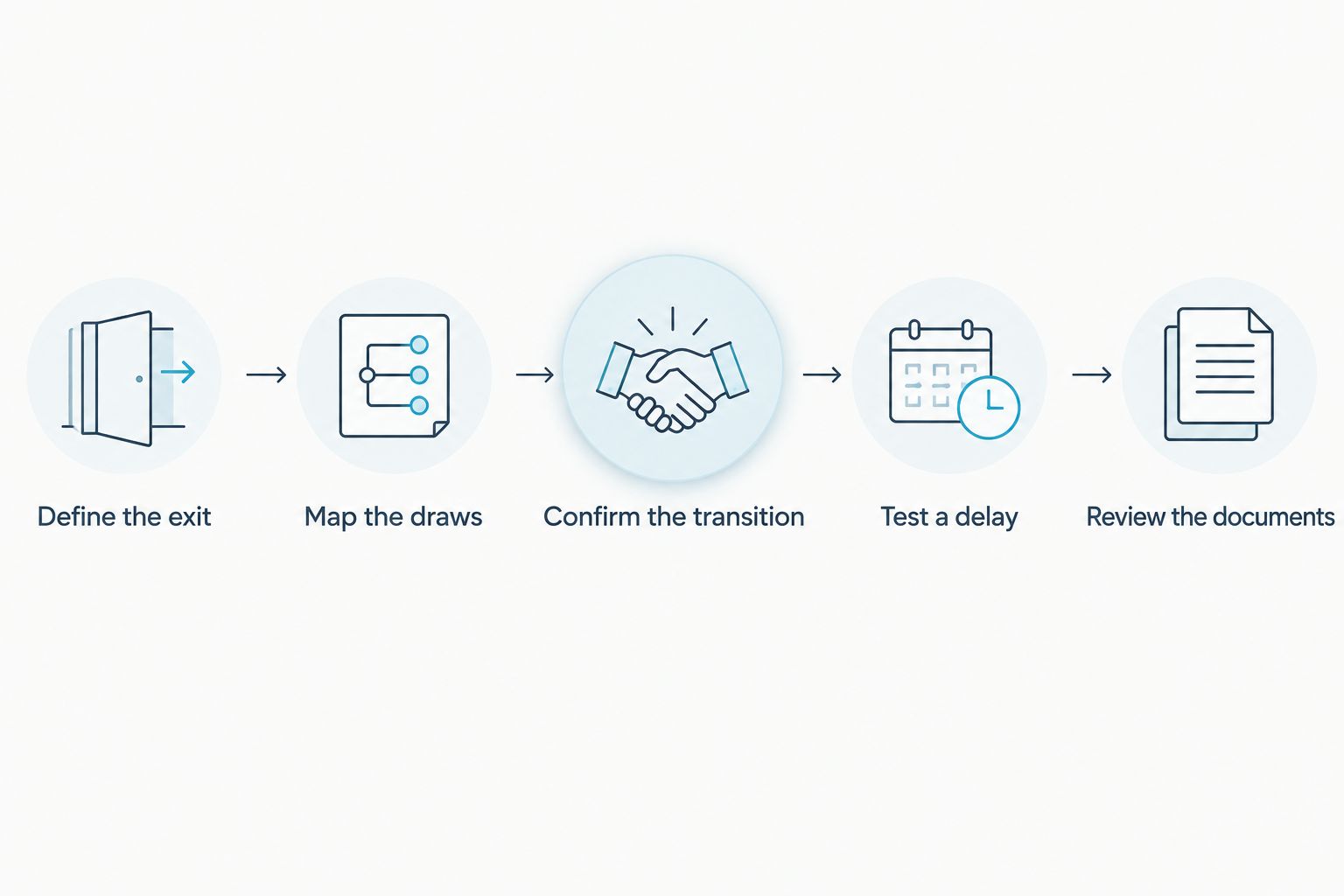
How do I compare the actual loan proposals?
Compare both structures using the same plans, construction budget, intended occupancy, and expected completion date. Otherwise, an apparent difference in financing can simply reflect different assumptions about the project.
1. Define the exit
Write down whether you intend to occupy, rent, or sell the finished property. Then identify the financing that supports that outcome and the conditions you must meet to obtain it.
If you plan to sell, a permanent mortgage is not automatically the right destination. Match the financing to the actual repayment strategy.
2. Map the draws
Ask how the lender releases construction funds, who verifies progress, and what must happen before the next draw. Also establish whether you must pay any project expenses before reimbursement.
A loan commitment is not the same as unrestricted access to the entire construction budget. Your cash planning must follow the draw rules.
3. Confirm the transition
For single-close financing, obtain the conversion checklist. For separate loans, obtain the permanent lender's qualification requirements and identify anything that cannot be resolved until completion.
Distinguish preliminary eligibility discussions from a binding lending commitment. Verbal confidence does not replace written conditions.
4. Test a delay
Ask what happens if work remains unfinished when the construction period ends. Identify the extension process, approval requirements, and your obligation if an extension is not granted.
Do not base your plan on an extension the contract does not promise. Keep the construction schedule and financing deadlines together.
5. Review the documents
Compare the written terms governing conversion, maturity, collateral, guarantees, and repayment. Ask the lender to resolve inconsistencies before you sign, and use qualified legal advice for contractual questions.
Keep the proposal whose documented transition you can support, not the proposal with the simplest label.
Check the repayment path before committing to the construction financing.
Can I switch lenders after construction?
Two separate loans let you choose a permanent lender through a new mortgage application. That freedom comes with a fresh underwriting decision, so start evaluating the intended permanent financing before the construction loan approaches maturity.
With single-close financing, using another lender generally means refinancing rather than completing the original conversion. Review any applicable payoff provisions and the requirements of the replacement loan before changing course.
Does one closing mean I will not need another credit review?
One closing does not guarantee that no further borrower review will occur. The lender's documents determine what must be verified before conversion and what changes require attention.
Ask specifically about employment changes, additional borrowing, credit changes, and changes to occupancy. Do not make a major financial change during construction without checking its effect on your financing.
What changes if I am building a rental property?
Your permanent financing must accept the finished property as an investment property. Confirm how the lender treats projected rent, leasing status, ownership structure, and any required rental history before relying on that financing as your exit.
DSCR means debt service coverage ratio: a measure of qualifying income relative to debt obligations. A DSCR mortgage is a potential permanent financing category for eligible rental properties, not an automatic source of funding for unfinished construction.
Loanguys is best suited to investors and homeowners seeking DSCR, bridge, or bank-statement mortgage options. Loanguys is a mortgage broker; compare the specific lender's written eligibility and repayment requirements rather than treating the broker's program categories as approval for your project.
FAQ
What's better in 2026: a construction-to-permanent loan or two separate loans?
A single-close construction-to-permanent loan fits borrowers prioritizing a planned transition, while separate loans fit borrowers prioritizing permanent-lender choice. Compare written conversion conditions and the risk of obtaining a later mortgage.
Does a construction-to-permanent loan always have one closing?
No, the name alone does not establish the closing structure. Confirm that the proposal is specifically single-close and ask whether conversion requires additional documents or review.
Are two separate loans always more expensive?
No, two separate loans are not automatically more expensive overall. Compare the complete financing terms and applicable charges across both transactions rather than counting closings alone.
Can a single-close construction loan still require another appraisal?
A single-close structure does not eliminate the lender's property-verification requirements. Ask which appraisal updates, completion inspections, or other valuation documents the agreement requires.
What happens if my construction loan matures before I refinance?
You remain responsible for repayment under the construction loan agreement. Request any needed extension before maturity and confirm the lender's requirements rather than assuming an extension is automatic.
Can I use a DSCR loan to repay construction financing on a rental?
A DSCR mortgage is a potential exit for an eligible completed rental property. Confirm completion, valuation, rental-income, ownership, and other underwriting requirements before relying on that strategy.
What mortgage options does Loanguys offer investors and homeowners?
Loanguys offers DSCR, fix-and-flip, bridge, bank-statement, and short-term rental loan programs. Match the specific program's requirements to the property and intended repayment strategy.
One last thing
Ask what prevents conversion or refinancing before asking what makes approval easy. That question exposes the conditions most likely to matter when the property is finished and the construction balance still needs a repayment path.
For your 2026 financing file, keep the construction deadline, permanent financing conditions, and delay plan together. Fewer closings are useful only when the financing still works at completion.


